Three Museums, One Avenue: Inside Madrid's Golden Triangle of Art
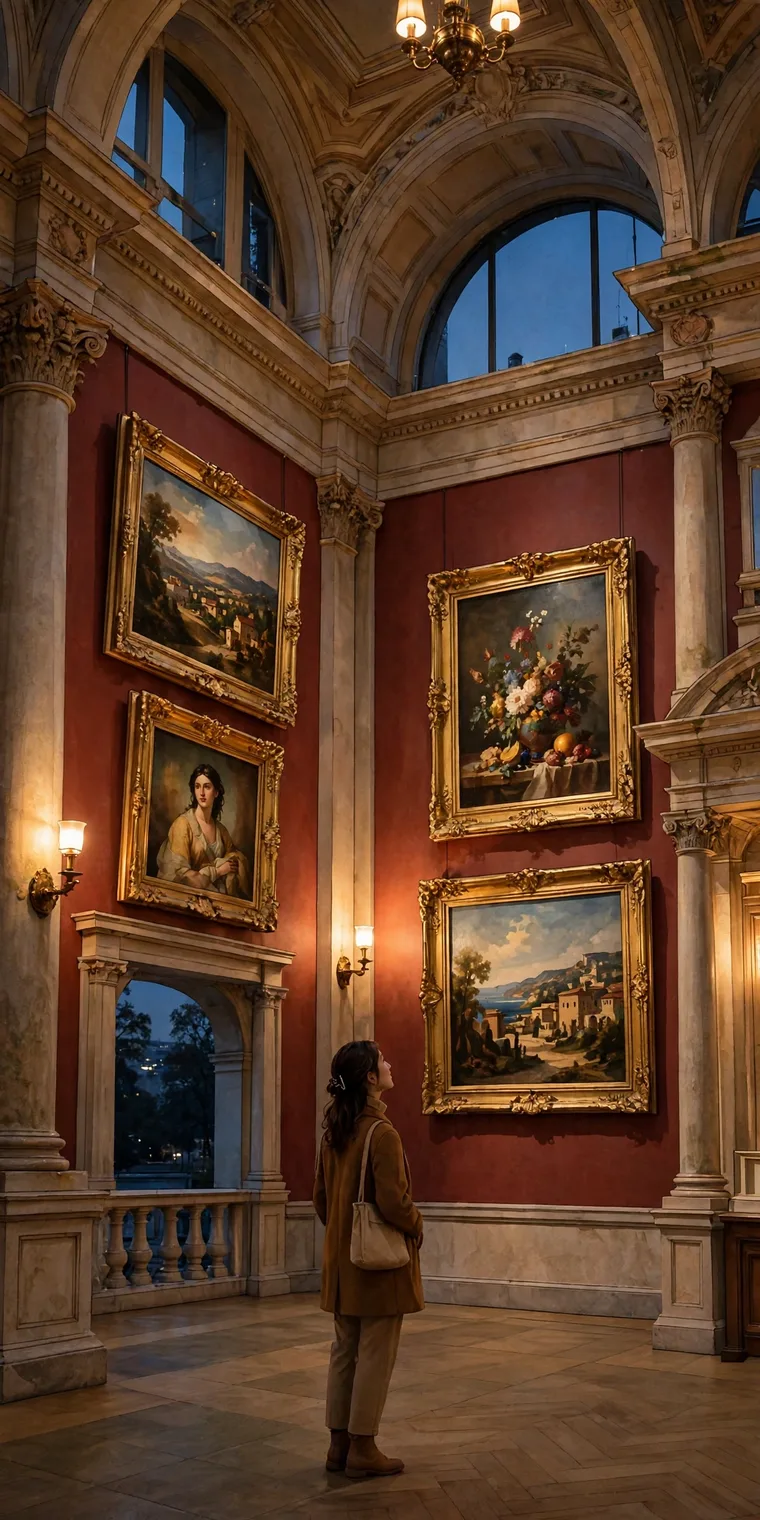
No other city lets you walk the entire story of Western art in under fifteen minutes. Along Madrid's Paseo del Prado — a tree-lined boulevard with fountains at either end — stand three museums holding almost everything that matters from the medieval altarpiece to the late twentieth century. Madrileños call it the Triángulo de Oro, the Golden Triangle: the Prado, the Thyssen-Bornemisza, and the Reina Sofía.
The three collections complement one another with unusual precision. The Prado is the old royal collection, deep in Spanish painting and in the Flemish and Italian masters the kings commissioned. The Thyssen, a private collection bought by the Spanish state in 1993, fills the Prado's gaps — early primitives, Impressionism, German Expressionism, and American art. The Reina Sofía, opened in 1990 in a former hospital, takes over from the avant-gardes to the present. Stand by the Neptune Fountain and you are roughly 500 metres from each door. This is one argument, in three buildings, about what painting is for.
The Prado: The King's Collection Becomes a Nation's
The Prado opened in 1819 in a neoclassical building designed by Juan de Villanueva, originally intended as a natural science museum. What it contained was the picture collection of the Spanish Crown — works accumulated over three centuries not for public instruction but for palaces: the Alcázar, El Escorial, the Buen Retiro, Aranjuez.
That origin explains its strengths. Titian is present in depth because Charles V and Philip II were his greatest patrons: The Emperor Charles V at Mühlberg, the Danaë, Venus and Adonis. Rubens is present because Philip IV commissioned him and because Rubens, in Madrid in 1628–29, copied the royal Titians and left his own mythology in exchange. Bosch is present because Philip II was obsessed with him — The Garden of Earthly Delights still stops a room cold.
Spanish painting is the core. Velázquez, Goya, Murillo, Ribera, Zurbarán, and El Greco dominate not as isolated highlights but in runs of pictures that let you watch a career change. In most museums you meet a painter once. Here you live with him for ten rooms.
The collection numbers roughly 8,600 paintings, of which only a fraction is on display. Go early — it opens at 10 a.m., and the first weekday hour is a different experience from midday — and resist seeing everything. Two focused hours teach more than a dutiful six. It is free for the last two hours each day, but crowds are heavy then; for a first visit, pay and go in the morning.
The Thyssen: The Collection That Fills the Gaps
Across the boulevard, in the Palacio de Villahermosa, the Thyssen-Bornemisza feels immediately different: smaller, calmer, arranged as a single chronological walk that begins on the top floor and descends. It began as the private passion of Heinrich Thyssen-Bornemisza and his son Hans Heinrich, assembled first in Lugano, Switzerland. When Spain bought the core collection — 775 works — in 1993, it acquired in one stroke centuries the Prado lacked.
Start at the top. The early rooms move from Italian primitives — Duccio, a small panel by Fra Angelico — through Jan van Eyck's Diptych of the Annunciation, painted in grisaille to imitate sculpture, to Hans Holbein the Younger's portrait of Henry VIII, all bulk and embroidery and controlled menace. The sequence of faces that follows, from Domenico Ghirlandaio's Giovanna Tornabuoni to a late Rembrandt self-portrait, is one of the finest short courses in European portraiture anywhere.
Then the gaps become pleasures. The Prado has almost no Impressionism; the Thyssen has Monet, Renoir, Degas, and Pissarro, Van Gogh's Les Vessenots in Auvers, painted in the last weeks of his life, German Expressionism in strength — Kirchner, Kandinsky, Franz Marc — and serious American painting, from Edward Hopper's Hotel Room to Roy Lichtenstein and Jackson Pollock. Baroness Carmen Thyssen's collection adds more Monet, Gauguin, and Joaquín Sorolla.
Because it tells a clean story in about two hours, the Thyssen is the best first museum of the three for anyone who feels underprepared — and the most comfortable, with fewer school groups and a café terrace over the courtyard. Do not treat it as the minor partner.
The Reina Sofía: The Hospital That Holds Guernica
South along the Paseo, past the Royal Botanical Garden, the Reina Sofía occupies the former General Hospital of San Carlos, an eighteenth-century building by Francesco Sabatini, now fronted by glass lift towers and Jean Nouvel's 2005 extension with its sweeping red roof.
Inside, the tone changes completely. This is art after the confidence of the old masters breaks down — and after Spain itself breaks down, in civil war. The permanent collection is organised around the 1930s, the Spanish Civil War, and its aftermath, which is exactly right, because the museum holds the single most famous Spanish painting of the twentieth century: Pablo Picasso's Guernica (1937), treated in full elsewhere in this series.
Around it, the context is superb: Dalí's The Great Masturbator (1929), Miró's Man and Woman in Front of a Pile of Excrement (1935), works by Juan Gris, the Madrid-born cubist the Prado barely touches, and sculptor Julio González. Later floors take the story through postwar abstraction, Tàpies, Chillida, and contemporary Spanish art.
The building can be confusing — long corridors that were hospital wards — and the honest advice is to accept a partial visit. See the second floor properly, including the material on the 1937 Spanish Pavilion in Paris for which Guernica was painted. Free evening hours on most weekdays and a programme of film and talks make it feel like a working cultural centre.
How to Do the Triangle Without Ruining It
The Paseo del Arte pass covers all three museums and saves money. But the important decision is tempo. Do not do all three in one day; you will retain almost nothing. The triangle rewards two or three days, one museum per morning, with afternoons left to the Retiro and the Barrio de las Letras, where Cervantes and Lope de Vega lived.
If you have only one morning, choose by temperament. Want the summit of European painting? The Prado. Want the whole story, clearly told, without exhaustion? The Thyssen. Want the twentieth century and politics? The Reina Sofía.
If you have three mornings, go in historical order: Thyssen first, Prado second, Reina Sofía last. The boulevard is now part of a UNESCO World Heritage listing, the Landscape of Light, inscribed in 2021 with the Retiro. This is a landscape built first for kings, then for citizens, and finally for pictures — and the pictures won.
© 2026 InsideRealSpain.com