A Year of Festivals
One signature celebration for every month. Dates shift a little year to year — Semana Santa and the Feria move with Easter, and La Tomatina always falls on the last Wednesday of August.
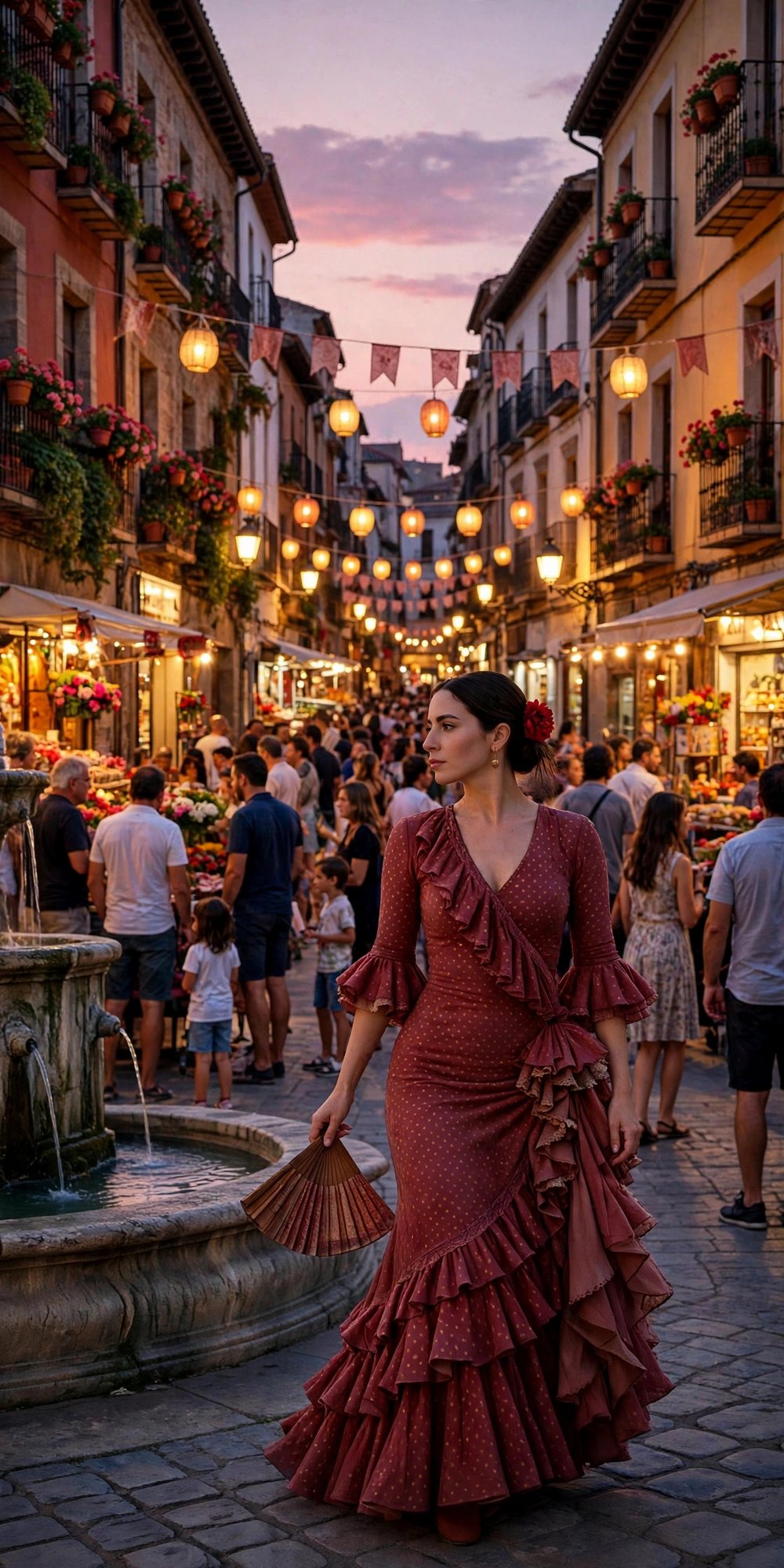
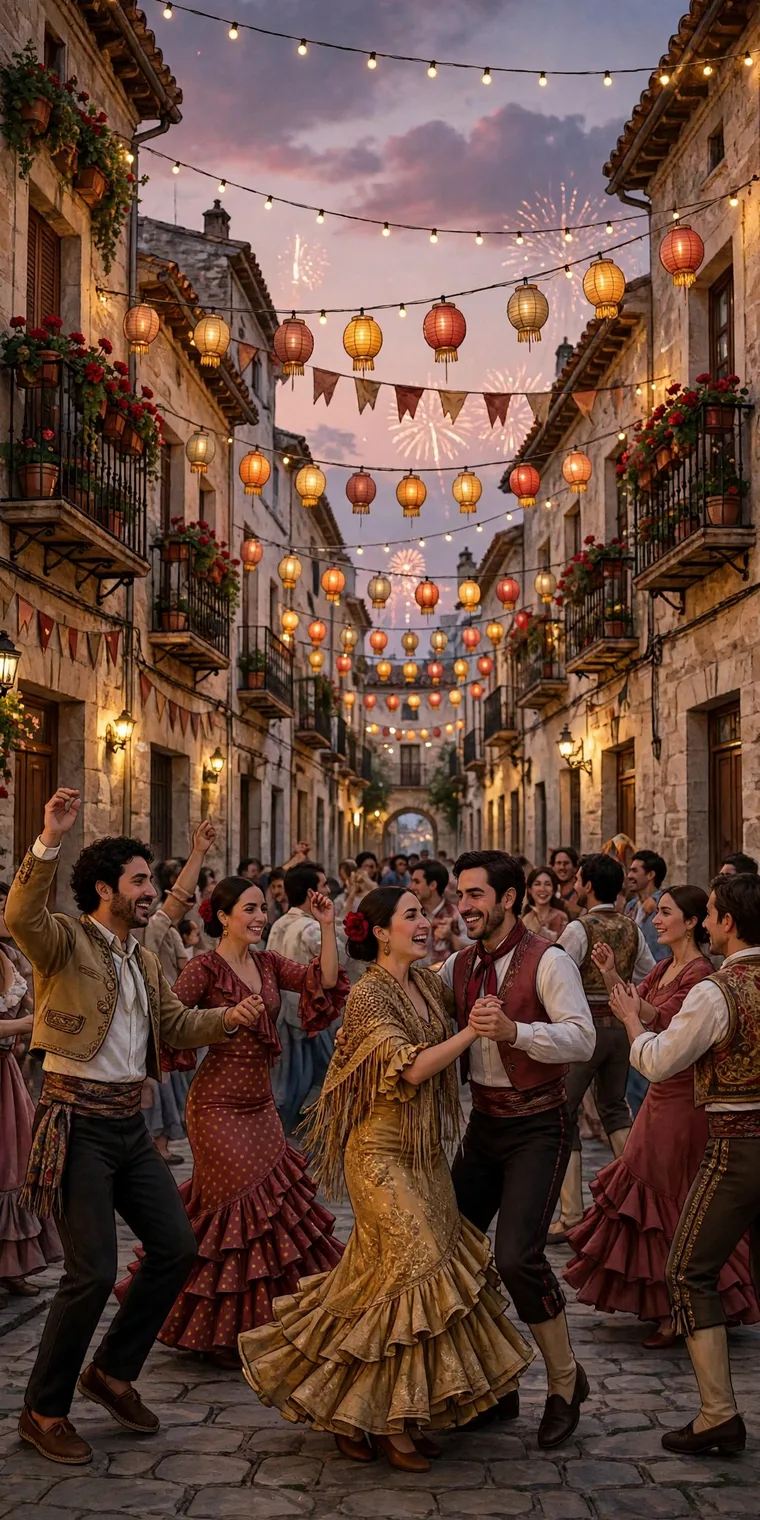
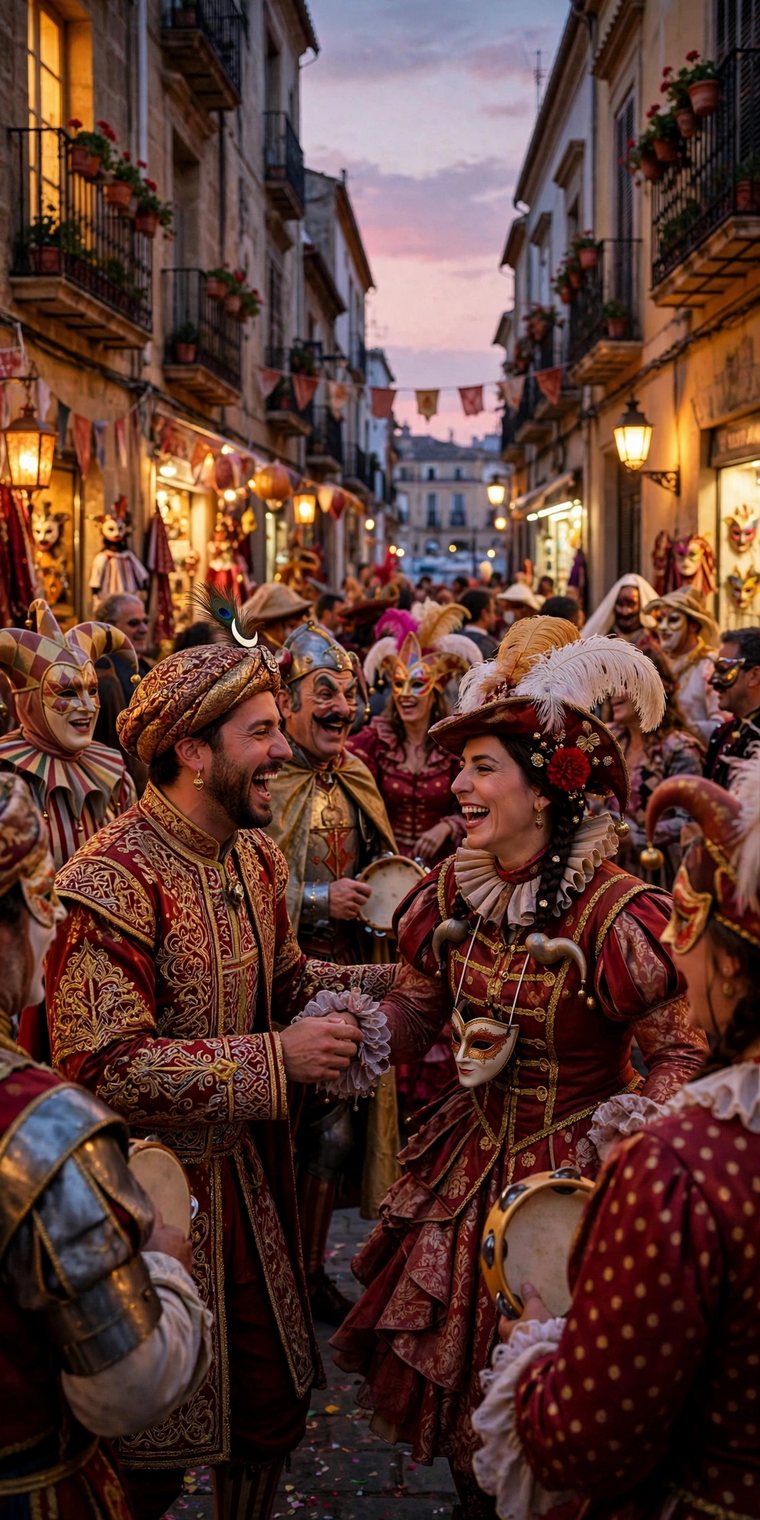
Tamborrada — San Sebastián
Twenty-four hours of drums through the city, from midnight on January 19–20.
Carnaval — Cádiz
Satirical chirigotas, costumes, and street singing — Spain's wittiest carnival.
Las Fallas — Valencia
Giant satirical sculptures fill the streets, then burn on the night of March 19.
Semana Santa & Feria de Abril — Seville
Solemn processions, then a week of dancing, horses, and feria casetas.
Fiesta de los Patios — Córdoba
Private courtyards open to the public, ablaze with geraniums and jasmine.
Hogueras de San Juan — Alicante
Bonfires and fireworks on the beach at midsummer, June 23–24.
San Fermín — Pamplona
The running of the bulls, July 6–14 — white clothes, red scarves, encierros at 8 a.m.
La Tomatina — Buñol
The world's most famous tomato fight, on the last Wednesday of August.
Fiestas de la Vendimia — Jerez
The sherry harvest festival: grape treading, flamenco, and bodega doors open.
Fiestas del Pilar — Zaragoza
A sea of flowers offered to the Virgen del Pilar around October 12.
Magosto — Galicia & the North
Roasted chestnuts, new wine, and bonfires for San Martín, November 11.
Nochevieja — Madrid
Twelve grapes at midnight in Puerta del Sol, one for each clock bell.
Beyond these headliners, nearly every town in Spain keeps its own patron-saint fiesta — ask locally, and plan to stay up late.