The Real Paella Valenciana Has No Peas, No Chorizo, and No Apologies
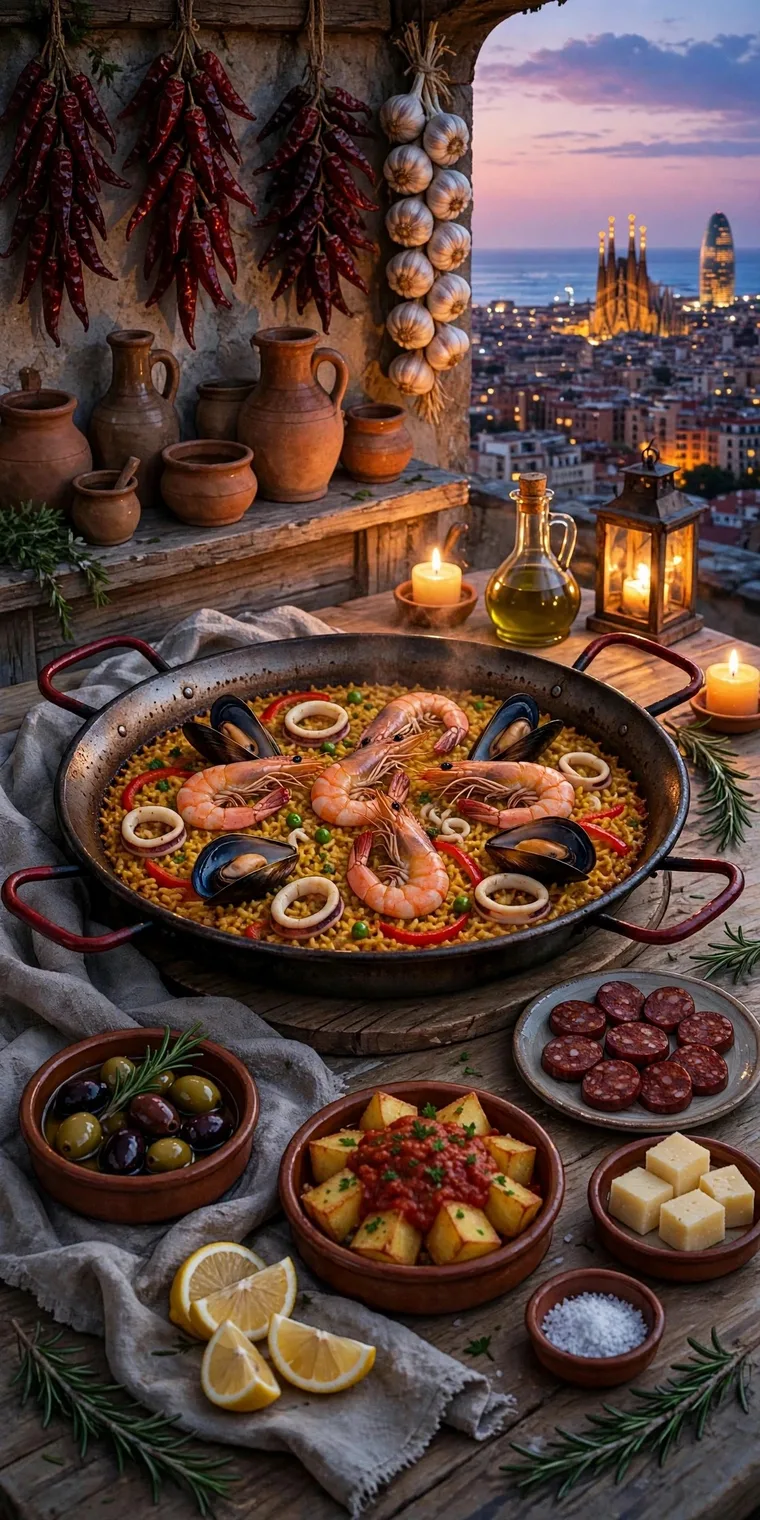
Order paella in most of the world and you will get a cheerful yellow rice scattered with shrimp, mussels, peas, red peppers and maybe rings of chorizo. Call that plate paella valenciana in Valencia, and you will start an argument with no polite end. This is not snobbery. Paella valenciana is a specific dish with a specific history, a protected list of ingredients, and a logic that only makes sense where it was born: the rice fields of the Albufera and a working lunch cooked outdoors over orange-wood fire.
Everything else — much of it delicious — is arroz con cosas. Rice with things. Valencians use the phrase with a smile that is not entirely kind, and they have a point. If anything can go in it, the name means nothing.
Born in a lagoon, not a restaurant
Paella takes its name not from its ingredients but from its pan: la paella, the wide, shallow steel pan with two handles and a dimpled base. The dish emerged in the mid-19th century around the Albufera, a freshwater lagoon south of Valencia city, separated from the Mediterranean by pine forest and dunes. Rice had been grown there since the Muslim period, when irrigation transformed eastern Spain's wetlands. By the 1800s it was a landscape of smallholdings, market gardens — the famous huerta — and labourers who needed a substantial midday meal cooked in the field.
What did they have? Rice. Olive oil. Tomato and flat green beans from the huerta. Garrofó, the large white bean that remains paella's most distinctive legume. Rabbit and chicken from the yard. Small land snails, vaquetes, when they could be gathered. Saffron, sparingly, for colour and aroma. Water and salt. There was no seafood in the original for the simplest reason: its inventors were inland farmers. Seafood paella is a real and honourable dish, and Valencia cooks it too. It is simply a different dish. A mixed paella, meat and seafood together, is regarded by traditionalists as a restaurant invention for visitors who want everything at once, and it is almost never cooked in Valencian homes.
In 2021 paella valenciana was declared an Asset of Intangible Cultural Interest by the Valencian government, with ten canonical ingredients: rice, water, olive oil, salt, saffron, tomato, flat green beans (ferraura), garrofó, chicken and rabbit. Snails are traditional but optional. Chorizo is not a near miss; it is a category error, its smoked paprika fat bleeding into a dish whose flavour rests on a clean sofrito and good stock. Peas, sweet peppers, onion and garnish mussels are common abroad, and absent from the original.
The rice is the point
Foreign versions treat rice as a carpet for toppings. In Valencia the rice is the dish, and everything else exists to flavour it.
The variety matters. Traditional paella uses short-grain bomba rice, grown in the Albufera, the Ebro Delta and Calasparra — a rice that absorbs about three times its volume in liquid while keeping its grains separate and firm. The geometry matters more. The rice layer should be no more than a finger deep, so every grain cooks in contact with flavour and the bottom can toast. That is why pans range from a 34-centimetre two-person size to metre-wide monsters for festivals, and why a Valencian cook changes pans rather than piling rice deeper. A thick layer steams. A thin layer absorbs and crisps. Only one is paella.
Cooking is over a lively fire, traditionally orange-wood, or a broad gas ring that mimics one. Grated tomato cooked slowly in olive oil — the sofrito — goes in with the well-browned chicken and rabbit. Beans follow, then water, saffron and salt. Then the rice is scattered evenly and essentially left alone. You do not stir paella. Stirring releases starch and pushes it toward risotto, fine in Piedmont and a failure in Valencia. You may shake or rotate the pan. After the rice goes in, your spoon is mostly retired.
Socarrat: the sound of getting it right
Ask a Valencian what they listen for in the last minutes and they will describe a sound: a faint crackling as rice toasts against the steel. That caramelised bottom is the socarrat, the most fought-over part of the pan, scraped up and divided like treasure when the paella is served — as it should be — in the pan itself, in the middle of the table. Getting it takes nerve: after eighteen to twenty minutes, when the liquid is absorbed, the heat is raised briefly to toast without burning, judged by ear and smell. Then the pan rests, covered, for five minutes while the grains settle and the table gathers.
How Valencia actually eats it
Paella valenciana is a lunch dish. Not a suggestion — a rule. It is eaten at midday, ideally on a Sunday or holiday, often outdoors, with a designated cook whose authority is absolute. Everyone eats from the pan, traditionally with a spoon, each working a wedge from edge to centre and respecting the invisible borders between diners. Lemon, if it appears, is contested; many purists call it an insult to a well-seasoned rice.
It is the centrepiece of the long Spanish midday, followed by sobremesa — the unhurried conversation that stays at the table after eating. Better restaurants insist you order it at lunch, for a minimum of two, and expect a wait of forty minutes, because a real paella is cooked to order from raw rice. Anywhere that can produce one instantly cooked it earlier and kept it warm, and kept rice is a sadness no garnish can hide. For the benchmark, head to El Palmar, the Albufera village of rice restaurants among fields and canals, or the wood-fire beach restaurants along La Malvarrosa.
None of this means you should stop enjoying arroz negro with squid ink in Catalonia, arroz a banda in Alicante or seafood rice in Cádiz. Spain has a whole family of great rice dishes. Defending paella valenciana does not shrink that family. It keeps one name honest — rabbit, chicken, two beans, tomato, oil, saffron, rice, water, salt and fire — and it needs nothing else added, least of all an apology.
© 2026 InsideRealSpain.com