Empire of Gold, Inheritance of Stone: Spain's Golden Age and Its 50 World Heritage Sites
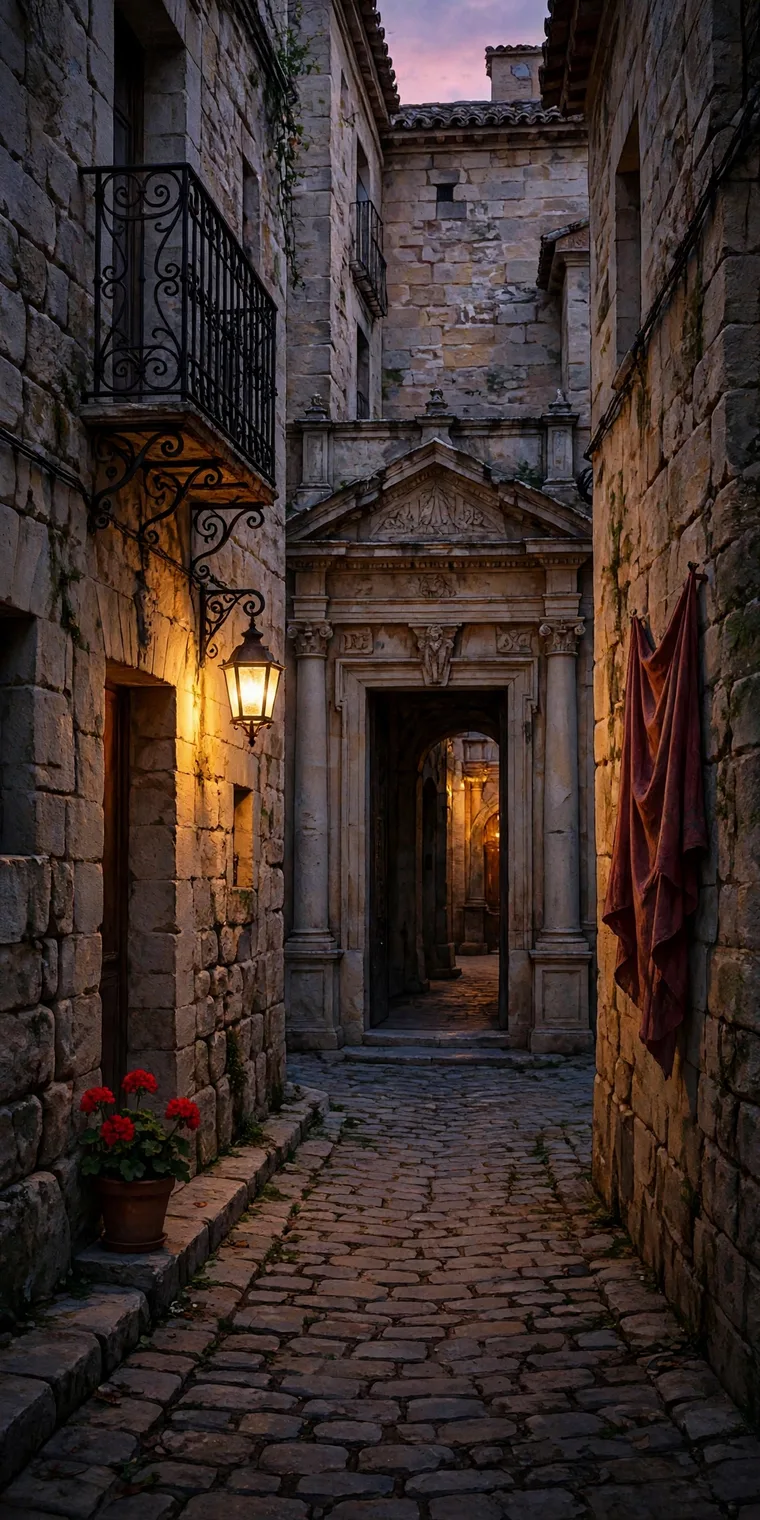
In the sixteenth century, Spanish silver paid for wars on three continents, Spanish infantry was considered the finest in Europe, and a Spanish king could say, with only some exaggeration, that the sun never set on his dominions. In the same century, a one-armed veteran of Lepanto wrote the first modern novel, and architects raised a granite monastery-palace in the Guadarrama foothills that still looks like the empire drawn in stone.
That double achievement — power and culture, glory and exhaustion — is Spain's great early-modern story. Its ending is not decline into nothing. It is inheritance: fifty UNESCO World Heritage Sites, layered across twenty centuries.
An Empire Where the Roads Ran on Silver
The Golden Age — the Siglo de Oro — spans roughly the century and a half from 1492 to the death of Calderón de la Barca in 1681, though its imperial peak came earlier. Charles V, who arrived in Spain in 1517 speaking little Spanish, inherited a composite monarchy of staggering reach: Spain, Naples and Sicily, the Low Countries, Austria's claims, and the expanding Americas. His son Philip II added Portugal and its empire in 1580, ruled from the Escorial, and presided over a monarchy stretching from Milan to Manila — the Philippines named, of course, for him.
Its fuel was American silver, above all from Potosí in modern Bolivia and Zacatecas in Mexico, shipped in treasure fleets to Seville and later Cádiz, which held the monopoly on American trade. The House of Trade in Seville licensed ships, pilots, and maps; the Archivo de Indias, still housed in Seville's merchants' exchange, holds the paperwork of a world empire.
Silver was also a curse in slow motion. It financed chronic war — against France, the Ottomans (checked at Lepanto in 1571, where Cervantes lost the use of his left hand), England (the Armada of 1588, defeated by weather and English seamanship alike), and the Dutch revolt that dragged on for eighty years. It drove inflation across Europe, discouraged Spanish industry that imports could undercut, and still was never enough: the Crown declared bankruptcy repeatedly under Philip II despite the fleets. By the mid-seventeenth century, under Philip IV and Charles II, the empire was visibly overstretched — losing Portugal in 1640, ground down in the Thirty Years' War, its tercios finally beaten at Rocroi in 1643 — even as its culture reached its highest peak. Spain's golden age of art flowered precisely as its power waned. That paradox is the period's most human truth.
Cervantes, Velázquez, and a Culture That Outlasted Power
The literature alone would justify the name. Don Quixote (1605 and 1615) invented much of what the modern novel does out of a comic premise: a minor gentleman maddened by romances of chivalry who insists the world is enchanted. Lope de Vega wrote more than a thousand plays and created Spanish commercial theatre. Calderón's Life Is a Dream asked whether any of this is real. Teresa of Ávila and John of the Cross wrote mystical works of psychological precision that believers and non-believers alike still read.
Painting matched it. El Greco found in Toledo a city that let him become himself. Zurbarán painted monks with a silence you can hear. And Velázquez produced Las Meninas (1656) — a painting about painting, power, and looking that artists from Picasso onward have measured themselves against. Stand before it in the Prado and the empire's most lasting conquest turns out to be a room, a mirror, and a child in a wide dress.
Architecture built the ideology in stone: the Escorial (1563–1584), monastery, palace, basilica, and royal tomb in one severe granite grid; and later a Spanish Baroque of glorious excess — the façades of Salamanca and Santiago de Compostela, where the Obradoiro front dresses a Romanesque pilgrim church in theatrical stone.
Fifty Sites: Reading the Whole Story in One List
Spain's fifty World Heritage inscriptions, accumulated since 1984, are more than a tourism ranking. Read chronologically, they are the national biography with plaques.
Prehistory and Rome: the Altamira cave art and the rock art of the Mediterranean Basin; Mérida, Tarragona, Segovia's aqueduct, Lugo's walls, Las Médulas' gold-scarred hills. Al-Andalus and the medieval kingdoms: Córdoba's Mosque-Cathedral and Medina Azahara, Granada's Alhambra, Generalife and Albaicín, Seville's Alcázar, cathedral, and Archivo de Indias; Burgos and León cathedrals; Santiago de Compostela, goal of the Camino routes also listed in their own right; the Mudéjar architecture of Aragón; Ávila's walls; Toledo's whole historic city. The Golden Age and after: the Escorial, Salamanca and Alcalá de Henares — whose university, founded by Cardinal Cisneros in 1499, made it a model university city — Aranjuez's royal landscape, Úbeda and Baeza's Renaissance streets, the Biscay Bridge and Vizcaya industry, and the transatlantic echo in listed colonial-era ensembles back home.
Then the list leaps to genius made modern: Gaudí's works in Barcelona — Park Güell, Casa Milà, Casa Batlló, the Sagrada Família — and Domènech i Montaner's Palau de la Música Catalana. Nature is honoured too: Doñana, Teide, the Pyrenees–Monte Perdido, Ibiza's biodiversity, and Menorca's Talayotic prehistory. Flamenco and Valencia's Fallas appear on UNESCO's intangible heritage lists — reminders that heritage here is lived, not only built.
What distinguishes Spain's list is compression and continuity: Phoenician ports under Roman cities under mosque-cathedrals under Golden Age palaces, sometimes on the same street. Nowhere is that clearer than Córdoba, where a Roman bridge leads to a mosque containing a cathedral, a few streets from a synagogue — four civilisations within a ten-minute walk.
What the Gold Bought in the End
The empire dissolved long ago — mainland American colonies independent by the 1820s, the last overseas possessions lost in 1898, a year Spaniards still call the Disaster. The silver is spent; Potosí's hill is in Bolivia; the Armada is a metaphor. What remains, unexpectedly durable, is what the Golden Age made and what every age before and after it added: a language now spoken by roughly five hundred million people, cities and monuments compelling enough that the world has formally listed fifty of them, and a literary and artistic canon that never needed an empire to survive.
That is the right way to visit Spain's heritage: not as a museum, but as a conversation still going on — flamenco in a Cádiz courtyard built over Phoenician streets, pilgrims finishing the Camino in a Baroque square, a family in Lugo walking Roman walls their city never stopped using. The gold ran out. The stone, the language, and the life inside them did not.
© 2026 InsideRealSpain.com