When Córdoba Outshone Europe: The Visigothic Prelude and the Glory of Al-Andalus
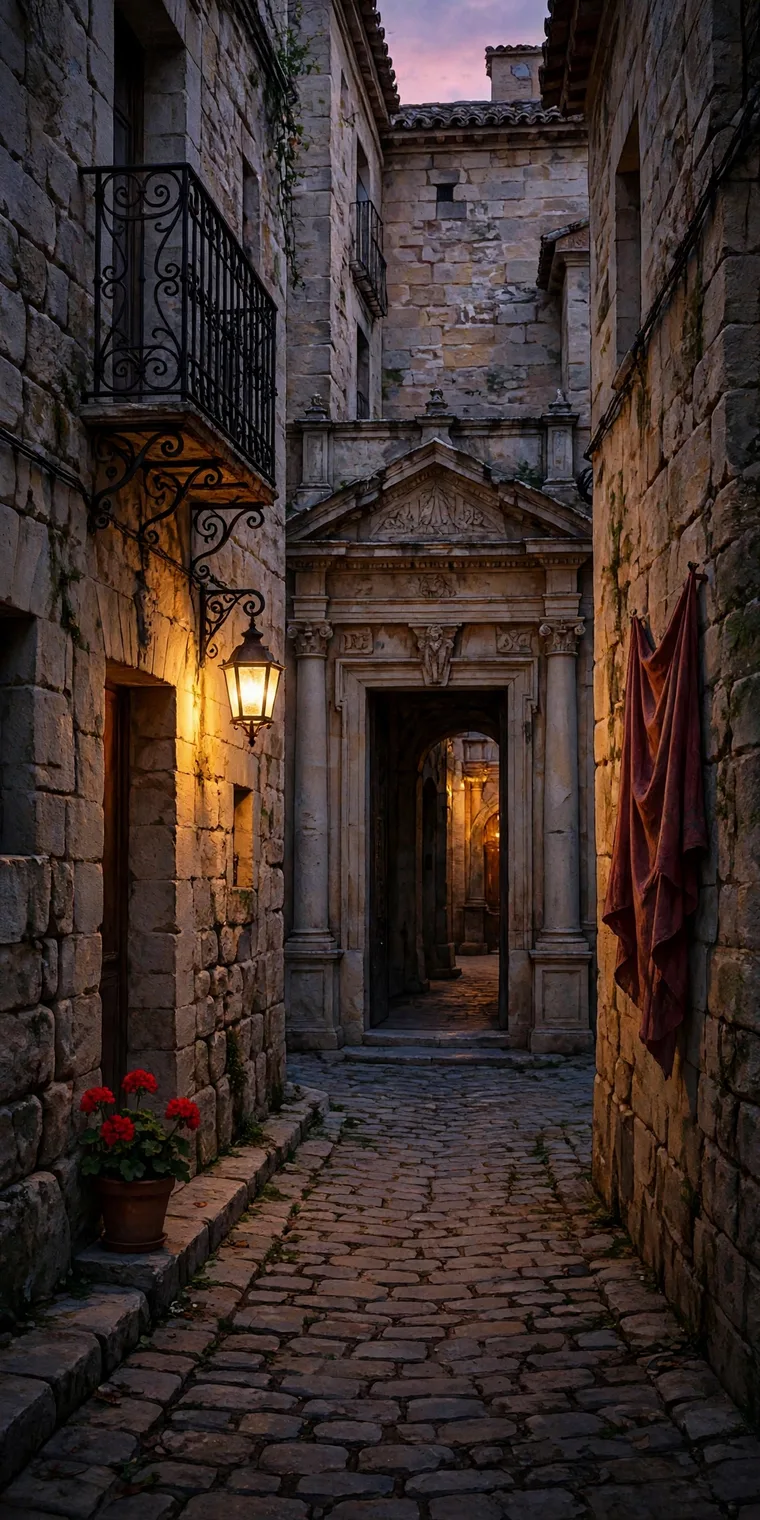
In the tenth century, while most European capitals were muddy towns of a few thousand people, Córdoba had paved streets lit at night, running water in hundreds of baths, libraries holding hundreds of thousands of books, and a population that may have reached half a million. It was, by any honest measure, among the largest and most advanced cities on the continent — and it was Muslim, Arabic-speaking, and built on Spanish soil. That fact, and the three centuries of Visigothic rule that preceded it, explain medieval Spain better than any simple story of invasion and reconquest.
The Visigoths: Rome's Heirs in Toledo
The Visigoths entered Hispania first as Rome's allies, sent to drive out other Germanic peoples, and stayed to rule. By the late fifth century their kingdom, centred eventually on Toledo, covered most of the peninsula. They were a small military aristocracy ruling a far larger Hispano-Roman population, and for two centuries the two worlds circled each other warily.
The turning points were acts of integration. King Leovigild (568–586) unified much of the peninsula by force and issued laws for Goths and Romans alike. His son Reccared took the decisive step in 589, converting from Arian Christianity to the Catholic faith of his subjects at the Third Council of Toledo. From then on, Toledo's church councils were effectively parliaments, and bishops became partners in government — a fusion of altar and throne that would echo through Spanish history for a thousand years.
Visigothic Spain produced real brilliance. Isidore of Seville (c. 560–636) wrote the Etymologies, an attempt to gather all knowledge that medieval Europe copied for centuries. The Liber Iudiciorum of 654 gave Goths and Romans a single law code. Goldsmiths produced the votive crowns of the Guarrazar treasure, now in Madrid, among the masterpieces of early medieval Europe. Small stone churches like San Juan de Baños (661) still stand in the northern meseta, sober and beautiful.
Yet the kingdom was brittle. Succession was rarely orderly; kings were made and unmade by assassination and revolt. In 710 a disputed succession split the kingdom — and across the Strait, a new power was watching.
711 and the Speed of Collapse
In 711 Tariq ibn Ziyad crossed from North Africa with a largely Berber army — Gibraltar still bears his name, Jabal Tariq, Tariq's mountain — and destroyed King Roderic's army at the Battle of Guadalete. Within a few years, Muslim forces controlled most of the peninsula. The conquest was fast not only because the Visigothic state fractured, but because many cities negotiated surrender treaties that left local elites, property, and worship largely intact in exchange for tribute and loyalty.
The new land was called al-Andalus. It would last, in shrinking form, from 711 to 1492 — 781 years. For scale: that is longer than the time from Columbus to the present day.
Al-Andalus was never one stable state. It began as a province of the Umayyad Caliphate in Damascus, became an independent emirate in 756 when a fugitive Umayyad prince, Abd al-Rahman I, crossed the Mediterranean and took Córdoba, and reached its apex in 929 when Abd al-Rahman III proclaimed himself caliph. After the caliphate shattered in the early eleventh century, it fragmented into competing taifa kingdoms, was twice reunified under strict North African empires — Almoravids, then Almohads — and ended as the small, brilliant, tributary Emirate of Granada. Any account that treats those eight centuries as a single golden age, or a single occupation, is selling something.
Córdoba, Capital of the West
Under the emirs and caliphs, Córdoba became extraordinary. Abd al-Rahman I began its Great Mosque in 786 on a site shared, in a complicated early arrangement, with a Visigothic church; his successors expanded it into one of the great buildings of the world — a forest of red-and-white arches that still defines the city, with a cathedral later planted, controversially and spectacularly, in its middle. Abd al-Rahman III built a palatine city, Madinat al-Zahra, outside the walls, with reception halls, gardens, and workshops employing thousands. Its ruins, excavated and now a World Heritage Site, still convey calculated splendour: this was government as theatre.
The city's intellectual life matched its wealth. The caliphal library under al-Hakam II was said to hold 400,000 volumes — the figure may be generous, but even a fraction of it dwarfed the libraries of Christian Europe, where a great monastery might own a few hundred books. Córdoba produced or sheltered the physician al-Zahrawi, whose surgical encyclopaedia was used in Europe for centuries; poets and philosophers; Jewish scholars such as Hasdai ibn Shaprut, diplomat and patron at the caliphal court; and, in the wider Andalusi world that followed, figures like Averroes and Maimonides in the twelfth century, both born in Córdoba, whose commentaries reshaped philosophy in Arabic, Hebrew, and Latin alike.
Agriculture changed permanently. Andalusi farmers and engineers spread or intensified irrigation — norias, qanats, terraced huertas — and introduced or expanded crops now considered quintessentially Spanish: rice in Valencia, citrus, sugar cane, aubergines, artichokes, saffron. Arabic words entered Spanish by the thousands — aceite, ojalá, alcalde, alfombra, naranja — so deeply that Spaniards use them daily without hearing the history inside them.
Coexistence, With Its Limits Named Plainly
Christians, Muslims, and Jews lived together in al-Andalus in ways that produced genuine cultural exchange — and it is right to call the result remarkable for its era. It is also right to be precise: coexistence was hierarchical, not equal. Non-Muslims paid a special tax, faced legal and social restrictions, and lived with periodic pressure and, especially under the Almoravids and Almohads in the twelfth century, episodes of persecution that drove figures like Maimonides' family from Córdoba. Martyrs' movements, revolts, and massacres belong in the record alongside the poetry and the libraries.
That honesty makes the achievement larger, not smaller. A society that was often tolerant by medieval standards, never tolerant by modern ones, still built a civilisation whose medicine, astronomy, agriculture, and architecture Europe spent centuries absorbing — frequently through Spain itself, where translators in Toledo later rendered Arabic learning into Latin.
When the caliphate collapsed, its splinters — Seville, Granada, Toledo, Zaragoza, Valencia — became taifa courts competing in poetry and palace-building as much as war. Their disunity invited both North African intervention and Christian conquest. But the world they inherited from Córdoba endured in Spanish fields, kitchens, language, and stone. Al-Andalus did not vanish in 1492, or in 1031. Parts of it are still on the table at lunch.
© 2026 InsideRealSpain.com