The Last Hundred Kilometres: Earning the Compostela
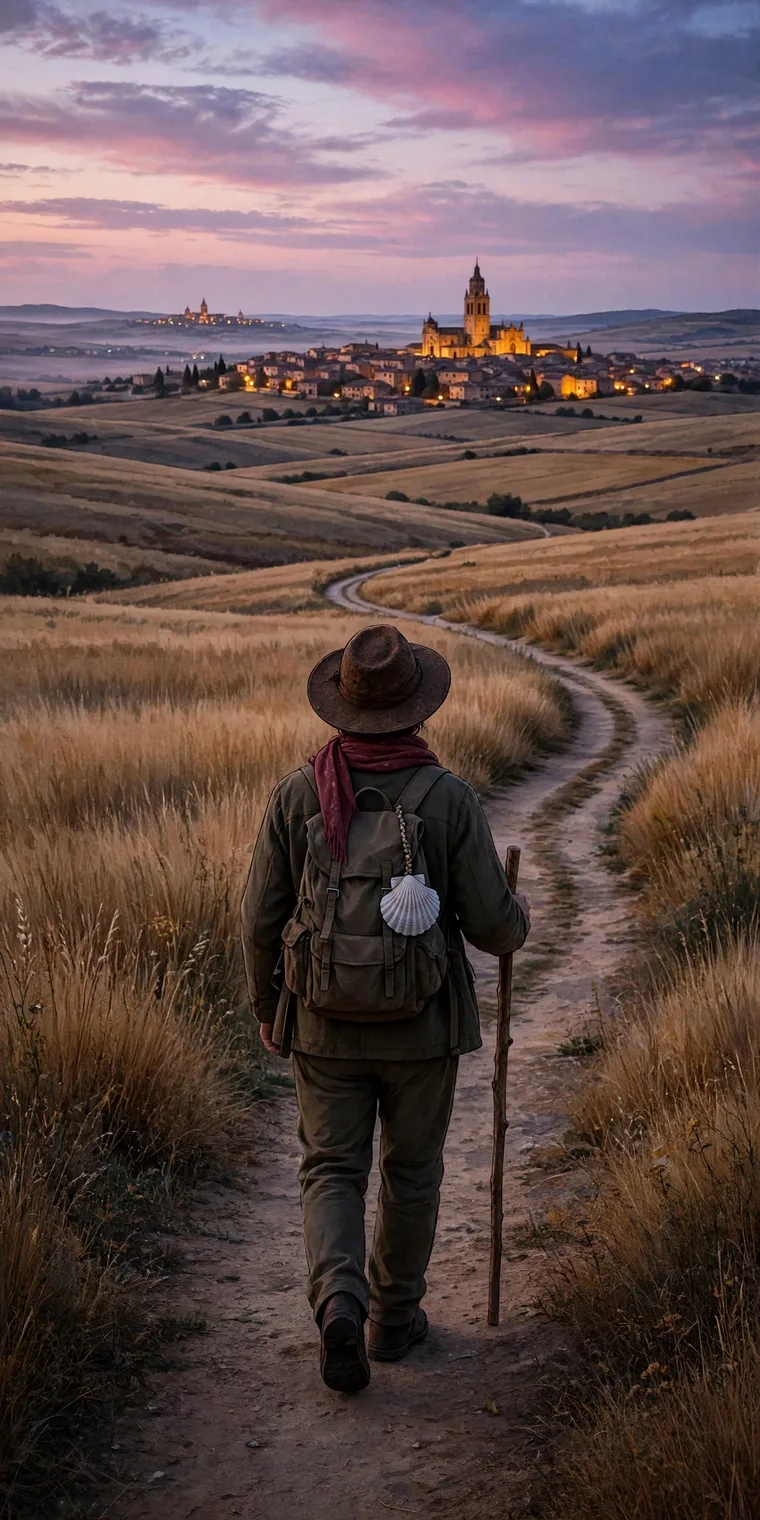
In recent years, roughly half a million people a year have walked into the Pilgrim's Office in Santiago de Compostela and come out holding a Compostela — the cathedral's Latin certificate, bearing their name, confirming that they completed the pilgrimage to the tomb of Saint James. That figure, unthinkable a generation ago, makes the Camino one of the largest voluntary walking movements in the world. Yet the certificate itself is governed by rules that are simple, specific, and widely misunderstood, and the final 100 kilometres — the minimum distance a walker must complete — have become a world of their own: the busiest, most social, most argued-over stretch of road in Spain.
This is what earning the Compostela actually involves, and the practical wisdom that separates a good final week from a miserable one.
The Rules, Exactly as They Are
The Compostela is issued by the cathedral's Pilgrim's Office — the Oficina del Peregrino, on Rúa Carretas, a short walk from the cathedral — to pilgrims who meet three conditions.
First, distance and continuity. Walkers must complete at least the last 100 kilometres to Santiago, continuously, along a recognised route. Cyclists must complete at least 200 kilometres. That is why Sarria, on the Camino Francés at just over 110 kilometres from Santiago, is the single most popular starting point of all: it is the closest convenient town beyond the minimum. On the Portugués, the equivalent threshold town is Tui; on the Primitivo and Norte, walkers aiming for the minimum typically join at Lugo or Baamonde respectively; on the Vía de la Plata, Ourense serves the purpose.
Second, evidence. Your credencial must carry stamps collected along the way, with particular care in the final 100 kilometres, where the expectation is two stamps per day. Albergues, churches, bars, and town halls all stamp; there is no excuse for an empty page in Galicia, where sellos are a local industry.
Third, intention. The Compostela is a religious certificate, and the office asks pilgrims to declare that they walked with a Christian or at least a spiritual, searching motivation — the famous formula is pietatis causa, out of devotion or a vow, broadly interpreted. Those who walk purely as sport or tourism can receive a different document, the certificate of welcome, which records the achievement without the religious character. The office does not interrogate; it asks you to be honest on the form.
Your name appears on the Compostela in Latin form — which is why so many walkers frame a document they cannot quite read.
The Sarria Effect
Starting in Sarria changes the Camino. A walker who began in Saint-Jean-Pied-de-Port has been on the road for a month when they pass through; a walker who starts in Sarria has five or six days ahead. Both are legitimate pilgrims under the rules. The friction between the two tribes is the Camino's oldest modern argument, conducted in albergue kitchens with varying grace.
The Sarria stretch — through Portomarín, Palas de Rei, Melide, where everyone eats pulpo, Arzúa, and O Pedrouzo — is lovely Galicia: eucalyptus woods, hamlets, and horreo granaries on stone stilts. It is also, in season, busy enough that booking private beds a day ahead is sensible, queues form at popular bars, and the dawn departure chorus begins before six. Group walkers, school parties, and supported tours with luggage transfers share the path with month-long pilgrims carrying everything.
Walk it on its own terms: start before or after the rush, stop in smaller villages between the guidebook stages, and arrive early, when Monte do Gozo — where pilgrims first see the cathedral towers — still belongs to walkers.
Stages, Seasons, and the Shape of a Good Walk
Whatever your route, the arithmetic of stages decides your experience. Twenty to twenty-five kilometres a day is the sustainable band for most adults; thirty is a strong day; forty is a story you tell later, usually about pain. Build the plan around the weakest part of your body, not your ambition: the Camino's medical folklore is dominated by knees on descents, blisters from new boots, and tendinitis from a heavy pack. Keep the pack near a tenth of your body weight, break boots in for months, and treat the first three days of any route as a shakedown, not a test.
Season shapes everything else. Late April to early June and September to mid-October are the connoisseur's windows on most routes: services open, weather workable, crowds present but human. July and August bring heat on the meseta and the Plata that can be genuinely hazardous, and peak crowding after Sarria. Winter walking is real and rewarding on the Francés and Portugués for the experienced — but albergues close, daylight shrinks, and the Pyrenees and O Cebreiro in snow are mountaineering problems, not walks. Holy Years, when 25 July falls on a Sunday — the next is 2027 — swell every number on every route; book, plan, and set expectations accordingly.
Carry water, learn the menú del peregrino — the cheap set pilgrim menu — as your daily engine, and remember cash still matters in small villages, where Sundays and fiestas close shops.
The Arrival
The end is choreographed by geography. From Monte do Gozo the path descends into Santiago's suburbs, loses its rural charm for a few urban kilometres — every long route's final indignity — and then delivers you into the old town, through the Porta do Camiño, down to the Praza do Obradoiro. The cathedral fills the western side. Pilgrims sit on the paving with their packs as pillows. Strangers photograph each other. It is, reliably, an emotional scene, including for people who insisted for a month that they were only walking.
Then the Pilgrim's Office: the queue, the questions, the examination of stamps, and the certificate. The ceremony is elsewhere: at the midday Pilgrim's Mass, where the day's arrival figures are read out by country and starting point, and where, if fortune holds, the Botafumeiro flies.
Roughly half a million Compostelas a year sounds like mass tourism until you break it into what it actually is: half a million separate decisions to walk at least a hundred kilometres, most of them in Galician rain, for a piece of paper in Latin that has no monetary value at all. That is the Camino's final paradox, and its best evidence. The certificate is worthless, and people cross the world for it — because what it certifies cannot be bought with it: the distance, done on foot, one stamped day at a time.
© 2026 InsideRealSpain.com