Heroes, Writers, and a Divided Spain: Toreros, Hemingway, and the Modern Argument
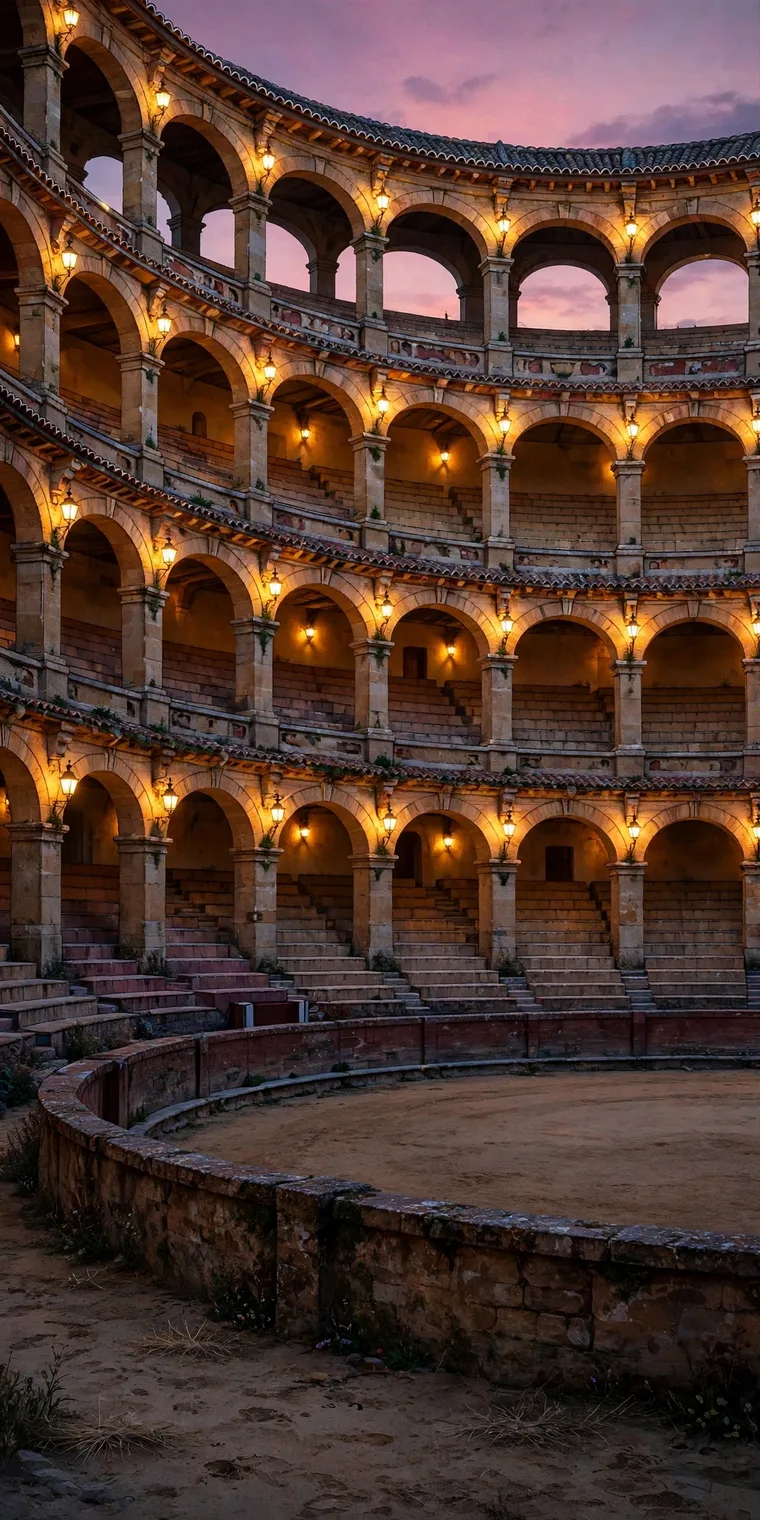
No other Spanish performer is asked to embody as much as the torero. He is athlete, artist, and — in the language his admirers still use without embarrassment — hero, expected to risk his life beautifully, in formal dress, before a crowd licensed to judge him without mercy. That expectation has made legends and destroyed men. It drew the world's most famous American writer to Spanish ringsides for forty years. And it helps explain why, in a Spain that now argues openly about whether the corrida should exist at all, the figure in the suit of lights still refuses to become merely historical.
The Making of a Torero
The road to the alternativa — the ceremony in which a senior matador hands a junior his sword and muleta, making him a full matador de toros — is long, poorly paid, and begun in boyhood. Aspirants learn in escuelas taurinas, bullfighting schools, then fight young animals as novilleros. For every name on a major feria poster, dozens have spent years travelling to village rings for expenses, waiting for a triumph large enough to move them up a rung.
Great careers therefore carry a charge of social escape as well as art. Manolete, the gaunt Cordoban whose severe, still style defined the 1940s, became a national figure before a Miura bull named Islero killed him at Linares in 1947 — a death announced on radio like the loss of a statesman. A generation later El Cordobés, a son of poverty, scandalised purists and filled plazas in the 1960s with an athletic, crowd-pleasing style. The argument between classicists and populists is permanent: every era produces both.
Modern aficionados start any list with José Tomás, whose rare appearances, extreme stillness, and willingness to let the bull pass at distances others will not attempt have made him a figure of near-religious devotion. His solo six-bull afternoon in Nîmes in 2012 is spoken of as a landmark of the modern age. Alongside him stand Enrique Ponce, at the top for three decades, the elegant Sevillian classicist Morante de la Puebla, and the Peruvian Andrés Roca Rey, the box-office force of the current generation. Their styles differ completely. The crowd's demand does not: command the bull, take the risk yourself, and do not lie.
Women fought formal exclusion — female toreros were effectively barred during much of the 20th century — and Cristina Sánchez, who took her alternativa in Nîmes in 1996 and faced hostility from colleagues as well as bulls, exposed how rigid the profession could be even as Spain modernised around it.
Hemingway and the Foreign Gaze
For the English-speaking world, one writer stands between the reader and the ring. Ernest Hemingway first saw bullfighting at Pamplona in 1923, and it shaped his imagination for life. The Sun Also Rises (1926) fixed the San Fermín festival and its encierros — the morning bull runs through Pamplona's streets — in the international mind. Death in the Afternoon (1932) went further: a long, opinionated, technically serious study of the corrida of the 1920s, still read as both a serious introduction and a period piece.
His importance is double-edged, and Spaniards know it. He took bullfighting seriously as art when many foreign observers dismissed it as cruelty or folklore. He later returned for the rivalry between Luis Miguel Dominguín and Antonio Ordóñez, chronicled in The Dangerous Summer. At the same time, the romantic Spain of brave men and tragic afternoons that he exported became a lens many visitors still look through — one Spanish critics have often found reductive. Goya, Picasso, and Lorca treated the same subject from inside the culture. But it is Hemingway's version that waits in the airport bookshop, and an honest account should name his influence and its limits in the same breath.
A Divided Country: Catalonia and the New Map
The modern argument is no longer conducted only in essays. It is conducted in parliaments. Bullfighting in Spain is regulated substantially by the autonomous communities, and their decisions have produced a patchwork. The Canary Islands effectively prohibited corridas in 1991. Catalonia went furthest in the public imagination: after a popular legislative initiative carrying some 180,000 signatures, the Catalan Parliament voted in 2010 to ban bullfights, and Barcelona's last corrida at the Monumental took place in September 2011.
What happened next shows how tangled the question has become. In 2013 the Spanish state declared bullfighting part of the nation's cultural heritage. In 2016 the Constitutional Court struck down the Catalan ban, ruling that regions could regulate but not prohibit a practice protected as common heritage. Legally, corridas could return to Catalonia. In practice they largely have not: Barcelona's Monumental remains closed as a bullring, and public opinion there, as in much of urban Spain, has moved away from the fiesta. A ban overturned on paper and a tradition that does not return may be the most accurate image of bullfighting's present position: defended in law, contested in culture.
Elsewhere the pattern varies. Andalusia, Madrid, Valencia, and Navarre still hold major ferias with public support; France's taurine south maintains its own corridas. Polling consistently shows a country split by age as much as by region: older and rural Spaniards far more likely to attend, younger and urban Spaniards far more likely to oppose — or, most consequentially, simply not to care.
That indifference may matter more than prohibition. Defenders respond with economics — the breed, the dehesa, the jobs — and the heritage case. Opponents respond with the animal at the centre, and ask why heritage should exempt a practice that would be judged cruel if invented today. Between them stands a large, quiet group who have never attended a corrida and do not intend to start.
What Endures
It would be tidy to declare the fiesta dying or eternal. The evidence supports neither. Major ferias still sell out for the right cartels, yet the number of corridas is far below its 20th-century peaks and the audience is ageing.
What endures is the record the toreros and their chroniclers have left: a vocabulary of courage and style, an art running from Goya through Lorca to Hemingway, and questions about art, cruelty, region, and nation that Spain is still answering in public. The man in the suit of lights walks out, still, to be judged. Increasingly, so does the country that created him.
© 2026 InsideRealSpain.com