The Long Shadow of the Fiesta Brava: How Bullfighting Became Spain
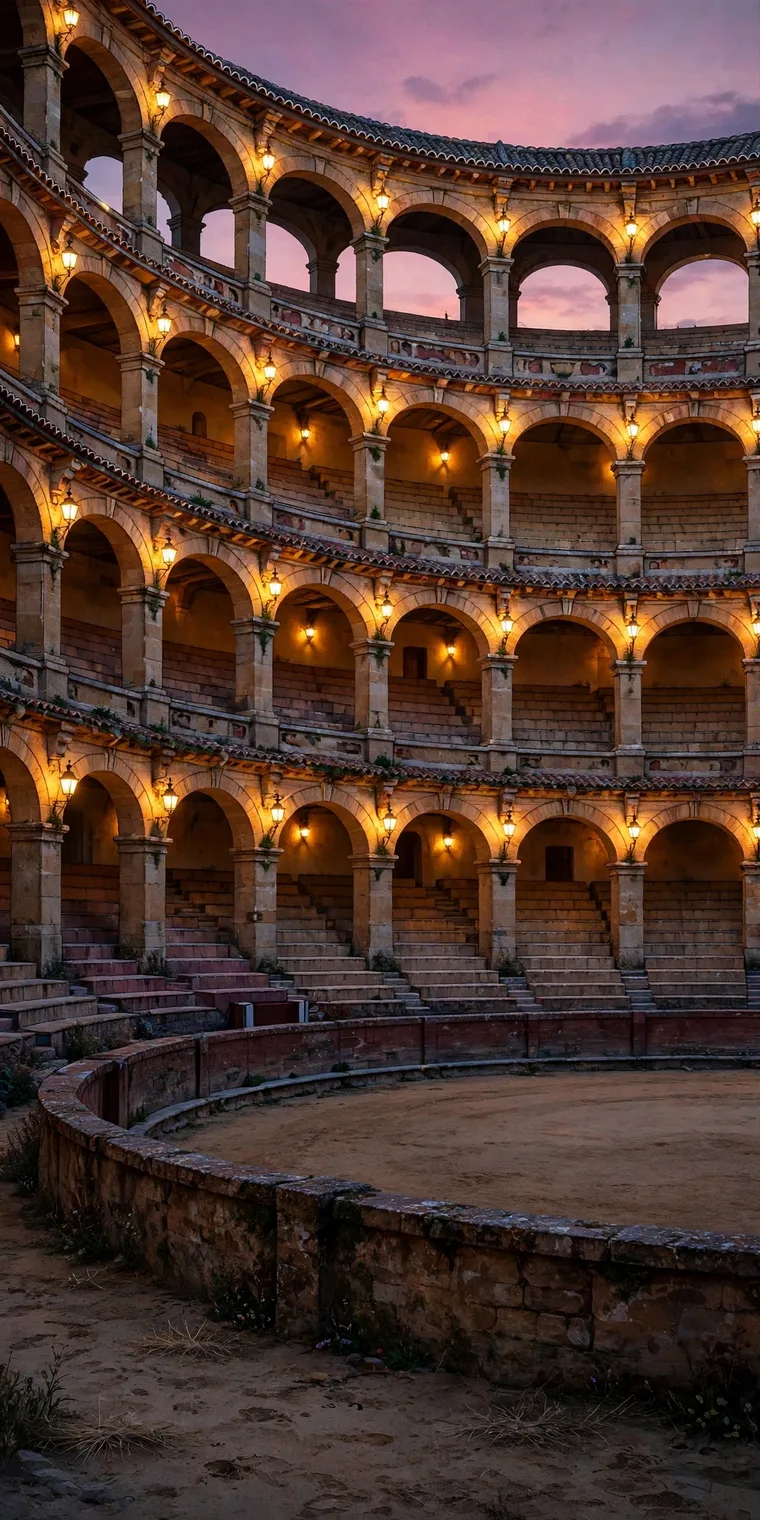
There is no single day when bullfighting began in Spain. There is a long accumulation — of rituals, royal sports, village festivals, professional rules, and arguments — that hardened into what Spaniards call la fiesta brava, the brave festival. It was inherited, revised, banned, revived, and codified, century after century, until the spectacle in a circular plaza came to feel, to its defenders, like history performed in real time.
That long history is why the subject provokes such strong reactions. For supporters, the bullfight is bound up with festivals, family memory, regional identity, art, and language. For critics, its age does not excuse it.
Before the Plaza: Bulls in an Older Iberia
Bulls have held a powerful place in Iberian imagination far longer than Spain has existed as a unified state. Images of bulls appear in prehistoric cave art, and Iberian and Roman cultures left carvings and mosaics in which the animal stands for strength and danger. There is no straight line from ancient ritual to the modern corrida. What can be said is that the peninsula has long lived close to cattle and treated the bull as more than livestock.
During the centuries of Muslim rule in much of the peninsula, and in the Christian kingdoms expanding southward, mounted nobles practised exercises with bulls as training for war. Spearing a charging animal demanded control of the horse, timing, nerve, and judgement of distance — staged at first for weddings, coronations, and religious festivals.
By the late medieval period, bull events were becoming civic occasions. Towns closed off a main square with carts and timbers, released bulls, and let local men test themselves. There was little uniformity. The important shift was social: what had belonged to the court was moving into the street.
From Noble Sport to People's Festival
The decisive change came in the 18th century. As Bourbon kings lost interest in participating personally, the mounted aristocratic style faded. In its place rose professional toreros on foot, drawn largely from working-class backgrounds in Andalusia. This was not a minor technical adjustment. It changed who the hero was.
The new torero did not arrive on a fine horse as a lord demonstrating rank. He walked in carrying a cape and later a sword and muleta, and earned his living by standing still when instinct said to run. Pedro Romero of Ronda, credited with helping define a sober, classical style, became one of the first great professional figures. Rivalries created the enduring idea of competing schools: Ronda for order and economy of movement; Seville for grace and artistry.
Francisco Montes, known as Paquiro, pushed the process further. His 1836 treatise, Tauromaquia Completa, set out rules for the lidia in unusual detail. Purpose-built rings were replacing improvised squares, and the afternoon had a structure audiences could learn and judge. The bullfight was becoming a profession, a business, and a codified art at the same time.
Codification, the Golden Age, and Politics
The 19th century gave bullfighting much of its modern shape. Permanent plazas rose in Madrid, Seville, Valencia, and dozens of smaller towns. Railways allowed bulls, toreros, and spectators to travel farther. Newspapers created national reputations. A good afternoon in Madrid could make a career; a failure there could haunt a torero for seasons.
Breeding became more systematic too. Great ganaderías selected animals not for meat or docility but for bravery — a willingness to charge repeatedly and frankly. Regulation kept pace, governing the weight and age of bulls and the duties of the plaza president, who still awards trophies and orders changes between phases with coloured handkerchiefs. The traje de luces, the suit of lights, became standard dress, and the paseíllo formalised the start of the afternoon.
Criticism is nearly as old as the spectacle itself. Popes attempted prohibitions in the 16th century, monarchs periodically restricted events, and intellectuals debated its cruelty and value long before television. The fiesta has never had a century without an opponent.
In the early 20th century came what many aficionados still call the golden age. The rivalry between Joselito, José Gómez Ortega, and Juan Belmonte reshaped public expectation. Joselito was prodigiously complete, a master of all phases. Belmonte, physically less imposing, revolutionised style by standing closer, holding his ground, and letting the bull pass nearer than audiences thought survivable. Joselito was killed in Talavera de la Reina in 1920, at twenty-five. Ignacio Sánchez Mejías, torero and friend of poets, was killed in 1934; Federico García Lorca's lament for him became one of the great poems in Spanish literature. Goya had etched the fiesta, Picasso would draw it obsessively — the line between the bullring and Spanish culture was never merely metaphorical.
During the Civil War of 1936 to 1939, corridas were disrupted like everything else. Under Franco's dictatorship afterward, bullfighting was promoted as a symbol of national tradition. That embrace preserved it but also tied it, for some Spaniards, to a regime they opposed. When democracy returned, regional governments gained powers over cultural policy, and the map of where bullfighting flourished or receded began to reflect Spain's modern territorial politics as well as local taste.
What Survived, and Why It Still Matters
By the early 21st century, the corrida had lost the unquestioned centrality it once enjoyed. Attendance in many places declined, younger audiences were less likely to inherit the afición automatically, and the ethical debate sharpened. Yet major ferias in Seville, Madrid, Pamplona, Valencia, and Bilbao still anchor city calendars. Breeding ranches still raise bulls for four or five years for a single afternoon. Young novilleros still apprentice in small plazas, hoping for an alternativa — the ceremony in which a senior matador grants a junior the right to kill adult bulls.
What survived is a bundle: rules, a breed found almost nowhere else, a calendar of festivals, circular plazas, and a vocabulary that has entered ordinary Spanish. Many elements presented as timeless are, on inspection, 18th- or 19th-century creations. Tradition here is not a single ancient object handed down intact. It is a living Spanish argument conducted over centuries, in sand, in print, in parliament, and in families.
That is why la fiesta brava commands attention even from people who would never buy a ticket. It sits where Spain's hardest questions meet: What is inherited culture worth? Who decides what a region celebrates? How should a modern country treat an animal bred for a ritualised death? The answers have changed before, and will change again — but slowly, and never in only one place at a time.
© 2026 InsideRealSpain.com