Buñuel and Amenábar: Two Masters of the Spanish Uncanny
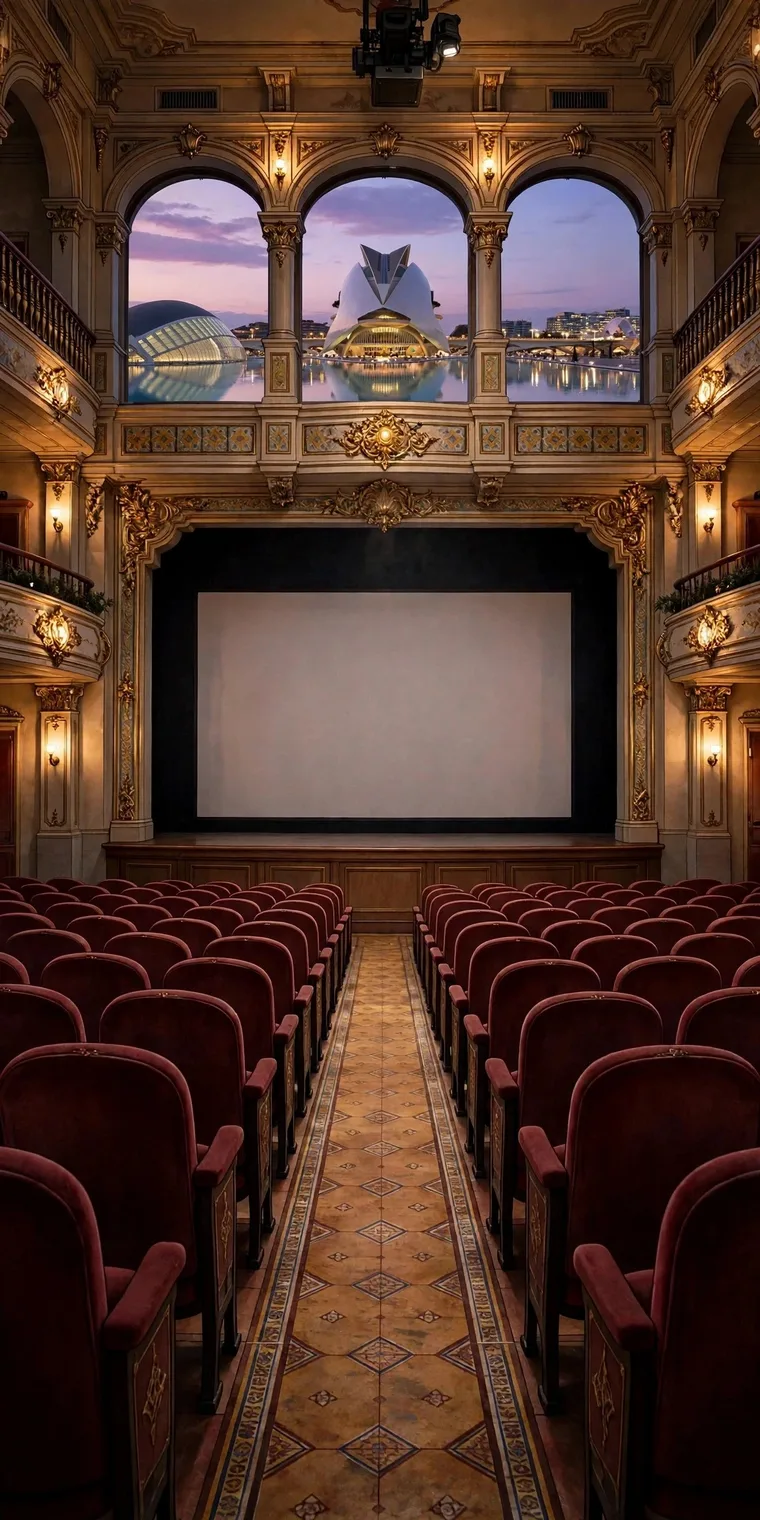
Spanish cinema has a dark twin tradition alongside its comedies and melodramas: a cinema of dreams, cruelty and locked rooms. Its father is Luis Buñuel, an Aragonese who scandalised Paris, was exiled by dictatorship, and made many of his greatest films far from home. Its modern heir is Alejandro Amenábar, a Chilean-born, Madrid-raised director who turned the thriller and horror film into instruments of philosophy. Together they explain why Spain, a country of bright plazas and long lunches, also produces cinema's most unsettling dreams.
The Eye and the Ant: Buñuel Before Exile
Buñuel was born in 1900 in Calanda, in Aragón, famous for the deafening drum processions of Holy Week — hundreds of drummers playing for hours until their hands bleed. He said that sound entered his work for ever: ritual, repetition, a community in trance. Educated by Jesuits in Zaragoza and then in Madrid, where he lived at the Residencia de Estudiantes alongside Federico García Lorca and Salvador Dalí, Buñuel absorbed the two forces that would fight in all his films: strict Catholic order and the desire to blow it up.
In Paris he made, with Dalí, Un Chien Andalou (1929), sixteen minutes that still shock. A razor slices an eye — in reality a dead calf's eye, in cinema history the most famous cut ever made. Ants swarm from a hole in a hand. Pianos carry dead donkeys. There is no plot because plot was the enemy; the two agreed to reject any image that could be rationally explained. L'Âge d'Or (1930) attacked church, state and bourgeois respectability so directly it was banned in France for decades.
Spain, meanwhile, was heading for civil war. His documentary Las Hurdes: Tierra Sin Pan — Land Without Bread (1933), about desperate poverty in Extremadura, was banned by both the Republic it embarrassed and the Franco regime that followed. After the Civil War he could not work in Spain at all. The great middle of his career belongs to Mexico, where Los Olvidados (1950), about street children in Mexico City, won Best Director at Cannes and restored his name.
The Films Franco's Spain Could Not Contain
When Buñuel returned to shoot in Spain, the result detonated. Viridiana (1961), made under official invitation, tells of a novice nun, played by Silvia Pinal, whose Christian charity on her uncle's estate is rewarded with chaos and a beggars' banquet that freezes, for one blasphemous instant, into the composition of the Last Supper. It won the Palme d'Or at Cannes. The Vatican condemned it, Franco's government banned it in Spain and tried to destroy it. Viridiana was not legally shown in Spain until 1977, after Franco's death.
His later French films — Belle de Jour (1967), The Discreet Charm of the Bourgeoisie (1972), which won the Academy Award for Best Foreign Language Film, and That Obscure Object of Desire (1977) — refined the attack into elegance. In Discreet Charm, six friends try repeatedly to sit down to dinner and never manage it, interrupted by soldiers, bishops and dreams within dreams. It is very funny, and completely merciless. Buñuel's targets never changed: a church that had traded faith for power, a bourgeoisie that had traded life for manners, and desire, which obeys neither. Yet the avowed atheist — "Thank God I'm an atheist" is the line attributed to him — remained obsessed with religious questions all his life.
Amenábar: The Thriller as a Question About Death
Amenábar arrived sixty years later, in a democratic Spain hungry for genre cinema that could compete with Hollywood without imitating it. Born in Santiago de Chile in 1972 and brought to Madrid as an infant when his family fled Pinochet, he was already making films while a student at the Complutense University. His debut, Tesis — Thesis (1996), is set in a Madrid film school like his own. A student writing a thesis on audiovisual violence finds a snuff film, and the investigation turns inward, toward her professor and toward the camera itself. Tesis won seven Goyas, including Best Film, and announced a director interested less in gore than in why we watch.
Abre los ojos — Open Your Eyes (1997), with Eduardo Noriega and Penélope Cruz, pushed further: a wealthy young man, disfigured in a car crash, wakes into a life that keeps rewriting itself — dream, virtual-reality afterlife, or madness. Hollywood remade it as Vanilla Sky. Tom Cruise, who starred in that remake, then produced Amenábar's breakthrough, The Others (2001). Set in a shuttered mansion on Jersey, with Nicole Kidman as a mother protecting children who cannot bear light, it is a ghost story built like a Buñuel chamber piece: a closed house, a set of rules, servants who know more than they say, and a revelation that turns the film inside out. It became one of the highest-grossing Spanish films ever made and won eight Goyas, including Best Film.
Then Amenábar changed direction. Mar adentro — The Sea Inside (2004) tells the true story of Ramón Sampedro, a Galician sailor paralysed in a diving accident who campaigned for nearly thirty years for the right to die. Javier Bardem gives one of the great performances in Spanish cinema, mostly from a bed near the Galician coast. The film won the Academy Award for Best Foreign Language Film and fourteen Goyas. Its debates — dignity, family, church and state — were Spain's debates; Spain finally passed a national euthanasia law in 2021. Later films, from Agora (2009) to Mientras dure la guerra (2019), about Unamuno in Salamanca in 1936, show the same habit: take a closed room of history and ask who, inside it, is dreaming.
What Connects Them
Buñuel and Amenábar did not work alike — Amenábar, who also composes his own scores, is a craftsman of suspense where Buñuel was a saboteur of narrative — but the kinship is real. Both distrust the official story told by church and state. Both love the enclosed space where polite rules decay. Both understand that in Spain the past is never past: Buñuel, exiled by a war, spent his life filming its causes; Amenábar's generation grew up in democracy and films the war as inherited memory.
Above all, both treat the dream not as decoration but as evidence. Buñuel's dreams expose what respectable people hide. Amenábar's nested realities ask whether the life we are living is the real one at all. Stand in Calanda when the drums begin, and the line between the two directors feels less like influence than a national trait: in Spain, reality has always been the most surreal proposition of all.
© 2026 InsideRealSpain.com