From Madrid to the World: How Spanish Series Took Over the Screen
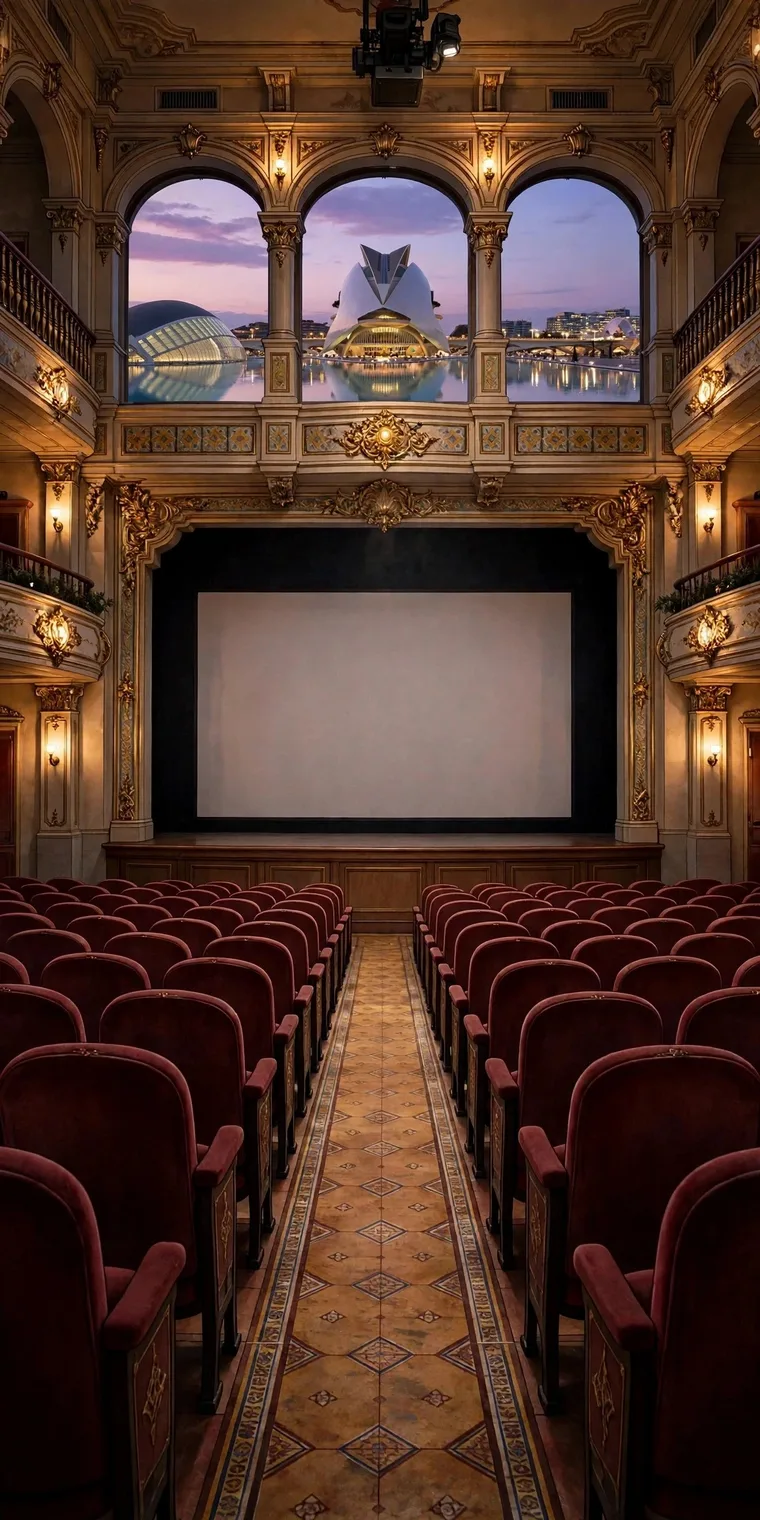
For decades Spanish television was something Spain watched alone. Its soaps and dramas were popular at home, rarely travelled, and were considered too local for anyone else. Then, within five years, viewers from Buenos Aires to Berlin learned to follow subtitles at Spanish speed, dress as Salvador Dalí for Halloween, and argue about Tokyo, Nairobi and the Professor. The Spanish series boom did not just export programmes. It exported a way of telling stories: high emotion, high stakes, cliffhangers without shame, and Madrid itself as a star.
The Heist That Changed Everything
La Casa de Papel — Money Heist — began modestly, as a limited series on Spain's Antena 3 in 2017. Created by Álex Pina, it followed a mysterious Professor, played by Álvaro Morte, who recruits eight thieves named after cities to lock themselves inside the Royal Mint of Spain in Madrid and print their own money, holding hostages and manipulating public opinion as carefully as they handle weapons. The first Spanish run did well, then faded, as domestic series usually do.
Netflix acquired it, recut it into shorter episodes, and released it with almost no promotion in late 2017. Word of mouth did the rest. It became, at the time, the most-watched non-English-language series on the platform. The red jumpsuits and Dalí masks — a perfect piece of design, instantly recognisable and easy to copy — appeared at protests and carnivals around the world, sometimes to the discomfort of a country that knows Dalí was a more complicated figure than a fancy-dress costume. The Italian resistance song "Bella Ciao," sung by the gang, charted again across Europe.
Why did it work? Partly craft: Pina's team, many of whom moved together to later hits, wrote heists as emotional chess, cutting between the Professor's classroom-like planning, the chaos inside, and a police negotiator, Raquel Murillo, whose personal life kept colliding with the case. Partly timing: after the financial crisis, a stylish robbery of a mint — not stealing the public's money, as the gang insists, but printing new money, rather as central banks had done — landed as a fantasy audiences in many countries understood. And partly Spain itself: the series used Madrid landmarks, Spanish directness and a melodramatic intensity that, instead of being smoothed away for export, turned out to be the attraction.
Netflix ordered new parts, the gang returned to rob the Bank of Spain — filmed around real Madrid locations including the Nuevos Ministerios area, with sets standing in for the bank's flooded gold vault — and the story finally closed in 2021. A Korean remake and a spin-off, Berlin, followed. A domestic series that had been cancelled in all but name had become a global franchise.
Boarding School, Cable Cars and Costume Drama
Élite, launched in 2018, proved the boom was not a one-off. Set at Las Encinas, an exclusive private school for the children of Spain's rich, it begins when three scholarship students from a working-class background arrive after their own school collapses — a premise that lets every episode run on class, desire, money and resentment. A murder mystery frames each season, told in flash-forwards to police interviews, a structure borrowed from American prestige drama and filled with very Spanish material: family honour, Catholic guilt, immigration, sexuality and the ferocious importance of appearances.
It is glossy, yes, and deliberately provocative, but its success in Latin America and beyond rests on something more than beautiful uniforms. Spanish series had learned to cast young, diverse ensembles and let them talk like people their age, while older viewers recognised the parents' world of property, influence and quiet corruption underneath.
A different audience was found by Las Chicas del Cable — Cable Girls (2017–2020), Netflix's first Spanish original series. Set in Madrid from 1928, it follows four women who get jobs as switchboard operators at the national telephone company, working in the grand Compañía Telefónica building on Gran Vía — a real landmark, one of Madrid's first skyscrapers. For its heroines the job is not background colour. A wage of one's own, in 1920s Spain, meant a chance to leave a controlling father, a bad marriage or a provincial past. The series mixes romance, crime and workplace drama with the approach of the Civil War darkening its later seasons, and it reminded domestic viewers that Spain's streaming era could also look backwards, to the generation of women whose freedoms were won and then, under Franco, taken away.
Around these three landmarks came a flood: Valeria, La Casa de Papel creator Álex Pina's Sky Rojo, the Basque and Galician crime dramas that showed international audiences a Spain far from Madrid, and Catalan successes that underlined how multilingual the country's television had become.
Why Spain, Why Then?
The boom had practical causes. Spain had a deep bench of writers, actors and technicians trained by decades of daily soaps and prime-time drama, used to producing a lot of television quickly and well. Production costs were lower than in Los Angeles or London. Locations helped: one small country can offer Atlantic cliffs, Mediterranean ports, desert in Almería, snow in the Pyrenees and a capital that can play itself or stand in for half of Europe.
Streaming changed the maths. Once platforms needed content for every market at once, a series made for Spain no longer had to be remade for the world; it could simply be subtitled and dubbed and released everywhere on the same day. Spain also shares a language with some 500 million people, giving a Spanish hit an immediate vast audience across Latin America that a series in most other European languages cannot match — while English-speaking viewers, trained by a decade of subtitled drama, finally joined in.
Something cultural travelled too. Spanish series rarely pretend their characters are cool in the American sense of holding everything back. They shout, confess, betray, forgive and fall in love at full volume, often within the same episode. For viewers raised on restrained prestige television, that emotional temperature was not a flaw. It was the point.
The boom has cooled from its first frenzy, as booms do; platforms order less, and not every Spanish premiere now becomes a phenomenon. But the change is permanent. Madrid production offices pitch to the world by default, Spanish actors open films in three languages, and a generation of viewers abroad now hears Spanish not as a foreign language but as the sound of a story about to accelerate. The country that once dubbed everyone else's films now, finally, makes the programmes everyone else is dubbing.
© 2026 InsideRealSpain.com