Burning the Beautiful: Las Fallas and the Battles of Moors and Christians
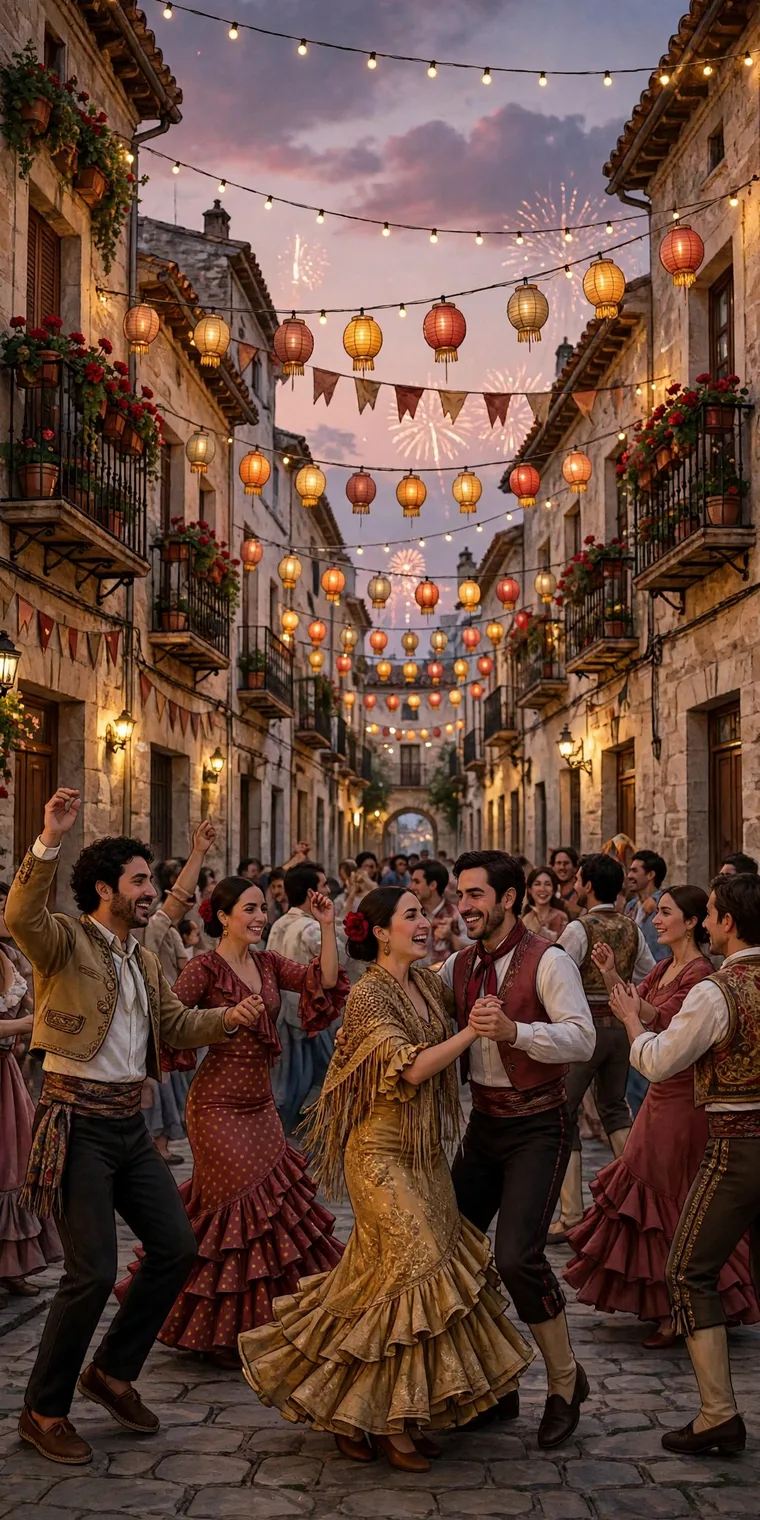
There is a special kind of madness in spending a year building something magnificent for the sole purpose of setting it on fire. Valencia does it every March on an industrial scale. Las Fallas — the falles in Valencian — is a festival of satire, gunpowder, flowers and flame that culminates on the night of 19 March, when hundreds of enormous sculptural monuments burn simultaneously while firefighters hose down the surrounding buildings. Down the Mediterranean coast, the same region stages an older argument with the past: the Moros y Cristianos festivals, in which whole towns divide into Moors and Christians, dress in spectacular embroidered uniforms, and re-enact the medieval battles for the Iberian Peninsula. Together, the two traditions show the Valencian character at full strength: artistic, explosive, competitive, and incapable of doing anything by halves.
A Year of Work for One Night of Fire
A falla is two things at once: the festival, and the monument at its centre. Each neighbourhood commission — around 380 in Valencia — spends the year raising money, running a social clubhouse called a casal, and commissioning an artist to build its monument. The monuments, made largely from expanded polystyrene, wood and papier-mâché, can rise higher than a four-storey building and cost, in the top Especial category, several hundred thousand euros. Their figures — ninots — are caricatures: plump, gleeful, grotesque sculptures that satirise politicians, celebrities, corruption, housing prices, football and bureaucracy. No one is spared, and being mocked well is almost an honour.
The satire explains why the burning is not vandalism but the point. Fallas grew, by the most widely told account, from carpenters burning their wooden lamp-stands on the eve of Saint Joseph's Day, their patron, on 19 March. By the nineteenth century the bonfires had acquired effigies, then full-scale monuments. The modern festival keeps that DNA: the city builds its grievances into beautiful effigies, awards prizes on 17 March — and then, two nights later, burns every single one. Only the ninot voted the year's favourite, the ninot indultat, is pardoned for the Fallas Museum, where a century of survivors charts Valencia's changing obsessions.
The burning, La Cremà, is sequenced with municipal precision. Children's monuments burn around ten at night, the great fallas from midnight, and the city hall monument last. Firefighters stand wetted down inside the safety perimeter, igniting the fuses and playing hoses on facades. As a thirty-metre monument collapses into its own bonfire, you understand that Valencia has turned destruction into civic art. The falleras weep as their year's work burns. Within weeks, the commissions are sketching next year's monument.
Gunpowder at Breakfast
If fire is Fallas' ending, gunpowder is its soundtrack. Every day from 1 to 19 March, at two in the afternoon, the Plaza del Ayuntamiento hosts the mascletà — a rhythmic, concussive firework display in which the point is not colour but sound: a crescendo of explosions felt in your sternum, your teeth and the soles of your feet. Valencians speak of master pyrotechnicians as other cities speak of conductors, and a great mascletà ends with a terremoto — an earthquake finale — that sets off car alarms streets away. Earplugs are openly sold, and quietly scorned.
Against the noise, the festival sets one of its gentlest rituals. On 17 and 18 March, tens of thousands of falleras in full traditional dress process carrying flowers for the Ofrenda, the offering to Our Lady of the Forsaken, Valencia's patron. The bouquets are worked into the vast frame of the Virgin in the plaza, forming her mantle flower by flower. The dresses deserve attention: silk skirts from Valencia's historic silk industry, lace mantillas, coiled hairstyles with gold combs. During the Ofrenda the streets become a slow river of silk moving through a city that smells of gunpowder and oranges. At the centre stand the Fallera Mayor and her court, elected for the year — a role understood inside Valencia as civic office, keenly contested and taken with complete seriousness.
Moors and Christians: History as Street Theatre
More than 150 towns in the Valencian Community, Murcia and eastern Andalusia celebrate Moros y Cristianos, mostly in spring and summer, commemorating — in highly embroidered form — the centuries of conflict between Muslim and Christian powers in medieval Spain. The grandest celebration is Alcoy's, around Saint George's Day in late April, staged across three days with a cast of thousands.
Townspeople belong to comparsas or filaes — companies — each assigned to the Moorish or Christian side, each with its own uniform, banner and commissioned march. A costume in Alcoy can cost more than a wedding outfit: velvet and plumed helmets on the Christian side; turbans, scimitars and silks on the Moorish side. On the day of the Entradas, the companies parade for hours, led by captains on horseback, with bands playing and standard-bearers spinning enormous flags. The Spanish word for the required bearing is planta: you march as if the street were honoured to have you.
The battles are ritualised sieges. Ambassadors on horseback deliver formal, versified ultimatums — the embajadas — demanding the surrender of a castle erected in the main square. Negotiations fail with great eloquence, and then the muskets open up: the alardo is a rolling street battle fought with blank-firing arquebuses whose smoke hangs over the town for days. The Christians lose the castle on the first battle day — the Moors always take it — and win it back on the last, because history here is allowed one guaranteed ending. Children grow up knowing which side their family marches on.
These are not shows put on for visitors. They are how towns from Villajoyosa — whose festival recalls a real 1538 defence against a Berber attack, complete with a seaborne landing — to Elda and Ontinyent write their origin stories in public, in silk and gunpowder. Critics occasionally ask whether celebrating Christian victory over Muslims sits comfortably in modern Spain. The towns' answer is visible in the festivals: the Moorish entries are usually the most lavish and applauded, and the affair functions less as triumphalism than as an annual census of belonging — everybody marches, on one side or the other.
Between the burning monuments of March and the embattled castles of spring, the Valencian coast makes a single claim: past and present are both best honoured loudly, beautifully, and together — and if a year's art must burn to prove the city is alive enough to make more, Valencia will light the match itself.
© 2026 InsideRealSpain.com