Eight Minutes in Pamplona, One Hour in Buñol: Spain's Fiestas of Pure Adrenaline
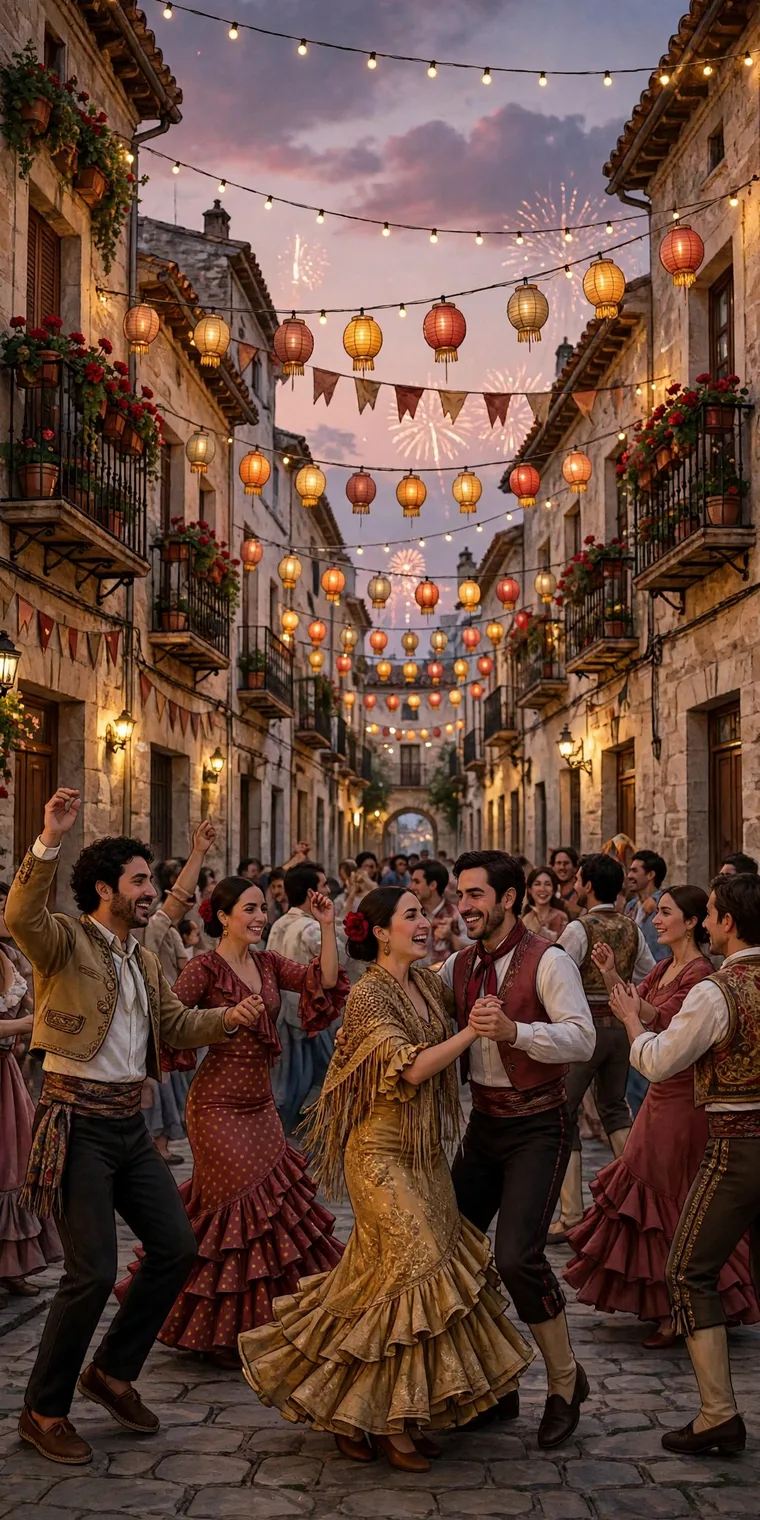
At 7:55 on a July morning in Pamplona, the runners on Calle Estafeta are jumping on the spot, singing — for the third time — to a small image of Saint Fermín set into the wall, asking the saint to guide and bless them. At eight o'clock a rocket goes up. The corral gates open, six fighting bulls come out with six steers among them, and for two to three minutes — if all goes well — several thousand people discover whether their nerve, their shoes and their luck are in working order. Five hundred kilometres south, on the last Wednesday of August, Buñol stages Spain's other great controlled catastrophe: La Tomatina, an hour-long tomato fight involving some twenty thousand people and over a hundred tonnes of overripe fruit. One festival is genuinely dangerous. The other merely looks it. Together they explain Spain's appetite for surrendering, briefly and on schedule, to glorious disorder.
Pamplona: The Encierro and What Surrounds It
The festival is San Fermín, held from 6 to 14 July in honour of Pamplona's patron saint, and the encierro is only its most famous appointment. The week begins at noon on 6 July with the chupinazo, a rocket fired from the city hall balcony over a plaza packed in white clothes and red scarves, held aloft until that moment and then tied around the neck for the duration. Until the closing song, the "Pobre de mí," sung by candlelight on the 14th, Pamplona runs on a different clock: concerts in the morning, giants and big-head figures parading daily, and a river of kalimotxo — red wine and cola — keeping the old town awake far later than prudence would advise.
The encierro is 848 metres long, from the corral on Calle Santo Domingo, along Mercaderes and its infamous curve into Estafeta, and down to the bullring. It exists for a practical reason that predates tourism: the bulls that fight in the afternoon had to be moved to the ring, and herders ran with them long before the run became a rite of passage. Modern organisation overlays that tradition with double barriers, pastores with long sticks who keep the herd moving, medical posts every few metres, and rules enforced by police: no running under eighteen, no touching the bulls, no running drunk.
The honest facts need stating plainly. The encierro is dangerous. Since records began, sixteen runners have been killed, most recently in 2009, and every year people are gored or trampled. Experienced local corredores, who choose a single stretch to sprint just ahead of the horns, will tell you the real skill is falling correctly: if you go down, stay down, curled, hands over your head, until the herd has passed. Ernest Hemingway, whose 1926 novel The Sun Also Rises made San Fermín world famous, romanticised the run; the locals who organise it are notably less romantic, and more respectful of half-tonne animals bred for aggression.
None of this is to say the run should not be watched — from behind the barriers, with a coffee afterwards in the Plaza del Castillo. The procession on 7 July and the morning parades give the festival a depth its international image rarely credits. San Fermín is a Navarrese family fiesta that the world gate-crashed; Pamplona still treats the locals' version as the real one.
Buñol: An Hour of Red
La Tomatina makes no claims to solemnity at all. Buñol is a small industrial town west of Valencia, and its festival, held within its week of patronal celebrations for Saint Louis Bertrand and Our Lady of Sorrows, is by common consent rooted in accident: in 1945, by the town's own account, a scuffle during a parade knocked over a vegetable stall, bystanders began pelting each other with tomatoes, the crowd remembered how much fun it had been, and returned the following year with tomatoes of their own. The authorities banned it on and off through the 1950s — one year residents staged a mock tomato burial in protest — before giving in and, eventually, organising it properly.
Since 2013 the event has been ticketed and capped at around twenty thousand participants, which has made it safer and more pleasant. Trucks loaded with tomatoes — grown in Extremadura for the purpose, too acidic for the table — roll down the main street from about eleven, after the palo jabón, in which contestants try to shin up a greased pole to knock down a ham. A water cannon signals the start. For one hour, the street becomes a red river ankle-deep in pulp. The rules are few: squash the tomato before you throw it, throw nothing else, stop when the second cannon sounds. Goggles are wise; old white clothes are traditional and rarely worn again.
The clean-up is half the wonder. Within a couple of hours the square is hosed down by fire crews and an army of municipal workers, locals turn hoses and buckets on visitors, and the citric acid in the tomato juice leaves Buñol's streets, by local insistence, cleaner than they were before. Where the encierro tests nerve against genuine risk, Tomatina is risk's carnival parody — total mess, total exhaustion, almost nobody hurt worse than a slip and a soaking.
What links Pamplona and Buñol is not danger, then, but design. Both festivals compress their chaos into a fixed time and place, surround it with ritual, music, food and family events, and then — this is the Spanish part — sit down to lunch as if nothing had happened. Disorder here is not the opposite of order. It is one of its scheduled products, made by towns that trust themselves to turn the tap off again. The runner tying his red scarf and the student hosing tomato pulp out of her ears are taking part in the same national proposition: that a life lived entirely sensibly is missing something, and that once a year, at eight in the morning or eleven, a town should arrange to provide it.
© 2026 InsideRealSpain.com