Fire on the Beach and a Fiesta for Every Month: Living by Spain's Festival Calendar
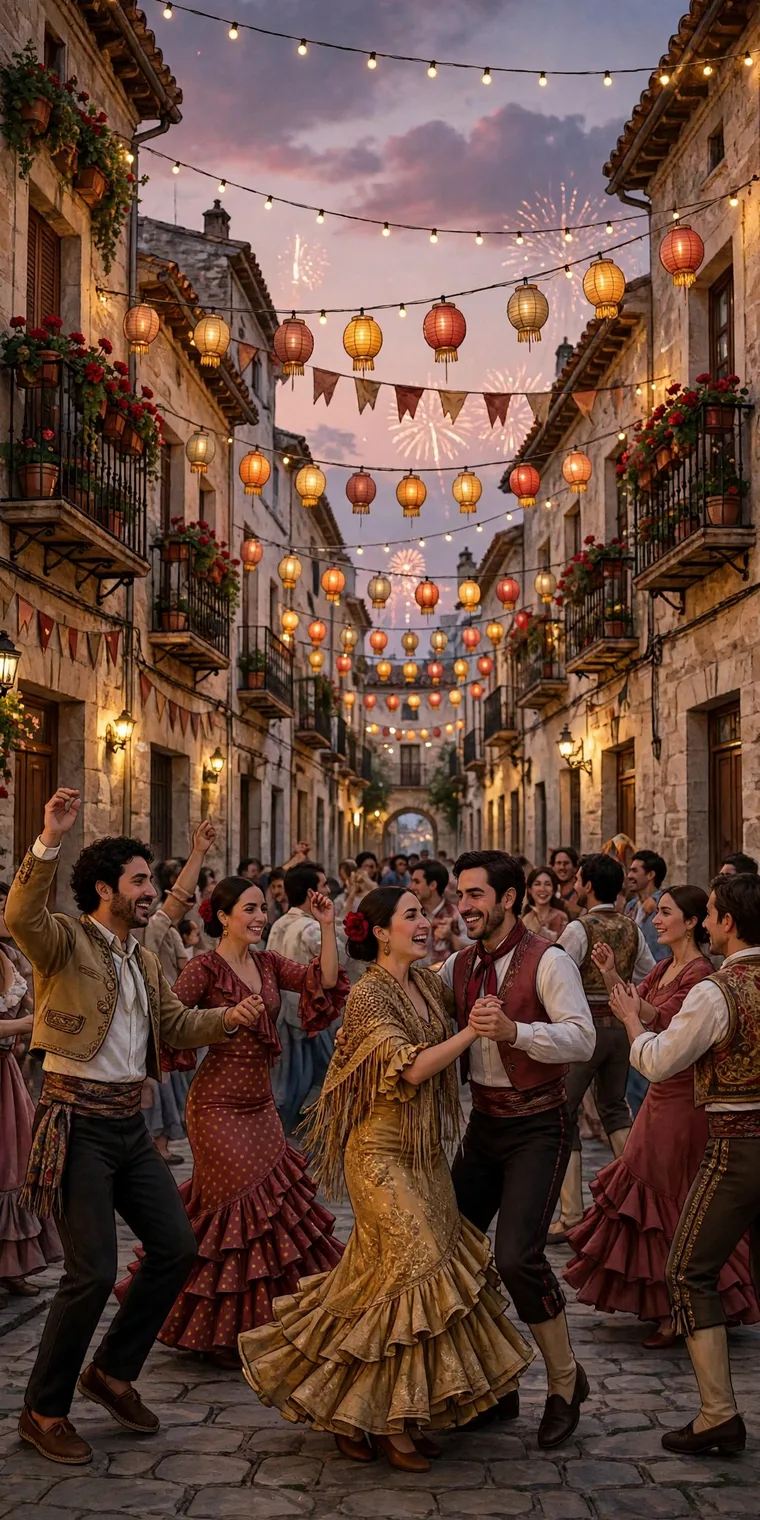
On the night of 23 June, the eve of the feast of Saint John, the beaches of Spain fill with bonfires. In Alicante, where the Hogueras de San Juan are the city's official great festival, satirical monuments in the style of Valencia's Fallas burn at midnight, after which firefighters turn their hoses on the crowd in the beloved soaking called the banyà. In A Coruña, thousands light hundreds of smaller fires along the Orzán and Riazor beaches. All along both coasts, families build their own hoguera from old furniture and driftwood, cook sardines over embers, feed written lists of things they want to leave behind to the flames — and at midnight, by a custom nobody needs explained, walk into the sea. San Juan is Spain's midsummer, and the perfect emblem of a country that has organised its year so that a festival is never more than a few weeks away.
The Night of Fire and Water
San Juan's power comes from its simplicity. Most great fiestas belong to a city or a brotherhood; San Juan belongs to whoever shows up with wood. Its ingredients are the two oldest festival elements there are — fire and water. You jump over the flames for luck: three times in some places, seven or nine in others. You bathe at midnight, or simply wet your feet, for health through the year. In Galicia, the night is the noite das meigas, the night of the witches, when the queimada — a fiery punch of orujo spirit, sugar and lemon, prepared with a spoken spell — is made to drive off evil spirits, and grilled sardines mark the season so firmly that Galicians say that by San Juan the sardine drips fat.
Alicante's version is the grand exception. Founded in its modern form in 1928, modelled on Las Fallas, the Hogueras build more than a hundred large monuments across the city, elect a Bellea del Foc — the Beauty of the Fire — hold mascletàs that connoisseurs rank with Valencia's own, and burn everything on the night of the 24th under firework palmeras over the harbour. It is both a copy and a rival: Valencians will tell you where the idea came from, Alicantinos will tell you their summer version does it better, and the honest visitor attends both, in March and in June, and declines to adjudicate.
A Year That Never Stands Still
Stand back from San Juan and the shape of the whole year appears. Spain's festival calendar is not a list of events; it is a load-bearing structure of Spanish life, running in every month. January opens with the Three Kings parades on 5 January — the Cabalgatas, when Melchior, Gaspar and Balthazar shower towns with sweets and deliver the presents that traditionally matter more than Christmas Day. February is carnival: Cádiz and Santa Cruz de Tenerife, whose carnival is one of the largest in the world, lead a national week of disguise before Lent.
March brings Las Fallas; spring delivers Semana Santa, the Feria de Abril two weeks after it, Alcoy's Moros y Cristianos, Córdoba's May of courtyards and fairs, and Rocío — the great pilgrimage at Pentecost, when a million people travel on foot, on horseback and in flower-decked wagons to a shrine village in the Doñana marshes. June has Corpus Christi and then San Juan. July brings San Fermín and a tide of village fiestas patronales as every town takes its summer turn: procession, orchestra in the plaza, dancing until the small hours for grandparents and teenagers alike. August still finds room for La Tomatina, and the Semana Grande celebrations in Bilbao and San Sebastián. September's vendimia festivals celebrate the grape harvest in Jerez and Logroño. October has Zaragoza's Fiestas del Pilar, with flower offerings on a scale even Valencia respects. November quietens before December rebuilds to the national ritual of the twelve grapes eaten to the twelve midnight bells on New Year's Eve.
Spain has thousands of local festivals; only a few dozen hold the rank of Fiestas of International Tourist Interest, and that list misses the point. The fiesta that matters most to a Spaniard is almost never the famous one. It is the fiesta of their pueblo — the town their family comes from, however long they have lived in Madrid or Barcelona — and the great August migration homewards is timed to it as faithfully as Christmas.
Why the Calendar Works
Three things keep the system alive. The first is ownership: these festivals are made by their participants — brotherhoods, falla commissions, comparsas, festival committees, groups of friends called peñas — not staged for audiences. The second is rhythm: work and fiesta are not opposites in Spain but alternating beats, and a town that has danced until dawn for its patron expects, without resentment, to be back at work the morning after the extra local holiday it has almost certainly granted itself. The third is return. Festivals are when emigrants come home, when cousins are seen, when the old are honoured and the young are presented, formally or not, to the community. A fiesta is a census conducted by dancing.
For the visitor, the practical lesson is to stop asking which single festival to see, and start asking which Spain you want. Come for fire in March or June, for satire in February, for silence in spring, for dancing in April and for tomatoes in August; then go back in a different season and find the same country in a completely different mood, in a different costume, beating a different drum. Spain does not have a festival season. Spain is the festival, season after season — and the bonfires on the beach at San Juan, with everyone's feet in the sea and last year's regrets going up in smoke, are as good a place as any to make your first promise to return.
© 2026 InsideRealSpain.com