Where Andalusia Dances: Seville's Feria de Abril and the Wit of Cádiz Carnival
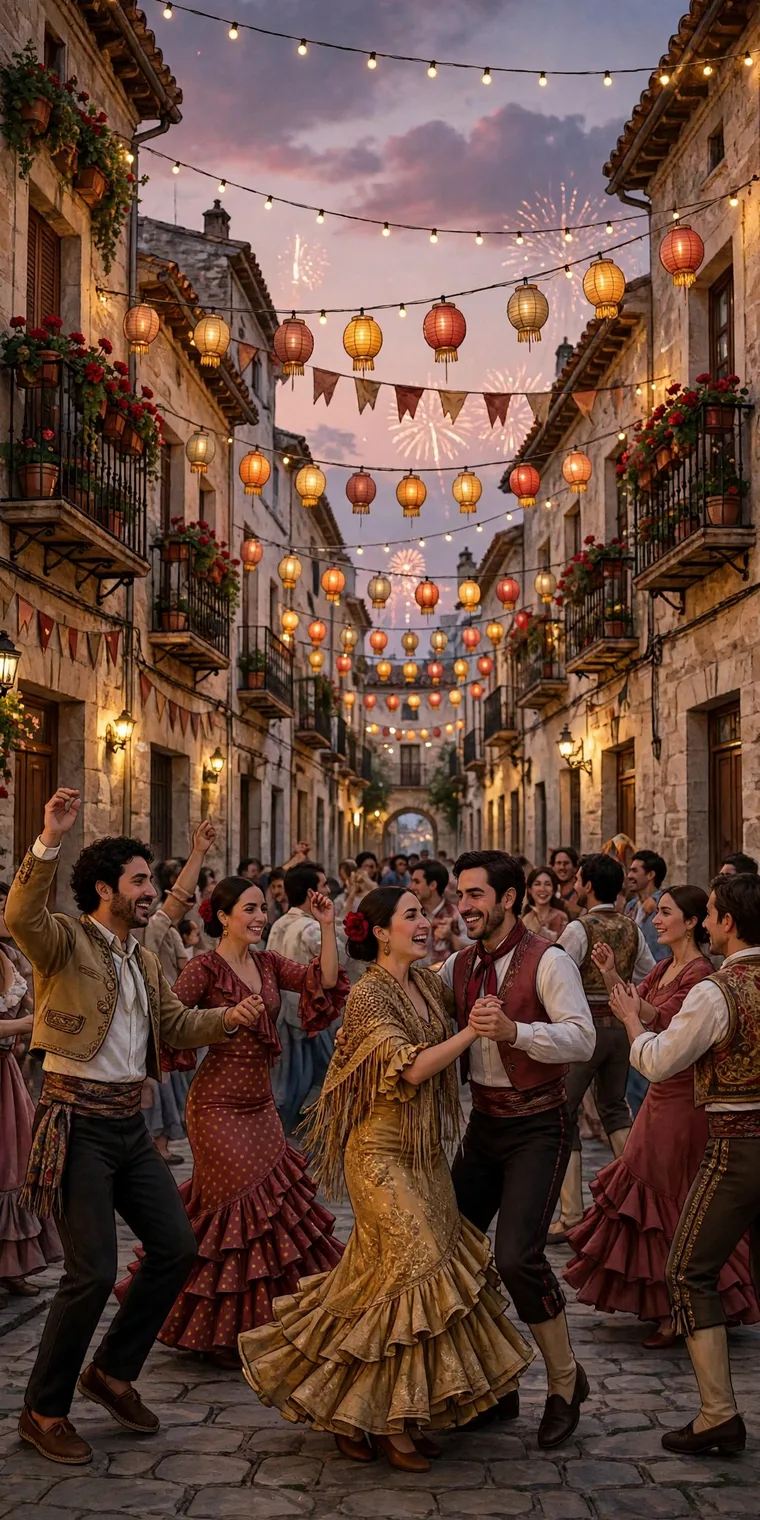
Seville holds its two greatest celebrations back to back. First comes Semana Santa, all candlelight and silence. Then, exactly two weeks after Easter Sunday, the same streets surrender to the Feria de Abril, the April Fair: a week of dancing, horses, sherry and colour that is Holy Week's mirror image and, locals insist, its necessary reward. Two hundred kilometres of winding road away — or a straight February train ride — Cádiz offers Andalusia's other great answer to winter: a carnival that replaces Seville's elegance with satire so sharp, funny and musical that Spaniards who have never set foot in the city watch its song contests on television the way others watch football. Between the fair and the carnival, you get the full Andalusian range: beauty taken seriously, and power taken apart with a grin.
The Fair That Is a Small City
The Feria began modestly in 1847 as a livestock fair, proposed by two city councillors and approved by Queen Isabella II. The cattle are long gone from the centre of the event, though horses remain, and what replaced them is a temporary city of more than a thousand striped canvas tents, the casetas, laid out on a dedicated fairground, the Real de la Feria, in the Los Remedios district across the river from the old town. On the Monday night of the fair, the alumbrao — the switching on of hundreds of thousands of bulbs on the fairground's monumental gateway — opens the week, and Seville at night becomes, for seven days, the brightest place in Spain.
Most casetas are private. This is the fact visitors must absorb first, ideally before they arrive in their best clothes expecting to walk in anywhere. Families, groups of friends, companies, professional colleges and brotherhoods — the same hermandades from Holy Week, in a very different mood — maintain their tents year after year, with a kitchen, a bar, a small dance floor and a roster of members and invited guests. A minority of casetas, run by the city and the districts, are public, and they are generous, crowded and entirely sufficient for a first Feria. But the fair's real social engine is invitation: Sevillians spend the week moving between casetas as guests, and a good fair is measured in introductions.
Inside, the format rarely varies and never needs to. There is fino sherry and manzanilla from Sanlúcar, served cold, increasingly mixed with lemonade as the rebujito — a modern fair invention that traditionalists affected to deplore and then adopted. There are plates of fried fish, sliced jamón, tortilla and prawns. And there is dancing: the sevillanas, the fair's four-part dance, related to flamenco but social, structured and learned by virtually every Sevillian child. Couples — women in the famous ruffled flamenco dresses, the trajes de flamenca, in colours that shift with each year's fashion; men in suits or in the short jacket and boots of the daytime horse parade — dance the four coplas in rotation, take a break for a drink and a conversation, and begin again. The dancing runs from early afternoon until deep in the night.
By day, the Feria belongs to horses. The paseo de caballos brings riders in traditional dress and horse-drawn carriages in every state of polish through the fairground streets, and for many families this, not the night, is the fair's centre. Add the bullfights at the Maestranza — the Feria cycle is among the most important of the Spanish season — and the attractions of the Calle del Infierno, the fairground's ride-filled "Hell Street," and the week acquires its peculiar completeness: religion drained away, appetite, vanity, horsemanship and dance put firmly in its place, all of it performed by a city that dresses as if national pride depended on it.
Cádiz: Carnival with Teeth
If Seville's fair is about looking magnificent, Cádiz carnival is about sounding devastating. Cádiz is Spain's oldest continuously inhabited city, a near-island of white stone at the Atlantic edge of Andalusia, famous for a dry, rapid-fire humour locals call guasa that treats pomposity as a civic offence. Its carnival, suppressed under the Franco regime — when it survived semi-disguised as a summer "typical festivals" celebration — returned with democracy and now runs for roughly ten days around February, filling the old town with costumed crowds, street choirs and improvised stages on every corner.
The carnival's heart is a contest: the Concurso Oficial de Agrupaciones Carnavalescas, held over several weeks at the Gran Teatro Falla and followed across Spain. The competing groups are the carnival's glory. Chirigotas are costumed comedy troupes whose songs pile joke upon pun about politics, royalty, football, television and the mayor. Comparsas are their dramatic cousins, more lyrical and poetic, singing about love, Cádiz and injustice with close harmonies and genuine melancholy. Coros arrive with a small orchestra of guitars, lutes and bandurrias and open the street performances on their travelling stages. Cuartetos perform comic theatre with a cast of four — sometimes, in the genre's cheerful disregard for arithmetic, three or five. The best lyrics are quoted in Cádiz all year.
What makes the whole thing unmistakably gaditano is that the satire does not stop at the theatre door. Illegal chirigotas — "illegal" meaning simply unofficial — perform in the streets in homemade costumes, illegal in nothing but paperwork, and their jokes are usually the rudest and funniest of all. Whole families appear in matching homemade disguises; groups of friends spend months building a single visual gag. The carnival's humour is topical to the hour, sometimes unkind, and sustained by an understanding the whole city shares: for these days, everyone is fair game, starting with the powerful and cheerfully including Cádiz itself.
The two festivals correct each other. The Feria shows Andalusia's genius for ceremony, continuity and dressing the present in its finest clothes; Cádiz shows its genius for saying, in perfect harmony and appalling puns, exactly what everyone was thinking. A visitor who does only one will leave with half the region. Do the fair in April, when the orange blossom is still on Seville's trees, and Cádiz in February with a warm coat against the Atlantic wind — and between the rebujito at two in the morning and a chirigota dismantling the government outside a bar at three, you will have heard Andalusia argue, beautifully, both sides of its own character.
© 2026 InsideRealSpain.com