When the Country Holds Its Breath: El Clásico and La Liga as Spain's Secular Liturgy
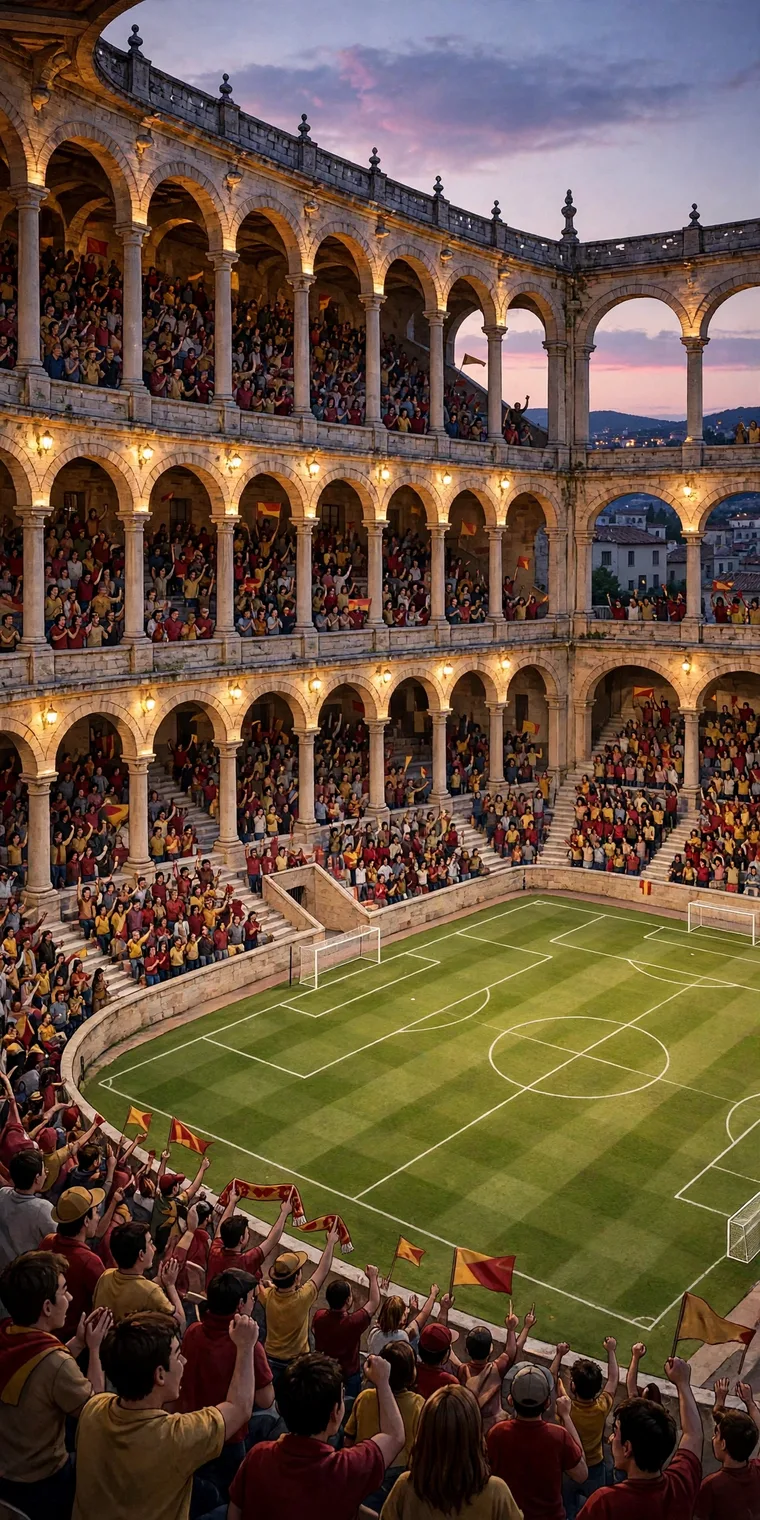
There are evenings in Spain when the calendar is written by a fixture list. A bar owner in Seville checks it before taking a wedding booking. A taxi driver in Madrid knows whether the city will be euphoric or inconsolable by midnight. That fixture is El Clásico — Real Madrid against FC Barcelona — and for a few hours, a few times a season, it stops Spain, divides it in two, and puts it back together for Monday.
Outsiders describe it as a football match. Inside Spain, that feels thin. It is ninety minutes, but also history, language, money, regional identity and family loyalty compressed into one night. To understand La Liga, founded in 1929, know that its greatest product is not just quality. It is meaning.
A Rivalry That Was Never Only About Football
Real Madrid was founded in 1902, Barcelona in 1899 by Swiss businessman Joan Gamper. From the start they accrued symbolism they did not entirely choose. Madrid, the capital, came to be associated with central power and the establishment. Barcelona, capital of Catalonia, presented itself as més que un club — more than a club — a motto that became a statement of cultural survival during Francisco Franco's dictatorship (1939–1975), when Catalan public identity was suppressed and Camp Nou was one of the few large spaces where Catalan could be heard en masse.
That history needs nuance, and Spaniards argue over it constantly. Madrid supporters reject the label of the regime's team, pointing to a fanbase that is global and diverse. Not every Barça fan is a Catalan nationalist, and not every Catalan supports Barça — Espanyol, the city's other top-flight club, proves the point. Other rivalries carry their own charges: the Seville derby between Real Betis and Sevilla, the Basque derby between Athletic Bilbao and Real Sociedad. El Clásico is different because it exports an internal Spanish conversation to the entire world.
The football has justified the attention. From 2009 to 2018, Pep Guardiola's Barcelona of Lionel Messi, Xavi Hernández and Andrés Iniesta confronted the Madrid of Cristiano Ronaldo, Sergio Ramos and Luka Modrić in a golden age. Messi scored 26 goals in the fixture, Ronaldo 18. Barcelona's 5-0 win in November 2010 and the frantic cup and Champions League clashes of spring 2011 set a standard Spain still measures itself against.
The fixture renews itself because the models keep reversing. Madrid has leaned into signing coveted young stars — Vinícius Júnior, Jude Bellingham, Kylian Mbappé. Barcelona, financially constrained after severe debt, has leaned on La Masia, producing Lamine Yamal, Pau Cubarsí and Gavi, teenagers asked to carry an idea: possession, pressing, technical courage in small spaces. When Yamal scores, the argument is never just about a winger. It is about whether beauty built at home can beat power bought at the top of the market. Next season someone will argue the opposite. That reversal is the point.
La Liga Beyond the Big Two
Reduce La Liga to two clubs and you misunderstand Spain.
Atlético de Madrid, under Diego Simeone since 2011, built a third pole through organisation, intensity and a working-class identity. Its league titles in 2014 and 2021, won against the financial gravity of the big two, are admired because they were not supposed to happen. Valencia's Mestalla, opened in 1923, still produces a wall of noise. Sevilla has won the Europa League seven times. Real Betis fills the Benito Villamarín with more than 50,000 people for a club that for decades defined loyalty without trophies. In Pamplona, Girona and San Sebastián, the chant and the pre-match food change — a bocadillo de calamares near the Bernabéu, pintxos in the Basque Country — but the function is the same: a weekly affirmation of place.
La Liga is also an economic argument. Television income was for years distributed far more unequally than in England, reinforcing the big two. Centralised selling in 2015 narrowed, but did not erase, the gap. Spanish clubs still sell talent to the Premier League and develop their own, producing a football education that is tactically literate, technically refined, and expert at controlling rhythm. Spain's European record over twenty years is no accident.
The costs are discussed openly. Late kick-offs for global television, ticket prices that strain younger fans, and stadiums rebuilt as entertainment businesses — the remodelled Bernabéu, Barcelona's vast, delayed Camp Nou rebuild — sit uneasily beside the neighbourhood institution a club should also be.
The Night Itself
On Clásico night the work starts early, and it is social before it is sporting. Bars reserve tables days in advance. In mixed cities — and most are mixed, with Madrid fans in Barcelona and Barça fans in every Andalusian town — families negotiate who sits where and who may gloat, and for how long. WhatsApp groups dormant since the last fixture flare with leaked line-ups and protective pessimism: hoy perdemos seguro, we will definitely lose today, said by people who believe no such thing.
For two hours the country conducts its argument in public. Momentum in a Clásico lies. Dominate for twenty minutes, miss a chance, concede on one transition, and the psychological weather changes entirely. Players who have performed in derbies in Buenos Aires, Manchester and Milan say this one is different — not necessarily louder, but more scrutinised. Every touch is replayed, framed and memed before breakfast.
When it ends, Spain exhales. Madrid fans drift towards Cibeles, Barcelona fans towards Canaletes on La Rambla, as they have for generations. Bars empty slowly, strangers finish the half-time argument, a small bet is settled — usually the next round or a lunch. Then life resumes in a way that surprises visitors expecting civil war. The losing postman still delivers to the winning baker.
That containment is the most Spanish thing about it. El Clásico does not resolve its questions about centre and periphery, money and academy, power and style. It rehearses them, beautifully and at elite speed, and schedules the next rehearsal. Between those peaks, La Liga does the quieter work: keeping grounds full, producing another teenage midfielder nobody abroad has heard of yet, arguing about VAR on a Monday night as if civilisation depended on it.
Watch a Clásico in a neighbourhood bar, not a tourist sports pub. Read the room before picking a side. You will learn more about Spain in two hours — its humour, regional pride, and ability to hold fierce disagreement inside a shared ritual — than in any museum. The football, if you are lucky, will be extraordinary. The country around it always is.
© 2026 InsideRealSpain.com