The Balearics Beyond the Beach Towel: Tramuntana Trails, Menorcan Calas, Ibiza's Old Soul and Formentera's Quiet
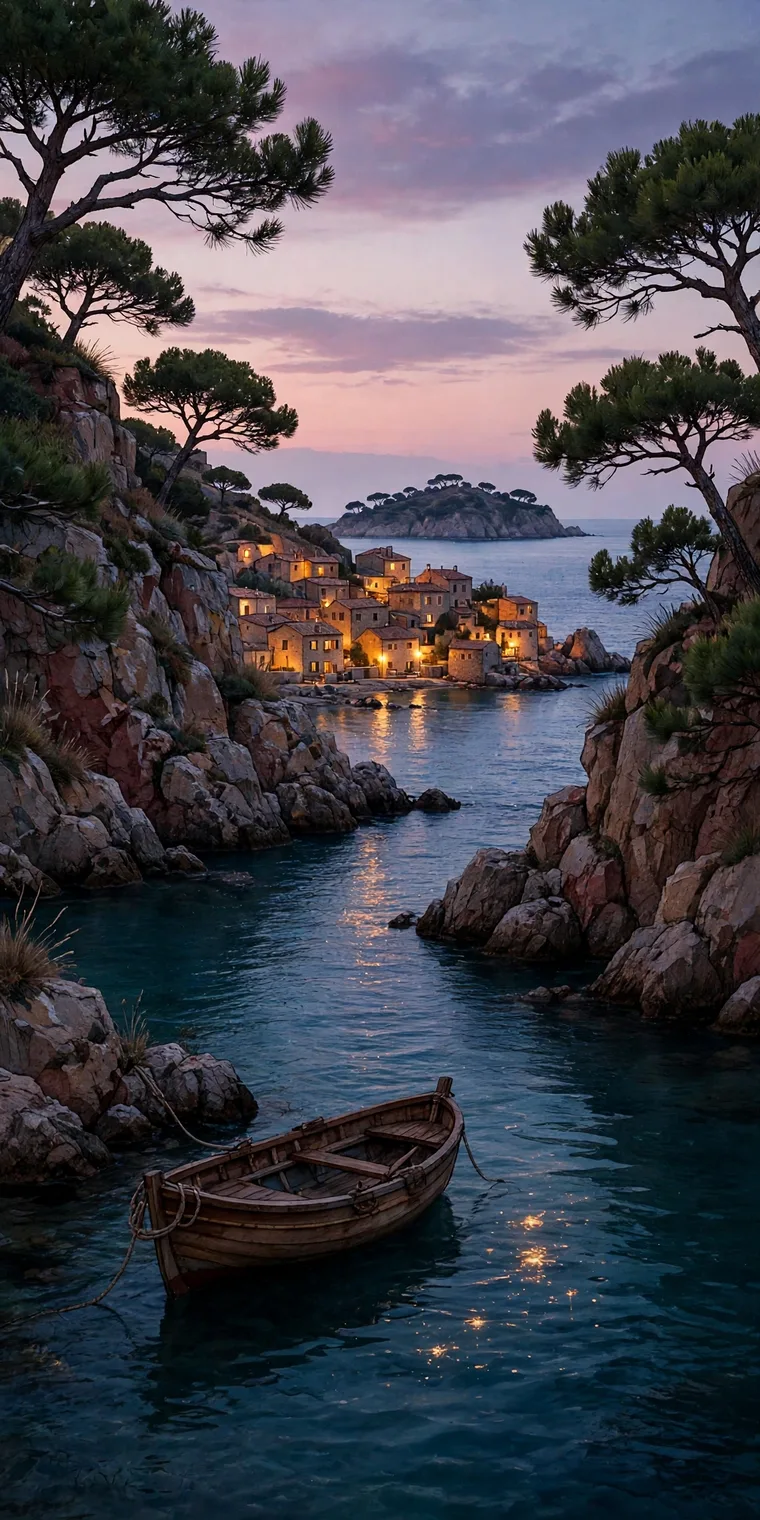
There is a version of the Balearic Islands that most visitors never leave: the hotel pool, the beach club, the sunset photograph taken from the same terrace as everyone else. It is not false — the water really is that clear — but it is incomplete. Mallorca, Menorca, Ibiza and Formentera share the same Mediterranean, yet each keeps a stubbornly different character. To understand the archipelago, walk away from the towel: uphill, inland and, in Ibiza's case, upward into history.
Mallorca: A Mountain Range That Changes Everything
Mallorca's defining feature is not a beach at all. It is the Serra de Tramuntana, the limestone range running ninety kilometres along the northwest coast, rising to Puig Major at 1,445 metres. UNESCO inscribed it as a World Heritage cultural landscape in 2011, not simply for its scenery but for what people built into it: dry-stone terraces climbing impossible slopes, ancient olive groves, irrigation channels and estates known as possessions.
Walk any section of the GR221, the Ruta de Pedra en Sec — the Dry Stone Route — and the landscape explains itself. The path links villages a world apart from Palma's crowds: Deià, where poet Robert Graves lived and is buried above the sea; Valldemossa, where Chopin and George Sand spent their unhappy winter of 1838-39; Sóller, reached by the wooden train from Palma that has run since 1913.
The Tramuntana also protects Mallorca from its own reputation. Resorts cluster in the south and east because the northwest is too steep and protected to build at scale. The road to Sa Calobra twists through a collar of rock known as Nus de Sa Corbata — the tie knot — to the Torrent de Pareis gorge. Cap de Formentor, the northern tip, now has summer traffic restrictions. Palma deserves more than a day trip: La Seu, its Gothic cathedral, rises directly from the sea wall.
Menorca: The Biosphere in Miniature
If Mallorca is the grand elder, Menorca is the quiet conservationist. The whole island was declared a UNESCO Biosphere Reserve in 1993, and the designation still shapes decisions about building and coastline protection. Menorca is divided geologically: the rugged, reddish north, and the pale limestone south, cut by ravines called barrancs that run down to the famous calas.
Those calas are the island's signature: small, pine-fringed coves of white sand and water in improbable shades of turquoise — Cala Macarella, Cala Turqueta, Cala Mitjana. In July and August they fill by mid-morning. The local answer is to walk. The Camí de Cavalls, the historic bridle path circling the island for 185 kilometres, was reopened in full after decades of dispute. Walk a stage of it, from Cala Galdana to Santo Tomás or around Albufera des Grau natural park, and you will find coves with six people in them, in August.
Menorca's depth is archaeological too. It preserves an extraordinary density of Talayotic monuments: taulas, mysterious T-shaped stone pillars found nowhere else on earth; navetas, boat-shaped burial chambers such as the Naveta des Tudons, over three thousand years old; and villages like Trepucó. UNESCO added these sites to the World Heritage list in 2023. Add the British legacy — Georgian architecture in Maó, gin distilled by the harbour — and Menorca becomes a place where restraint is an identity. Order caldereta de langosta, the spiny lobster stew from Fornells, with bread for the broth.
Ibiza: Dalt Vila Above the Noise
Ibiza suffers the strangest distortion of all: an island of farmers, salt pans and pine forests reduced in the global imagination to a nightclub with an airport. The clubs are real, but they occupy a few corridors of an island whose oldest story is far more interesting than its newest.
Start in Dalt Vila, the fortified old town of Ibiza Town, a UNESCO World Heritage site since 1999. Renaissance walls built to repel Ottoman and pirate raids enclose a steep labyrinth of whitewashed streets rising to the cathedral. Enter through the Portal de ses Taules and climb past houses where quiet has survived every fashion the island has imported. Below lies the necropolis of Puig des Molins, one of the best-preserved Phoenician and Punic burial grounds in the Mediterranean. Ibiza was founded by the Phoenicians as Ibossim around 654 BC, and its museum holds the amulets and figures of the Carthaginian city that followed.
UNESCO's inscription paired culture with nature: the meadows of Posidonia oceanica, the seagrass that keeps the water that electric blue, are protected in the same listing. The salt pans of Ses Salines, worked since Phoenician times, still produce salt, and the surrounding park is a great birdwatching site, flamingos included. Rural Ibiza — white fincas, red earth, fortress-like churches built against pirates — is best seen in the north around Santa Agnes and Sant Joan. Dalt Vila at dawn, empty and pink with light, is the proof that Ibiza has kept a core of itself through Phoenicians, Romans, Arabs, hippies and clubbers.
Formentera: The Art of Doing Less
Formentera has no airport. That single fact has shaped the smallest inhabited Balearic island. You arrive by ferry from Ibiza, thirty minutes across water so clear the boats appear to float on air, and the flat, cicada-loud landscape enforces a slower gear. There are no high-rises because building rules forbade them. For long stretches there is almost nothing to do, and that is the point.
Ses Illetes, a spit of white sand with water on both sides, justifies its reputation if you walk beyond the first hundred metres. Platja de Migjorn runs five kilometres along the south. Cala Saona, in the west, is made for sunset. A network of green routes crosses the island, and a bicycle is genuinely the best vehicle here, from La Savina to the lighthouse at Cap de Barbaria, past dry-stone walls and fig trees propped on wooden stakes. Formentera also caps vehicles brought in summer through its formentera.eco scheme — a small island conducting a big experiment in choosing to stay small.
Four Islands, One Lesson
Taken together, the Balearics argue that mass tourism and authenticity can coexist — but only where mountains, biosphere rules, Renaissance walls and a missing airport do the hard work of protection, and where visitors meet the islands halfway. Walk the Tramuntana. Take the Camí de Cavalls to a cove without a car park. Climb Dalt Vila before breakfast. Cycle Formentera end to end. The beach towel can wait until afternoon — the water will be just as blue, but you will know what holds it up.
© 2026 InsideRealSpain.com