Islands of Fire and Stars: Tenerife, Lanzarote, La Palma and the Whistled Valleys of La Gomera
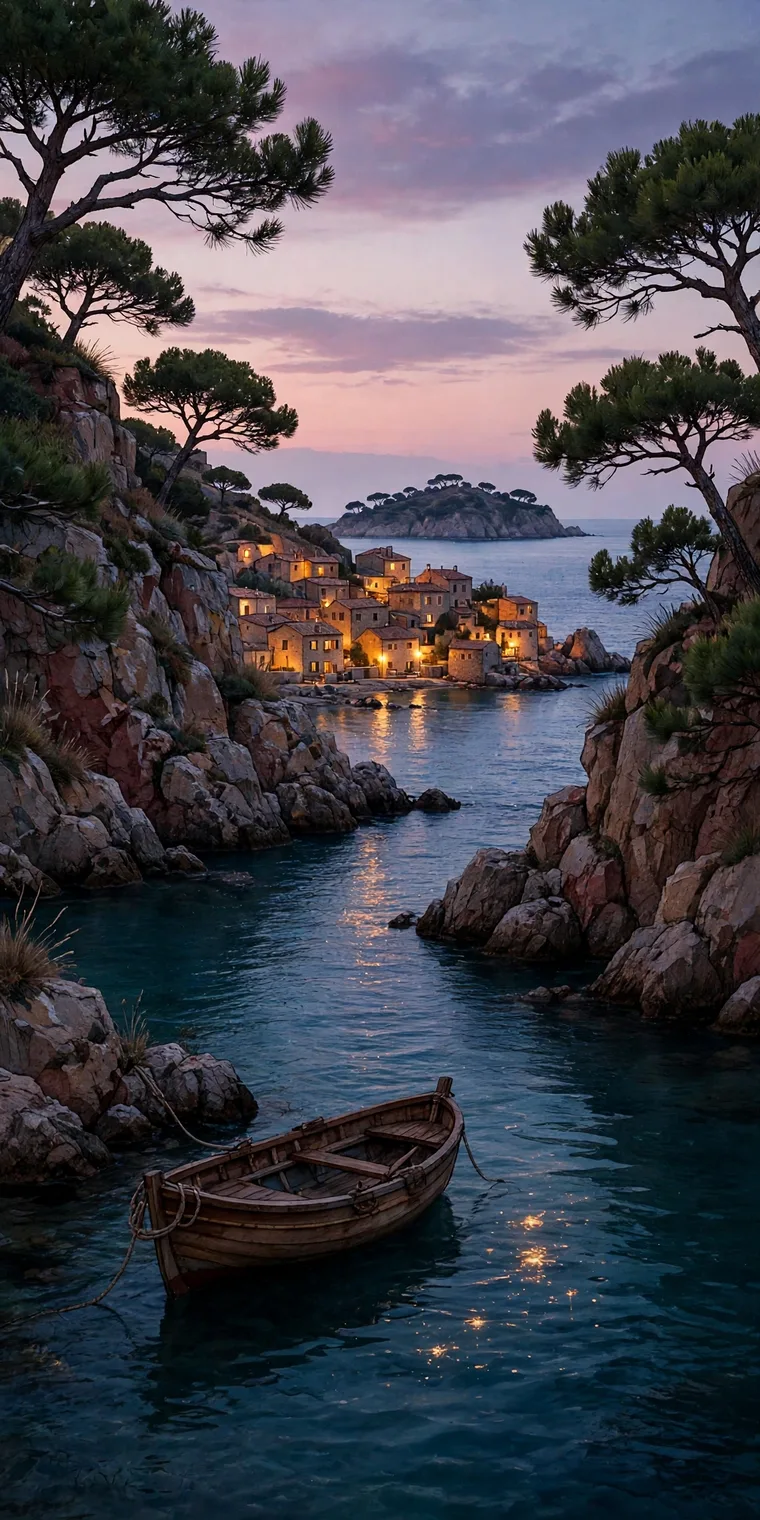
The Canary Islands are not, geologically speaking, Spanish at all in the way the mainland is. They are African offshore volcanoes — closer to Morocco than to Madrid, raised from the Atlantic floor by fire and still, in places, warm from it. That origin explains everything that makes them different: black sand where the Balearics have white, trade winds where the Mediterranean has sirocco, and a verticality that crams desert, forest, farmland and snow into a single day's drive. Four of the islands tell that story best.
Tenerife: Teide, the Roof of Spain
Mount Teide rises 3,715 metres from the sea — 7,500 metres from the ocean floor — making it Spain's highest peak and the third-largest volcanic structure on Earth. Teide National Park, a UNESCO World Heritage site since 2007, is not a green mountain park. It is a vast caldera, Las Cañadas, floored with lava flows in rust, ochre and black, punctured by roques — eroded rock towers — and, in spring, set alight by red tajinaste, the echium spikes that grow up to three metres tall and nowhere else in quite this way.
The cable car carries most visitors to within 200 vertical metres of the summit; the final stretch to the crater requires a free but limited permit, booked well in advance. Go up early, before the trade-wind clouds build. By mid-morning those clouds often pour over the island's northern rim in a famous cascade, leaving the peak in hard sunlight above a white sea while the coast below sits in shade. That cloud sea explains Tenerife's split personality: a lush, banana-planted, often cloudy north around La Laguna — itself a UNESCO-listed colonial city, the model for grid-planned towns later built across Spanish America — and a dry, sun-guaranteed south where the resort towns cluster. Both are real. The mistake is seeing only one.
Below the park, Tenerife keeps older layers: the Anaga mountains, a UNESCO Biosphere Reserve of laurisilva forest; the guachinches, family eateries serving home-grown wine; and Carnival in Santa Cruz, second only to Rio's.
Lanzarote: The Island César Manrique Refused to Ruin
Lanzarote should have been destroyed twice: first by the eruptions of 1730-36, which buried a third of the island under lava and created the Timanfaya badlands, and then by the tourism boom of the 1970s, which buried so many other coasts under concrete. That the second disaster never happened is largely due to one man: César Manrique, artist, native son and the most consequential figure in modern Canarian history.
Manrique argued — and persuaded the island government — that Lanzarote's volcanic strangeness was its wealth, and that building high and paving everything would kill it. The result is visible today: low, whitewashed buildings, no roadside billboards, and art-nature centres fused into the lava. At Jameos del Agua, a collapsed lava tube became an auditorium, pool and lagoon home to tiny blind albino crabs found nowhere else. The Mirador del Río frames La Graciosa from a cliff-top window. Timanfaya National Park, where water poured into a borehole erupts as steam and lunch at El Diablo is grilled over geothermal heat, shows the raw material he protected. Lanzarote was declared a UNESCO Biosphere Reserve in 1993, and its vineyards may be its most beautiful argument: at La Geria, each vine grows alone in a pit in black ash, shielded by a crescent of stone, producing Malvasía wines from a landscape that looks like the moon.
La Palma: The Beautiful Island Under Dark Skies
La Palma is the greenest and steepest of the Canaries, rising so abruptly its great crater, the Caldera de Taburiente, cuts 8 kilometres wide and nearly 2,000 metres deep into its heart, now a national park of waterfalls and pine forest. In 2021 it reminded the world it is still being built: the Cumbre Vieja eruption flowed for 85 days, destroying homes and adding new land to the western shore — a lesson that these islands are not scenery but process.
La Palma's other distinction is above it. In 2012 it became the world's first Starlight Reserve, under laws that control light pollution, air traffic and development to protect the night sky. The Roque de los Muchachos Observatory, at 2,396 metres on the caldera's rim, hosts some of the world's great telescopes, including the Gran Telescopio Canarias, the largest optical telescope on Earth. You do not need a telescope to feel it: on a clear night away from the small towns, the Milky Way has structure, colour and shadow. La Palma sells silence and darkness as luxury goods, and a growing world is learning they are.
La Gomera: The Island That Whistles
La Gomera is the island day-trippers reach and few absorb. Its centre is Garajonay National Park, a UNESCO site protecting the largest surviving laurisilva forest in the Canaries — a cloud forest cloaking ridges permanently combed by mist. Its terrain is radial: deep barrancos cut from the central plateau to the sea like spokes, making travel between neighbouring valleys slow.
That difficulty produced one of humanity's most remarkable inventions: Silbo Gomero, the whistled language of La Gomera. Silbo transposes Spanish into whistles — vowels and consonants rendered in pitch and interruption — that can carry intelligible messages two, three, even five kilometres across a ravine. Shepherds announced arrivals, dangers and news across valleys long before telephones. In 2009 UNESCO inscribed Silbo on its Representative List of the Intangible Cultural Heritage of Humanity, and La Gomera teaches it in schools, making it one of the few whistled languages in the world protected as living heritage rather than recorded as a curiosity. Hear it properly, with distance: two whistlers conversing across a gorge, the sound clean and musical, the meaning as precise as speech. Valle Gran Rey in the west and the pottery village of El Cercado, where women shape clay without a wheel, complete an island that has turned its obstacles into identity.
Fire, Managed
What unites these four islands is fire managed by imagination: a summit protected by permits, a caldera left to steam, an artist who made an island refuse easy money, a sky protected by law, a language whistled over lava-cut valleys. The Canaries are often sold as winter sun, and they deliver it. But their real offer is stranger and better — a geology you can walk on, grill over and look through telescopes at, in the middle of the Atlantic.
© 2026 InsideRealSpain.com