Rosalía Rewrites the Rules: How a Catalan Singer Took Flamenco Global — and Started an Argument Spain Needed
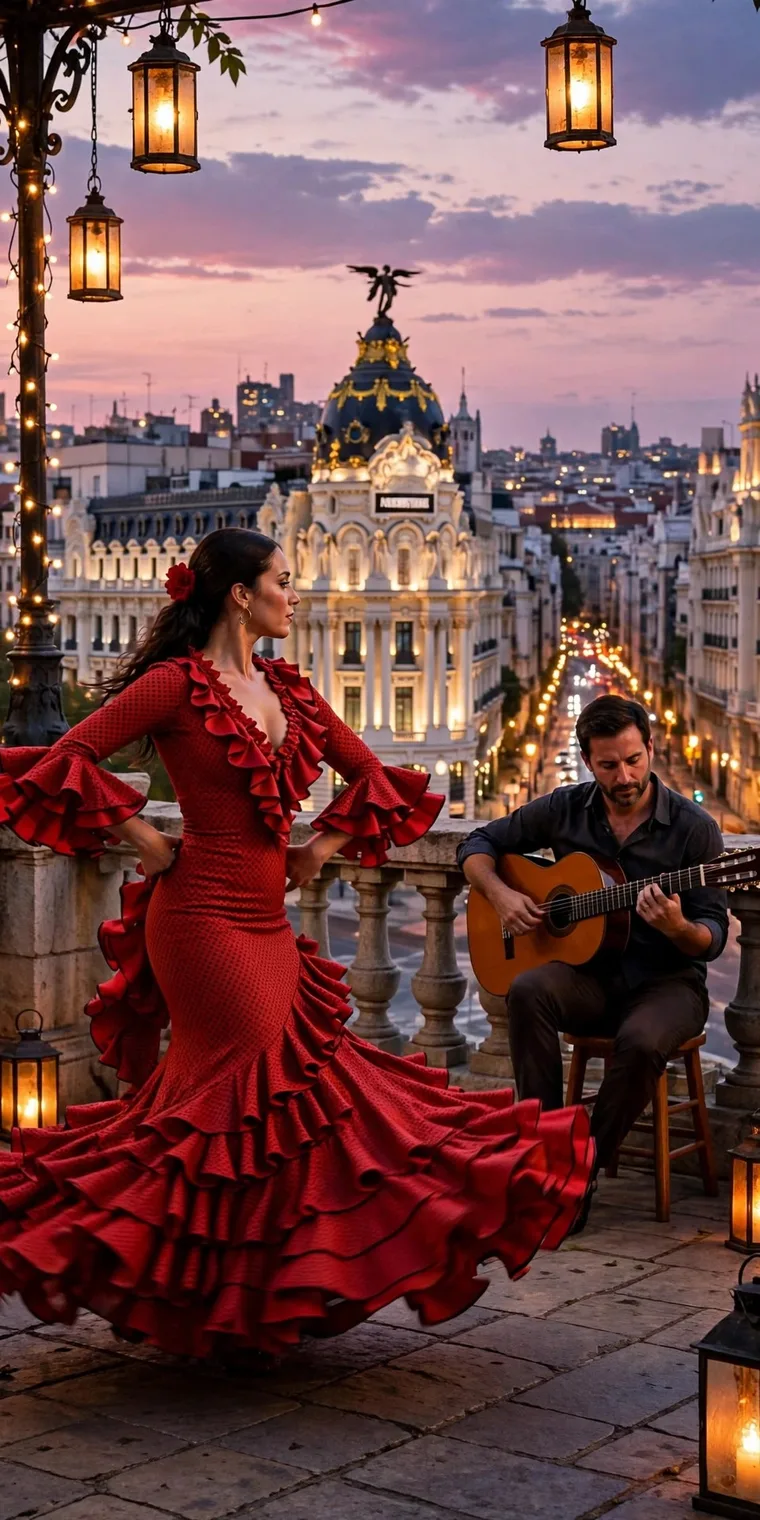
In November 2018, a twenty-five-year-old singer from Sant Esteve Sesrovires, a small industrial town outside Barcelona, released an album structured like a thirteenth-century Occitan novel, built from handclaps, motorcycle engines, Auto-Tuned laments and flamenco rhythms, and announced it with videos full of bullfighters, truckers, flamenco dresses and nail extensions long enough to qualify as tools. El mal querer made Rosalía Vila Tobella — Rosalía — the most debated Spanish musician of her generation within a month. Nearly a decade on, the argument she started has not ended. It has become the most interesting conversation in Spanish music.
Can a Catalan, conservatory-trained, non-Gitano pop star sing flamenco? Who owns a tradition built by Spain's most marginalised community? And what happens when the palmas of Jerez are mixed, brilliantly and deliberately, with reggaeton, trap and Bachata for an audience of hundreds of millions? Rosalía's career is the test case, and Spain — which loves nothing more than an argument about authenticity conducted at full volume — has risen to it magnificently.
From the Taller to Los Ángeles
The caricature says Rosalía was manufactured. The record says otherwise. She spent a decade in training before fame, studying flamenco singing at the Escola Superior de Música de Catalunya — admitted, famously, as the single flamenco voice student of her year — under cantaor José Miguel Vizcaya, "El Chiqui de la Línea." She sang in tablaos, released a spare, traditional first album, Los Ángeles (2017), with guitarist Raül Refree — classic cantes about death that critics admired and the public largely ignored — and appeared as a flamenco singer in Pedro Almodóvar's Dolor y gloria.
El mal querer, made with producer El Guincho, was her graduation project turned detonation. Its concept came from Flamenca, the medieval novel of a woman imprisoned by a jealous husband: each track is a chapter in a story of toxic love and escape. Musically it treated the palos not as museum pieces but as raw material with the same status as an 808 drum machine. "Malamente" rode a rhythm built on flamenco palmas while its video remixed Andalusian iconography into a fashion film shot at a truck stop. It won Latin Grammys. It also drew serious criticism: that this was flamenco as costume, its Gitano creators uncredited in the fine print of global success.
The Argument, Taken Seriously
The criticism deserves to be stated fairly, because Rosalía's defenders and detractors are both partly right. Flamenco was created substantially by Andalusian Gitanos, a community that remains among the poorest and most discriminated against in Spain. When a non-Gitano artist builds a global brand on flamenco's sounds, symbols and suffering — the dresses, the handclaps, the very word duende — while Gitano artists struggle for bookings at home, the word appropriation is not hysteria. It is a description at least worth answering. Some Gitano activists and artists made exactly that case in 2018 and 2019, and the debate ran in every Spanish newspaper.
Rosalía's answer has been to insist on the debt: to name her teachers, cite Camarón and the classic cantaores, and present flamenco as a study she submitted to rather than a style she borrowed. Musicians largely sided with her — flamenco's history is itself one of exchange across Gitano and non-Gitano lines — and the strongest defence is musical: she can actually sing the cantes. Her a cappella moments in concert, when the pop machinery stops and a soleá must stand on technique and nerve alone, are not the work of a tourist.
What nobody disputes is the effect. After 2018, young producers across Spain began sampling palmas and cajón, and a generation of listeners from Mexico City to New York arrived at Camarón backwards, through a Catalan pop star. Purists have heard this story before — it is precisely what Camarón and Paco de Lucía did in the 1970s, to identical accusations — and the parallel is the most Spanish thing about the whole affair.
Motomami and the World Stage
If El mal querer was flamenco meeting pop, Motomami (2022) was Rosalía absorbing everything else: dembow and reggaeton on "Saoko," a bachata with The Weeknd on "La fama," flamenco handclaps dissolving into Jersey club and back. It topped critics' lists worldwide and won the Latin Grammy for Album of the Year. In 2025 came Lux, recorded with orchestral forces including the London Symphony Orchestra and sung in more than a dozen languages — a deliberate swerve from hit-making toward the monumental.
Meanwhile the ecosystem around her has flowered: C. Tangana, who rebuilt his career around Spanish folk and flamenco on El Madrileño (2021); Israel Fernández, a Gitano cantaor of unimpeachable credentials who records with experimental producers; María José Llergo and Queralt Lahoz mixing flamenco with electronic music; and Niño de Elche, the ex-prodigy turned avant-garde provocateur. Spanish-language, flamenco-touched music now sits at the centre of pop rather than its exotic edge.
What She Proved
Strip away the celebrity and three durable facts remain. First, flamenco's rhythmic and melodic DNA — the twelve-beat compás, the Phrygian cadence, the palmas — turned out to be load-bearing material for twenty-first-century pop, not decoration on it. Producers now study what Jerez knew for a century. Second, Rosalía demonstrated that a Spanish artist need not sing in English, soften her references or explain her iconography to conquer the global market; the trucks, Virgins, bulls and motomamis travel unexplained, and the world does the homework. Third, she forced an overdue national conversation about credit — who created flamenco, who profits from it, and what respect actually requires in practice — that has measurably changed how festivals bill Gitano artists and how journalists write about the tradition.
That is a large legacy for an artist still in her early thirties, and it remains gloriously unsettled. In the tablaos of Seville and the peñas of Jerez, opinion on Rosalía divides by age, by neighbourhood and by glass of fino. Some hear a saviour who carried the music to the world. Some hear a brilliant student who should say the names of the masters louder. Most, if pressed, will concede the only verdict that has ever really mattered in flamenco: she studied, she can sing, and she risked something. The duende, Lorca said, does not come unless it sees that death is possible. Rosalía risked her career on a graduation project about a medieval novel, built from handclaps. Spain is still arguing about what happened next — which is to say, the music is still alive.
© 2026 InsideRealSpain.com