The Duende Hours: Inside Flamenco's Tablaos and the Twelve Beats That Hold Them Together
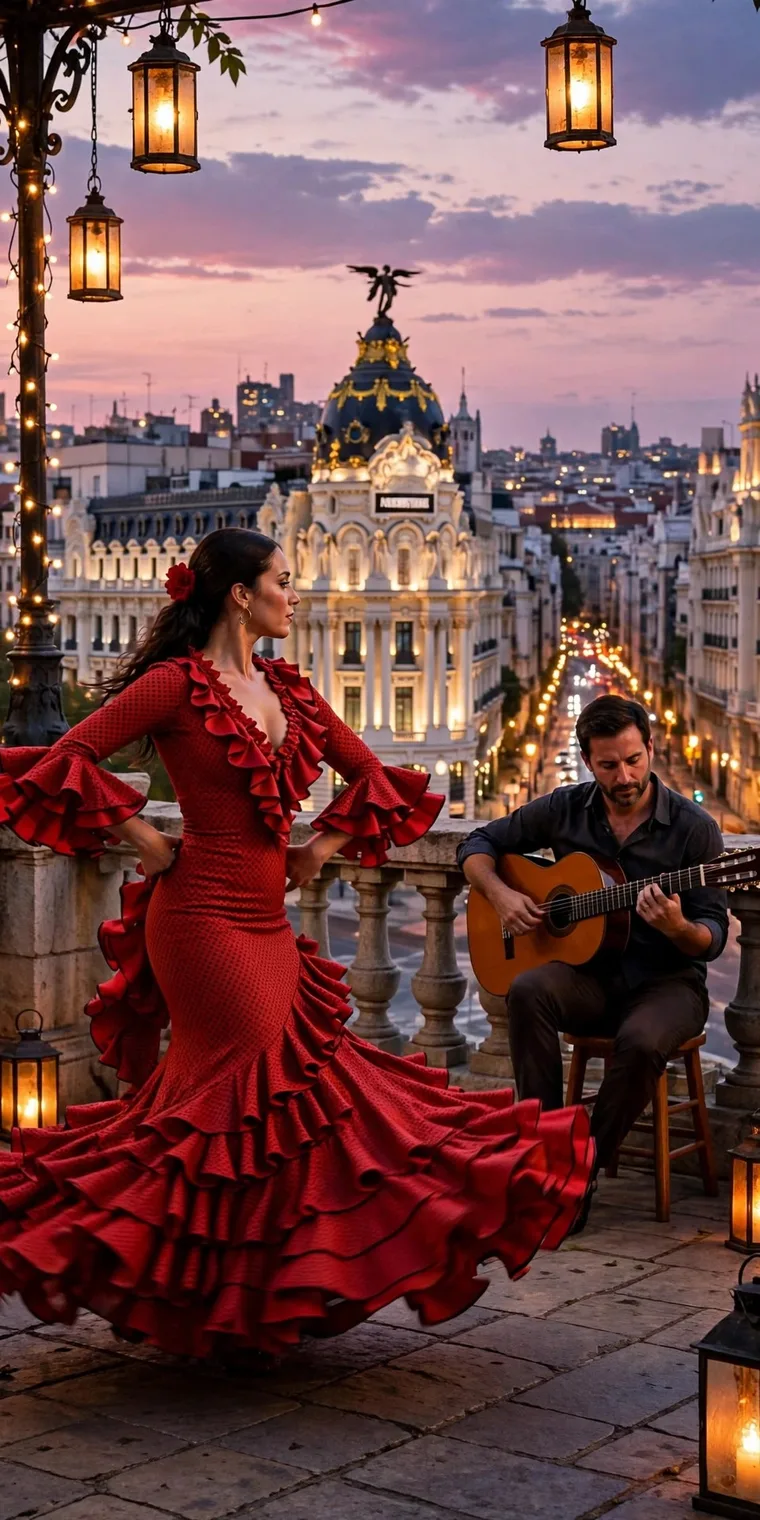
There is a moment, usually well after midnight in Seville, Jerez or Granada's Sacromonte caves, when flamenco stops being entertainment. The singer leans forward, the guitarist stops showing off, the dancer's feet go quiet for a fraction too long, and the room holds its breath. Someone will say there is duende here. They are not complimenting technique. They are naming something rarer: the instant when grief, pride, memory and rhythm align so precisely that the performers are no longer safely in control.
Flamenco was inscribed by UNESCO as Intangible Cultural Heritage of Humanity in 2010, but the label risks making it sound museum-safe. It is not. In Andalusia it remains a living grammar — spoken differently in Triana than in Cádiz, argued over in peñas, and renewed nightly in tablaos where tourists and purists sit close together, waiting to see if lightning will strike.
To understand it you do not start with the postcard dress and castanets. You start with compás, and with the palos.
A Family of Forms, Not a Single Dance
A palo is not simply a song type. It is a framework: a rhythm, a mood, melodic habits and traditional verses that singer, guitarist and dancer inhabit and improvise inside. There are more than fifty, and learning to hear the differences is the real education flamenco offers.
The great mother-form is the soleá, plural soleares. It moves in a twelve-beat cycle, with accents on beats three, six, eight, ten and twelve — a pattern that, once it gets into your body, makes ordinary 4/4 pop music feel almost childishly square. The soleá is solemn, spacious and unsparing. Its lyrics speak of mothers, death, debt, unfaithful lovers and a God who does not always answer. A great soleá singer does not decorate pain. She strips everything else away until pain is the only thing left standing.
At the opposite pole stand the bulerías, also in twelve beats but taken fast, playful and ferociously difficult. If the soleá is a confession, the bulería is a party where everyone is showing off and nobody is allowed to fail. Born in Jerez de la Frontera in the nineteenth century, bulerías close almost every serious flamenco gathering in a fin de fiesta, when performers trade short fragments, dancers take brief, blistering turns, and the handclapping — palmas — splits into interlocking patterns that can throw a newcomer off the beat in seconds. It sounds like chaos and is in fact mathematics. Miss your entrance by half a beat in Jerez and the whole room knows.
Between these poles lie other essentials: the siguiriya, darker even than the soleá and among the oldest forms in the cante jondo, the "deep song" at flamenco's core; the earthy, four-beat tangos, the most accessible palo for beginners; and the bright, major-key alegrías of Cádiz, proof that wit and appetite belong in the art too. A knowledgeable audience hears the palo announced — by the guitar's opening falseta, by the singer's first cry of "ay" — and instantly knows what emotional country they are entering.
Duende Is Not a Compliment
Federico García Lorca gave flamenco its most famous piece of criticism in his 1933 lecture "Juego y teoría del duende." Lorca argued that duende is not the muse, who dictates from above, nor the angel, who dazzles from outside. Duende climbs up inside you from the soles of the feet. It is a power, not a skill; a struggle, not a style. It requires, in his unforgettable formulation, the possibility of death nearby. A singer can have perfect pitch, a dancer perfect feet, and neither may have duende on a given night. An ageing singer with a ruined voice may have it in terrifying abundance.
This is why aficionados are such severe judges. Technique is assumed; what they await cannot be rehearsed into existence. A performance that never risks ugliness or collapse will never produce the moment everyone came for.
Duende also explains flamenco's intimacy with marginal Spain. The Gitano (Romani) families of Andalusia were the principal creators and custodians of the deep song, developing it in forges, courtyards and prison yards as much as in cafés. The martinete, sung a cappella to a hammer's rhythm on an anvil, preserves that forge history in its pulse. To enjoy flamenco without acknowledging it was forged by people Spain persecuted for centuries is to listen with half your ears closed.
Night School: The Tablao
The tablao is flamenco's modern temple and its most contested compromise. The word originally meant the wooden stage itself — boards whose resonance turns a dancer's zapateado into percussion. In the 1950s and 60s, venues like Madrid's Corral de la Morería (founded 1956) and Seville's Los Gallos formalised the format: an intimate room, a small cuadro of singer, guitarist and dancers, dinner optional and beside the point.
Purists have grumbled about tablaos for seventy years — the shortened numbers, the mixed audiences — and the grumbling contains truth. A peña in Morón de la Frontera or a family juerga in Jerez will always go places a commercial stage cannot. But the tablao also gave professionals steady work and dancers a laboratory: some of the greatest baile of the past half-century was sharpened night after night on those boards, in rooms close enough to see sweat fall.
What to watch for is structure rather than spectacle. Notice how the singer watches the dancer and the dancer listens — truly listens, marking steps quietly — before launching. Notice the guitarist's double role: accompanist and engine, following the singer's breath in the soleá and driving the dancer in bulerías. Notice the jaleo, the shouted encouragement — ¡olé!, ¡vamos!, ¡eso es! — which is not noise but participation, timed with the same precision as the palmas. In flamenco the audience is a section of the orchestra, and knowing when to stay silent is as much a skill as knowing when to shout. The argument between purity and innovation is itself a tradition: Camarón de la Isla and Paco de Lucía were denounced as heretics in the 1970s, and their 1979 album La leyenda del tiempo is now treated as scripture.
Start with the voice alone — Carmen Linares, Enrique Morente, or Camarón. Then add the guitar. Only then the dance, because baile makes most sense once your ear knows what the feet are arguing with. Somewhere in a small room, around the second hour, the singer will lean forward and the temperature will change. Your feet, if Lorca was right, will already know what to call it.
© 2026 InsideRealSpain.com