Forests of Cloud and Skies of Ink: Garajonay, Teide, Sierra Nevada and Spain After Dark
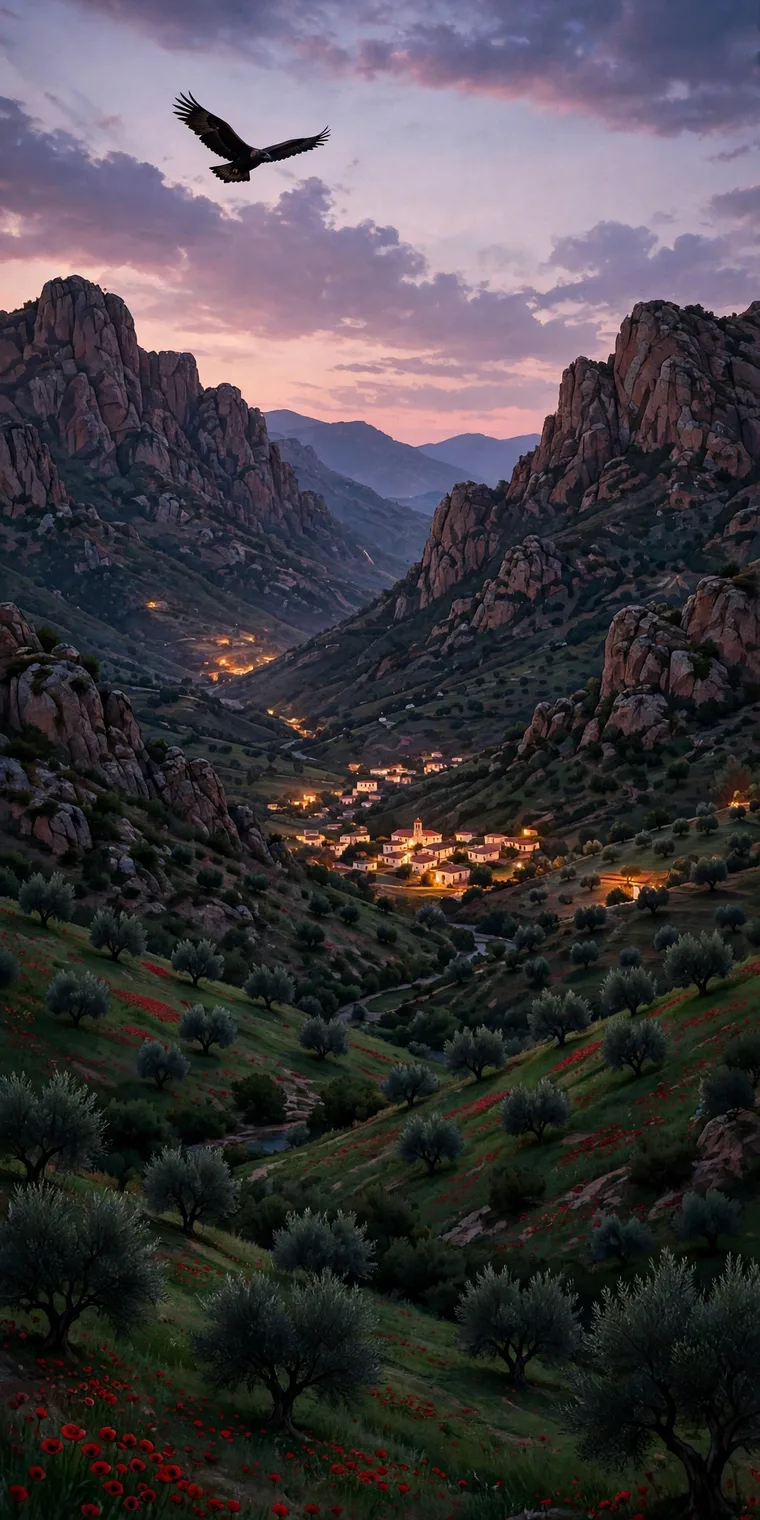
Spain's wildest places include a forest that was old when Rome was young, a volcano you can see from two other islands, a mountain range where you can ski within sight of Africa — and a night sky so dark that comarcas now protect it by law. The southern and island parks — Garajonay on La Gomera, Teide on Tenerife, and Sierra Nevada in Andalusia — look nothing like the green north. They are shaped by trade winds, volcanoes and altitude instead of Atlantic rain. And when the sun goes down, they offer something increasingly rare in Europe: real darkness.
Garajonay: The Forest the Ice Ages Left Behind
On the Canary island of La Gomera, the national park of Garajonay protects about 4,000 hectares of laurisilva — laurel forest — at the island's misty centre. Twenty million years ago, subtropical forests like this covered much of the Mediterranean basin. Then the ice ages came, the climate dried, and the forest vanished from the continent. On the Canaries, buffered by the ocean and fed by the trade winds, it survived.
Walking into Garajonay is a change of element. The wind pushes cloud against the island's northern slopes, the cloud condenses on the leaves — a process scientists call horizontal rain, which can double the water the forest receives — and the world goes green, dripping and quiet. Trees here are not the pines of the Spanish mainland but Canary laurel, viñátigo, tilo and wild olive relatives, their trunks furred with moss, hung with lichen, and surrounded by giant ferns and the endemic geraniums and sow-thistles that evolved in this isolation. Two endemic pigeons, the laurel pigeon and Bolle's pigeon, feed in the canopy and are found almost nowhere else on Earth.
Garajonay, declared a national park in 1981 and a World Heritage Site in 1986, came close to disaster in 2012, when fire burned about a fifth of the park. Laurel forest is not adapted to fire, and recovery is measured in decades — a living lesson in how slowly an ancient ecosystem heals. Go early, walk the misty trails around El Cedro, and listen. In a forest this old, silence has texture.
Teide: Spain's Roof, Above a Sea of Cloud
Tenerife's Teide National Park is Garajonay inverted: not wet and enclosed, but dry, vast and open to the sky. At its centre stands Teide itself, 3,718 metres — the highest peak in Spain, the third-largest volcano on Earth measured from its base on the ocean floor, and on clear mornings a perfect cone whose shadow, cast onto the sea of cloud at sunrise, forms a vast triangle that draws gasps from the summit cable-car station.
The park, about 19,000 hectares, protects the caldera of Las Cañadas, a high desert of pumice, lava flows and roques in rust, ochre and black. Life here is specialised to an extreme. The Teide violet blooms above 3,200 metres, among the highest flowering plants in Europe. The red tajinaste — a spire of crimson flowers up to three metres high — turns the caldera into a brief, improbable garden in May and June, and at night its silence is total.
A free permit, booked well in advance, limits summit numbers; the cable car carries most visitors to 3,555 metres, and the final stretch is walked. Altitude is the real gatekeeper — the air holds far less oxygen than at sea level.
Sierra Nevada: Ski in the Morning, the Sea by Afternoon
The mainland answers Teide with Sierra Nevada, other high park — a national park of about 86,000 hectares in Granada and Almería, wrapping a core of peaks that includes Mulhacén, at 3,479 metres the highest summit on the mainland, and Veleta, just below it. The local claim is famous and, on a clear winter day, verifiable: ski in the morning at the resort above Granada — one of Europe's highest and southernmost — and by afternoon stand on the Mediterranean shore looking back at the snow. From the upper slopes, the sea is visible, and on exceptional days, so is Morocco.
The same altitude that gives the snow gives Sierra Nevada an astonishing biology. Cut off as an island of cold during the ice ages, its summits harbour more than 2,000 plant species, dozens of them found nowhere else — the Sierra Nevada violet, the snow star, tiny plants that flower in the meltwater of the borreguiles, the high wet meadows unique to the range. Spanish ibex, reintroduced and now thriving in herds of thousands, pick across the screes, and golden eagles nest in the barrancos that drain toward the white villages of the Alpujarras on the southern slope — one of the most complete cultural landscapes in Spain, terraced and irrigated with techniques brought from North Africa centuries ago.
Spain After Dark
Teide and Sierra Nevada share a distinction that has nothing to do with height. Both are certified Starlight Reserves and Destinations under a scheme born in Spain — the Starlight Foundation, created after the 2007 La Palma Declaration in Defence of the Night Sky — and both sit under some of the darkest skies in Europe. La Palma, home to Caldera de Taburiente National Park and the great Roque de los Muchachos Observatory, was the world's first Starlight Reserve. The observatories are here for an astronomical reason: the Canaries' altitude, dry air and stable trade-wind inversion put telescopes above most of the atmosphere's turbulence, and Spanish law — the Sky Law first passed for the islands — protects that darkness from light pollution.
You do not need a telescope to feel it. On a moonless night in Las Cañadas, in the Sierra Nevada high country, or in certified dark-sky comarcas such as the Sierra Morena or the Montsec in Catalonia, the Milky Way stops being a faint smudge and becomes structure — bright clouds, dark dust lanes, a galaxy with depth. Guided night walks now run in several parks, and the etiquette is simple: red torches only, phones away, eyes given twenty minutes to adapt.
That darkness completes a picture the daylight parks begin. Spain's 16 national parks run from Cantabrian beech forest to Canarian desert, from Doñana's marshes to the summit of Teide. But their rarest shared asset may be the one overhead. In a continent where most people have never seen a truly dark sky, Spain still has nights black enough to read the galaxy by — in a laurel forest that survived the ice ages, on a volcano above the clouds, and on a snowy sierra within sight of the sea.
© 2026 InsideRealSpain.com