The AVE Effect: How Spain Built Europe's Biggest High-Speed Network Around Madrid
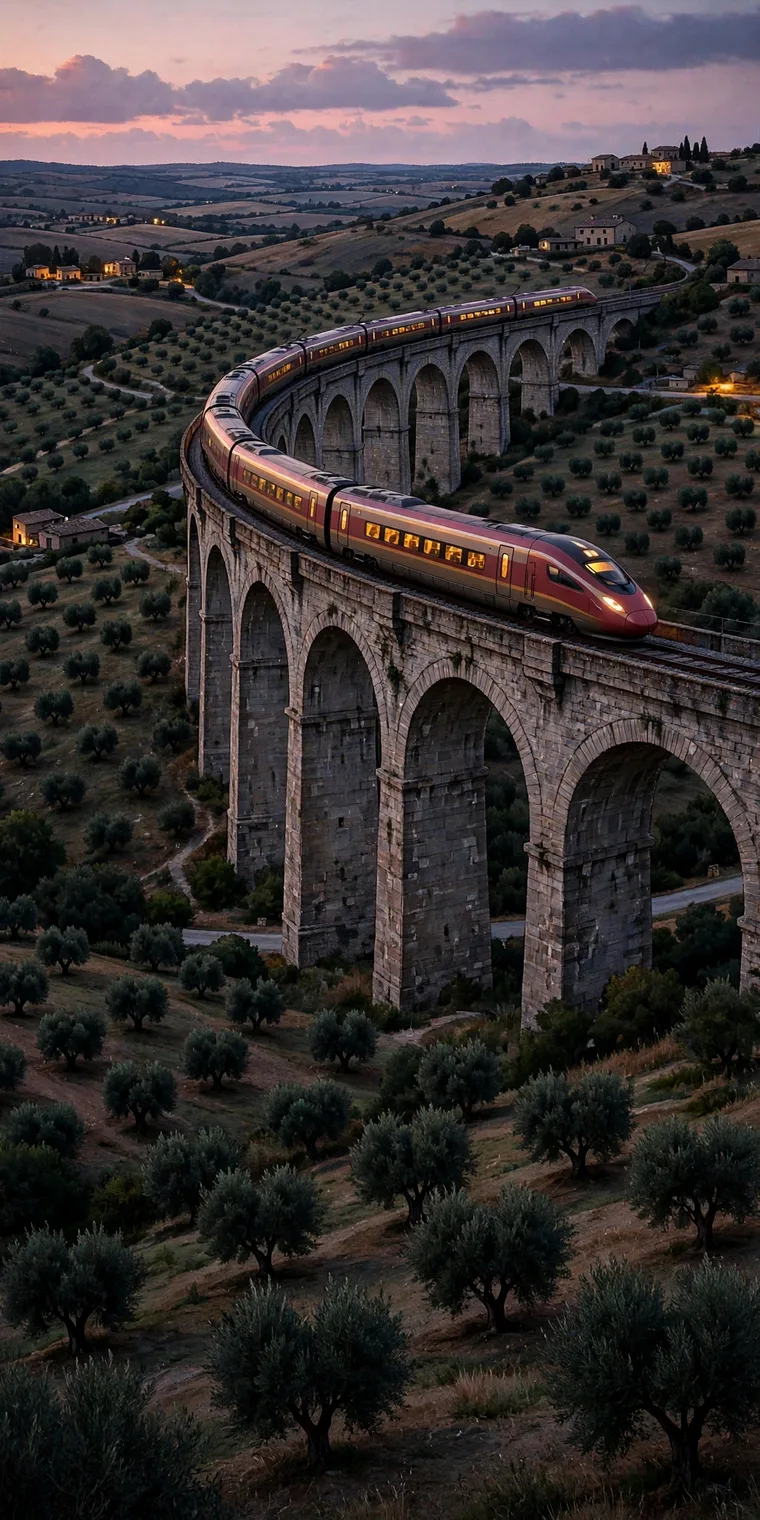
Stand in the tropical garden inside Madrid Atocha station and watch the departure boards turn over. Barcelona at 7:00. Valencia at 7:15. Seville, Málaga, Alicante, Granada, Zaragoza, A Coruña. Every few minutes another long, white train slides out and within half an hour is travelling faster than any car on the motorway beside it. This is not a showcase line. It is a system, and once you understand its shape, planning a trip around Spain becomes radically simpler.
Spain operates the largest high-speed rail network in Europe — roughly 4,000 kilometres of dedicated track, second in the world only to China. From the first AVE service between Madrid, Córdoba and Seville in 1992, successive governments treated high-speed rail as a tool for holding a decentralised country together. The result is a map like a bicycle wheel: Madrid in the middle, spokes running to almost every major city.
A Capital in the Middle, on Purpose
Geography explains the hub. Madrid sits almost exactly in the centre of the Iberian Peninsula, on a high plateau — the Meseta — at about 650 metres above sea level. It was chosen as capital in the 16th century partly for that centrality. The AVE made the old logic literal. From Madrid you can reach Barcelona in about two and a half hours, Valencia in one hour and forty minutes, Seville in about two hours and twenty minutes, Málaga in a similar time, and Alicante in a little over two hours. Madrid to A Coruña in Galicia, once most of a day by road, is now under three and a half hours.
Madrid therefore works as both a base and a hinge. Land there, spend three nights, take a day trip to Toledo in 33 minutes or Segovia in under half an hour, then move on to Andalusia or the Mediterranean without hiring a car, arriving in city centres rather than at airports an hour outside them.
Two Madrid terminals cause a classic first-timer's error. Puerta de Atocha-Almudena Grandes, in the south, handles most services to Andalusia, Valencia, Alicante and Barcelona. Chamartín-Clara Campoamor, in the north, handles most services to the north and northwest, and many Barcelona trains. Some routes run through a tunnel linking the two. Check which station your ticket names, and allow at least 45 minutes to cross between them by Metro or Cercanías train. Other hubs — Barcelona Sants, Valencia Joaquín Sorolla, Seville Santa Justa, Málaga María Zambrano, Córdoba Central — are large, modern stations a short walk or Metro ride from the historic centre.
Three Companies, One Set of Tracks
Until recently, Renfe — the state operator — was the only name you needed. Liberalisation changed that, and travellers are the winners. Renfe's AVE is the flagship: fastest, most frequent, with a Premium offer and the widest network. Renfe also runs Avlo, its low-cost brand, with paid extras and fares that on quiet days start in single figures. France's Ouigo España runs double-decker trains on corridors including Madrid–Barcelona and Madrid–Valencia. Iryo, a private operator, runs sleek red trains linking Madrid with Barcelona, Valencia, Córdoba, Seville and Málaga, selling comfort rather than rock-bottom price.
Not every route has competition. Head for Granada, Galicia or the north coast and Renfe is usually your only option. But on Madrid–Barcelona, trains can leave every 15 to 30 minutes at peak times, and competition has kept a lid on prices.
Not every fast train is an AVE, either. Avant is the brand for medium-distance high-speed shuttles — Madrid to Toledo, Seville to Córdoba and Málaga, Barcelona to Girona — with steadier, more moderate pricing. Alvia trains switch between high-speed and conventional track, which is how they reach Cádiz, San Sebastián and Santander, cities without a full high-speed station in the centre.
Fast, Calm and Civilised
AVE trains run at up to 300 or 310 kilometres per hour, but the real luxury is calm. Boarding involves an airport-style security scan — arrive at least 30 minutes before departure, more in summer — but there are no liquid rules and no weighing of your bag. Your coach (coche) and seat (plaza) are printed on your ticket. Standard seats are wide, with legroom most airlines would envy, power sockets, and windows made for the Meseta: wheat fields, olive groves to the horizon in Jaén, snow on the Sierra Nevada on the winter approach to Granada.
Premium adds a larger seat, lounge access and food served at your seat. For a two-hour journey, standard is genuinely enough. Eat before you board or bring something: the café car is fine, but the station neighbourhood will almost always offer a better bocadillo for less.
Booking Renfe Without Losing Your Mind
Book early. High-speed fares are dynamically priced, like air fares. The cheapest tickets on a popular Friday Madrid–Seville train can sell out weeks ahead, while the same train on a Tuesday morning may be cheap a few days before. Tickets generally go on sale about two to three months ahead, though the window varies. If your dates are fixed and your route is popular — anything into Andalusia during Semana Santa, anything to the coast in August — book as soon as your train appears.
Compare operators before you commit. On competitive routes, check Renfe and Avlo, Ouigo and Iryo; a departure 40 minutes later can cost half as much. Third-party platforms add fees and can complicate changes, so booking direct is usually cleaner. Understand the fare, too: the cheapest are generally non-refundable, or changeable only for a fee. Read that line before you pay. Discount cards exist — the Tarjeta Dorada helps travellers over 60 — but conditions apply, so verify them on Renfe's site.
Keep your ticket accessible, with a screenshot saved offline. Coverage is good, yet tunnels — including the long Guadarrama tunnel north of Madrid — interrupt it exactly when an inspector may come through.
Finally, do not overlook the slower network. Cercanías trains need no reservation and are right for short hops: Madrid to Aranjuez, Barcelona to Sitges, Málaga to Fuengirola. Media Distancia trains reach places the AVE passes by — Ronda, on a line climbing through the El Chorro gorge. Long-distance buses, led by Alsa, fill the remaining gaps, from Granada into the Alpujarras or Seville to Ronda.
Start with the train map. Spain is the second-largest country in Western Europe, and first-time visitors routinely underestimate it. The AVE shrinks it to a human scale where breakfast in Madrid, lunch in Córdoba and dinner in Seville is not a stunt. It is a Tuesday.
© 2026 InsideRealSpain.com