La Hora del Vermut: Spain's Aperitif Hour and the Map of 70 Wine Regions
Shortly before lunch on a Sunday in Madrid, Barcelona, or Bilbao, something civilised happens. Bars fill, not for a long session but for a ritual with its own name: la hora del vermut, the vermouth hour. A small glass of red vermouth arrives, very cold, with ice, a slice of orange or an olive — sometimes both — and perhaps a dash of sifón, soda water from the classic siphon bottle. Around it gather the supporting cast: a plate of olives, potato crisps with tinned mussels or cockles, a gilda — that perfect Basque skewer of olive, anchovy, and pickled green chilli. The vermouth hour is not drinking before eating. It is the overture that makes eating better.
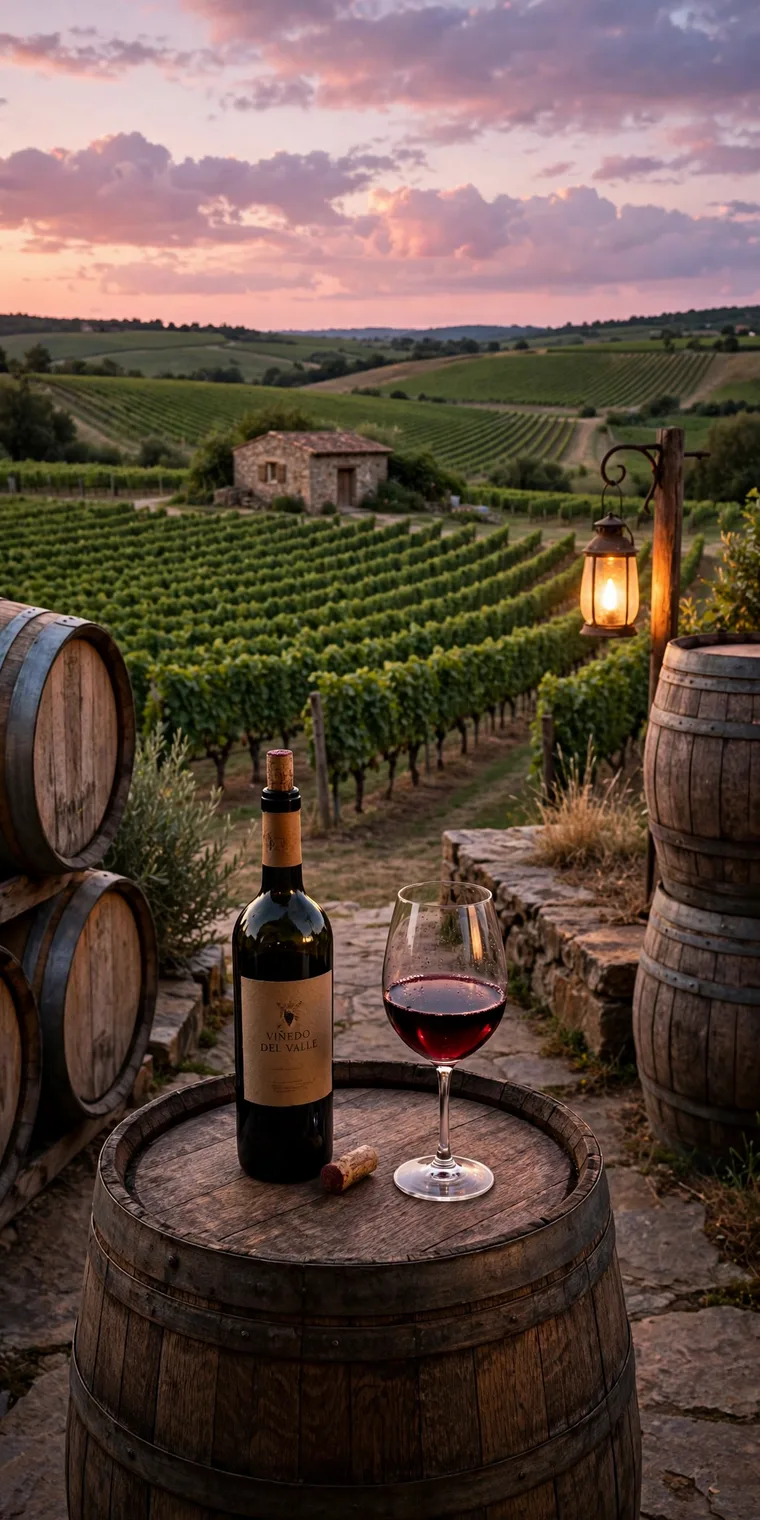
It is also the perfect doorway into Spain's wider wine map, because vermouth itself is wine — aromatised, fortified wine — and the country that invented this ritual also maintains more than 70 denominaciones de origen, a system of protected wine regions unmatched in its variety. To understand Spanish wine, you need both.
Vermouth: The Bar's Own Wine
Vermouth takes its name from Wermut, German for wormwood, the bitter herb that by European law must be part of its aromatisation, alongside a pantry of botanicals: herbs, roots, bark, spices, and citrus peel, each producer guarding a recipe. A base of neutral white wine is fortified, sweetened, coloured — in Spain usually red, vermut rojo, often with caramel — and infused. Italian and French brands made vermouth famous, but Spain developed its own tradition, centred historically on Reus in Catalonia, once one of Europe's great vermouth and spirits towns, and on bodegas across the north that made house vermouths for local bars.
Spanish vermouth tends to be a little softer, rounder, and more warmly spiced than its Italian cousins — cinnamon, clove, and orange peel where others lean bitter and herbal — and it is almost never drunk neat at room temperature. On the rocks, with an olive, is the classic serve in Madrid's old taverns and Barcelona's bodegues. In Catalonia the phrase fer un vermut — to do a vermouth — means the whole occasion: the drink, the snacks, the friends, the hour. The snacks are not incidental. Salt, acid, and fat from tinned seafood — conservas, a Spanish art form in itself — are precisely what a bittersweet, chilled aperitif is built to meet.
The tradition nearly faded in the late 20th century, dismissed as old-fashioned, then returned with force in the 2010s. Madrid bars that had poured vermouth on tap for a century were suddenly fashionable again, new craft producers appeared from Rioja, Galicia, Andalusia, and Catalonia using local wine bases and botanicals, and barrel-aged and white and rosé vermouths joined the classic red. Crucially, the revival kept the ritual intact: vermouth in Spain is still inexpensive, still served before lunch, still measured in one glass, maybe two — an aperitif, not an event in itself.
The Map Behind the Bar: How the DO System Works
Spain organises its quality wine through denominaciones de origen — DOs — each a defined area with its own regulatory council, permitted grape varieties, and rules on yields, winemaking, and aging. There are now more than 70 DOs for wine, within a wider pyramid. At the base is Vino de la Tierra, equivalent to regional wine, with looser rules. Above it sit the DOs. Above them, just two regions hold DOCa — Denominación de Origen Calificada — Rioja and Priorat, recognised for a long, consistent record at the highest level. At the very top, single estates can be recognised as Vino de Pago, a DO in miniature for one exceptional site. Cava, unusually, is a DO defined mainly by method rather than one place, though its production is centred in Penedès.
The numbers tell only half the story. What matters is the diversity those 70-plus names contain. Spain has more vineyard area than any country on earth, much of it old, dry-farmed bush vines, and an unmatched library of native grapes. Beyond the famous names in this series — Rioja, Ribera del Duero, Priorat, Rías Baixas, Jerez — a curious drinker could spend years exploring the rest: Bierzo, in León, where Mencía makes fragrant, mineral reds from slate and clay; Toro, where Tinta de Toro — Tempranillo again, adapted — makes some of Spain's most powerful wines; Jumilla, in the hot southeast, rescued from bulk status by old-vine Monastrell; Montilla-Moriles, sherry's Cordoban cousin, built on Pedro Ximénez; the Canary Islands, where ungrafted vines grow in volcanic ash pits in Lanzarote and in the high vineyards of Tenerife, tasting like nowhere else in Europe; and Txakoli from the Basque coast, poured from a height into tumblers, sharp and spritzy, made for anchovies and grilled fish.
The DO system is not perfect, and Spaniards argue about it constantly. Critics say large DOs protect big producers, that rules can lag behind climate and fashion, and that some of Spain's most exciting winemakers work partly or wholly outside the system, labelling wines as regional or table wine to keep their freedom — much as Cava's best growers debated their own designation. Defenders reply, fairly, that the DOs preserved native grapes and regional styles through decades when international varieties and bulk production might have erased them. Both are right, which is why the label is a starting point for curiosity, not a guarantee in the glass.
How to Drink the Map
The insider approach to all this abundance is reassuringly Spanish: follow the hour and the plate, not the points score. Start a Sunday with a vermouth and conservas. At lunch, drink what the region drinks — Albariño with seafood in Galicia, Txakoli in San Sebastián, a Rioja Crianza with lamb in Logroño, Manzanilla in Sanlúcar, a Bierzo Mencía with roast pork in Ponferrada. In a wine shop, let price work for you: Spain still offers, at ten to twenty euros, a depth of regional character that France or Italy rarely matches at the same cost, because its fame is distributed across dozens of regions rather than concentrated in two or three.
Above all, treat the map as an invitation rather than an exam. Seventy denominaciones is not a list to memorise. It is evidence of a country where wine was never one thing — where a bitter red aperitif before lunch, a barrel of Fino aging under flor, a slate hillside in Priorat, and a pergola of Albariño above the Atlantic all belong to the same culture. La hora del vermut lasts an hour. The country behind it can fill a lifetime of lunches.
© 2026 InsideRealSpain.com