Cathedrals of Sand: Las Ventas, La Maestranza, and Ronda
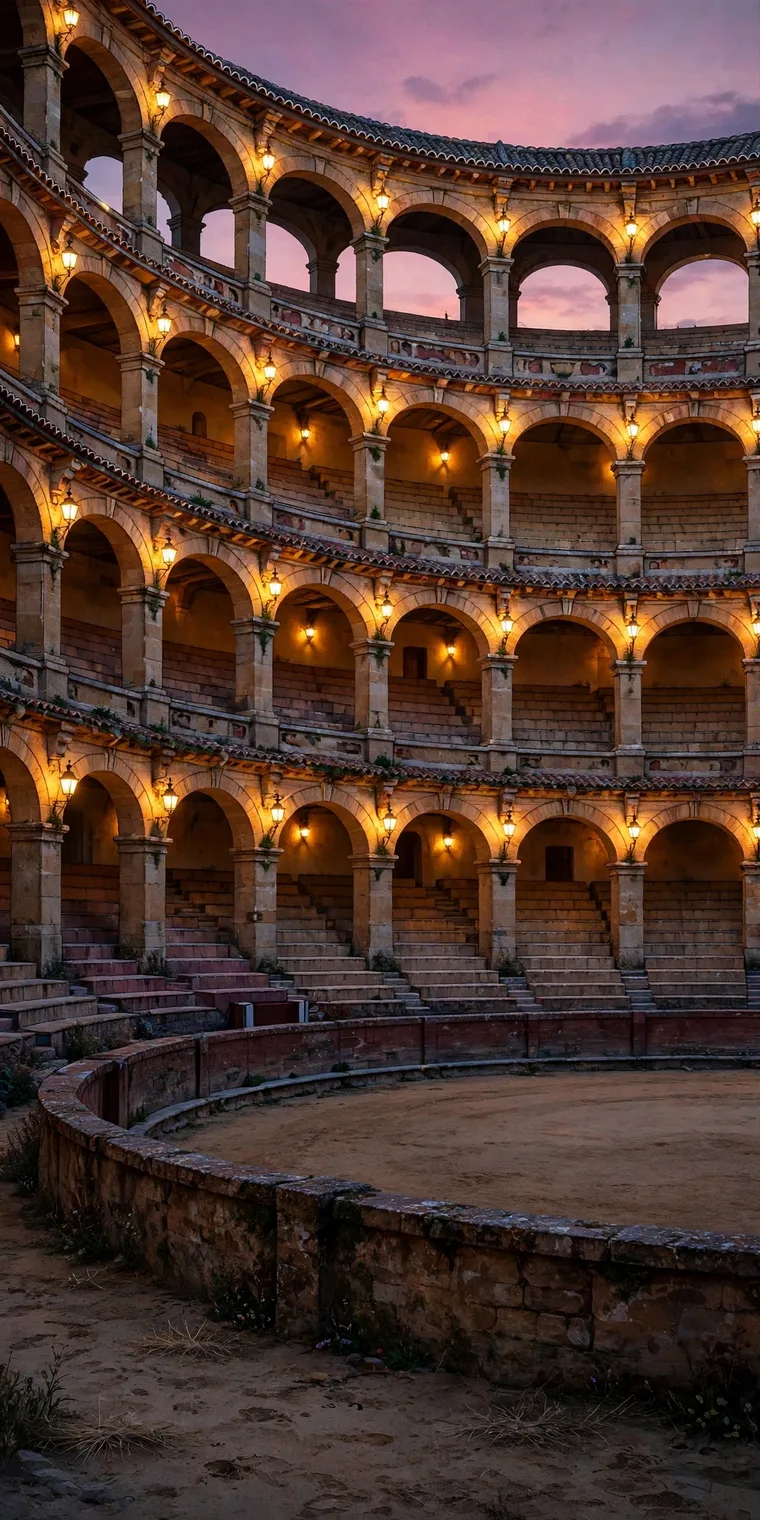
Every serious bullring in Spain claims a personality, and aficionados will defend theirs the way football supporters defend a stadium. But three plazas stand apart, not only for their size or beauty, but because each represents a different idea of what the fiesta is for. Ronda is the origin story, small and stone-built in the mountains of Málaga province. La Maestranza in Seville is the temple of artistry, golden sand and baroque elegance on the banks of the Guadalquivir. Las Ventas in Madrid is the court of final judgement — vast, severe, and famously unforgiving. A torero can succeed in one and fail in another on the same faena, because the buildings themselves, and the crowds inside them, ask different questions.
To visit all three, even outside the season, is to read Spanish bullfighting in architecture.
Ronda: Where the Modern Rules Were Born
The Plaza de Toros de Ronda, inaugurated in 1785, is one of the oldest bullrings in Spain and by many accounts the oldest still in regular use built in stone for the purpose. Set in the old town, a short walk from the Puente Nuevo that vaults the El Tajo gorge, it does not overwhelm by size. Its ring, at about sixty-six metres across, is among the widest in Spain, while its seating, for roughly five thousand, is intimate by modern standards. Two tiers of arched galleries, with Tuscan columns and a pitched roof, give it the calm of a cloister rather than a stadium.
That restraint suits its legend. Ronda is the home town of Pedro Romero, the 18th-century matador credited with codifying the classical, sober style — kill cleanly, waste no movement, respect the bull — and of the Romero dynasty that helped turn bullfighting from noble pastime to professional art on foot. The Goya connection deepens the aura: Francisco de Goya, who knew the Romeros' world, made bullfighting a central subject of his Tauromaquia etchings, and Ronda has long traded, not unfairly, on being the place where the modern corrida found its manners.
The town later drew Ernest Hemingway and Orson Welles, and a small museum under the stands displays costumes and posters. But the essential experience is simpler: in Ronda there is nowhere to hide. The crowd is close, the ring is broad, and a matador must govern that wide circle of pale sand. It remains a working plaza during the September Feria Goyesca, when toreros wear period dress in homage to Goya's age.
La Maestranza, Seville: The Baroque Stage
If Ronda is classical prose, Seville is poetry. The Real Maestranza de Caballería de Sevilla, begun in the mid-18th century and built in stages over more than a hundred years, sits in the Arenal quarter facing the river. Its exterior is a warm, irregular oval — not a perfect circle, because it grew building by building — painted in the white and ochre that define Sevillian bullfighting afternoons. Inside, about twelve and a half thousand spectators fill stands crowned by the distinctive Prince's Box, built for royal viewing.
Everything in Seville is judged by feel. The sand is golden, the April evening light soft, and the crowd responds to grace in a way that can leave a technically correct but cold torero bewildered. Seville loves temple, wrist, and line — the slow drawing of the bull past the body. The Maestranza is inseparable from figures such as Pepe Luis Vázquez and, in the modern era, Morante de la Puebla, whose classicism feels native to this ring.
Yet Seville is not indulgent. Its silence can be as eloquent as Madrid's whistling. When a faena fails to move the Maestranza, the band withholds its music and a matador understands he has been measured against a standard of beauty he did not meet. When the music strikes up unbidden and handkerchiefs bloom, the Puerta del Príncipe — the Prince's Gate, requiring three trophies — becomes a possibility. It opens rarely enough to retain its meaning. The season's centrepiece, the April Fair corridas following Semana Santa, draws the strongest cartels of the spring.
Las Ventas, Madrid: The First Plaza of the World
Las Ventas calls itself, without much argument from anyone, la primera plaza del mundo — the first bullring in the world. Not the oldest, not the prettiest, but the most important. Inaugurated in 1931 and built in red brick neo-Mudéjar style, studded with ceramic shields of the Spanish provinces, it holds nearly twenty-four thousand people in the Ventas district east of the centre. Its ring is fifty-two metres wide, its stands steep, its wind — a treacherous breeze off the open side that can lift a muleta at the worst moment — a character in its own right.
Madrid's season peaks with the Feria de San Isidro in May and June, a month of corridas in which reputations are assembled and dismantled in public. Tendido 7, long associated with the most demanding aficionados, will protest a weak bull, a badly placed pic, or a matador who steps back, with coordinated fury. One ear in Las Ventas, the saying goes, is worth three elsewhere, and the Puerta Grande — requiring two ears under strict scrutiny — has settled arguments and started legends.
The bulls are part of the severity. Madrid demands large, serious animals, typically older and heavier than in more festive plazas. A ganadería that triumphs here gains a season's prestige; one whose bulls fail will hear about it all winter.
There is no music during the faena in Las Ventas, because the work must hold attention unaided. What you hear instead is the hush when a matador cites a bull from distance, a single ¡bien! from a connoisseur, the rising olé timed to a series of naturales, and, when things go wrong, a whistle that can feel physical.
Three Rings, One Language
Other plazas have their own claims — Pamplona, Bilbao, Valencia — and any list of three is an argument waiting to happen. But Ronda, Seville, and Madrid form a triangle every newcomer should understand. Ronda explains where the rules came from. Seville explains what the fiesta looks like when it aims at beauty. Madrid explains what happens when it submits to judgement.
Visit them in that order if you can, and you will understand why Spaniards do not speak of the bullring crowd, but of this plaza, this public, and what this sand demands.
© 2026 InsideRealSpain.com