Dinner at Ten, Dessert at Midnight: In Praise of the Sobremesa
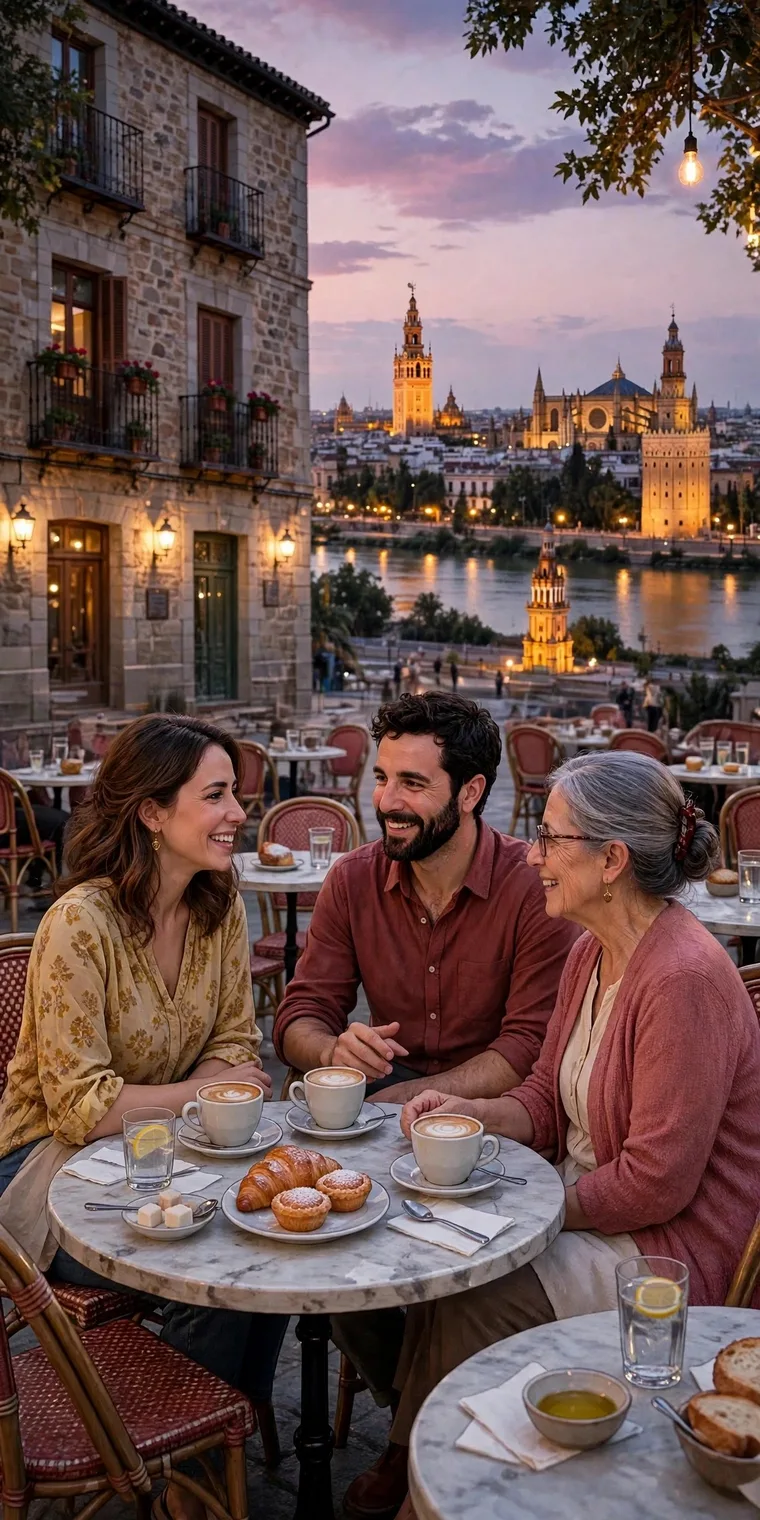
Newcomers to Spain make the same mistake on their first evening. Hungry at seven, they find the restaurant they wanted dark and its kitchen closed. At nine they are finally seated, still among the first in the room. By ten the place is full and loud. By eleven-thirty, when they expect the bill, the next table is ordering coffee and settling in to tell a long story. Nobody is leaving. This is not poor service. It is the design. In Spain, dinner is late, and what happens after — la sobremesa — may be the most important part of the meal.
Sobremesa means, literally, "over the table": the time spent at the table after eating, talking. English has no exact word for it, because English-speaking cultures largely do not do it. They clear, they pay, they go. In Spain, the end of eating is the beginning of something else. Plates are cleared, coffee and perhaps a small liqueur arrive, and conversation becomes the whole event. Half an hour is unremarkable. An hour is common. At a wedding or a long Sunday comida, it can roll on for two or three hours.
Why Dinner Starts When Other Countries Are Finishing
Dinner in Spain, la cena, is normally eaten between nine and eleven at night. At home on a weeknight, nine or nine-thirty is typical. Eating out, Spaniards book for nine-thirty or ten, and later still in summer in the south. Prime-time news begins at nine. Football routinely kicks off at nine or nine-thirty. The whole day pushes dinner back: the long lunch at two or three, shops open until eight-thirty, the merienda snack around six or seven.
Because lunch is the heavy meal, dinner at home is often modest: tortilla española and salad, soup and fish, grilled vegetables, leftovers. The grand late dinners visitors imagine happen in restaurants and on weekends. A visitor who eats a full three-course lunch at two and another at ten has not discovered Spanish life; they have doubled it. Spaniards pace the day: substantial comida, small merienda, lighter cena. The late hour works because the meal is scaled to it.
Restaurants enforce the timetable without apology. Kitchens commonly open for dinner at eight or eight-thirty and take orders until eleven or later. Tapas bars are the bridge: their counters serve earlier and continuously, which is why so many visitors survive their first nights on tapas alone. But a sit-down restaurant keeps restaurant hours, and no amount of hunger will make a chef light the stove at six-thirty.
What Happens After the Plates Are Cleared
The sobremesa has a familiar choreography. Dessert slows the pace — flan, arroz con leche, tarta de queso — and then comes coffee, almost never with dessert but after it: a small solo or cortado that marks the border between eating and talking. In many restaurants a chupito follows, a small shot of licor de hierbas, pacharán in Navarre and the Basque Country, orujo in Galicia. Nobody is rushed.
Then the talk opens out. This is when the meal's real business gets done. Families settle questions too delicate for the eating phase: who hosts at Christmas, how an elderly parent is really doing. Business lunches famously conclude their actual business here, not over the courses — the agreement sketched over food is confirmed, informally but bindingly, over coffee. To skip it is to leave a Spanish meal before its conclusion, like leaving a play before the last act.
Waiters understand this, which is why the experience baffles visitors raised on table turnover. In Spain the bill, la cuenta, does not arrive unasked — bringing it unasked would be a dismissal. The table is yours for the night; restaurants book essentially one seating for dinner. So the visitor waiting politely for the bill will wait a long time, while the waiter waits for a signal. The solution is a raised hand and the writing-in-the-air gesture. Until then, you are not being ignored. You are being hosted.
At home, the sobremesa migrates to the sofas, coffee cups following, the youngest peeling away to screens while the older generation talks on. The principle holds: the gathering does not dissolve just because digestion has begun.
Lunch Sobremesas Are the True Marathon
It is at lunch — especially the Sunday comida — that the institution shows its full scale. A family lunch beginning at two-thirty may still have people at the table at six. Courses arrive slowly: something to pick at, a first plate, a roast or a paella or a cocido, dessert, coffee, liqueurs, and then the long tail of talk, during which someone inevitably produces more food — nuts, turrón at Christmas, pastries — because a talking table is a table that might still eat.
Visitors invited to such a meal should understand the gift and the obligation. You are not being fed; you are being incorporated. Arrive at the stated hour, not early. Bring wine or dessert. Leaving after an hour reads as an emergency. The correct strategy is surrender: eat moderately, accept the coffee, and let the afternoon take the shape it wants. Scheduling anything tight afterwards is a beginner's error. The festive calendar multiplies these occasions — Christmas, Reyes, saints' days, village fiestas, weddings — and in that time zone nobody checks a watch. The sobremesa is where family memory is maintained. Spaniards just call it Sunday.
A Culture That Refuses to Hurry the Good Part
Honesty requires noting the costs. Late dinners sit badly with early starts, and health campaigns periodically scold Spain about eating at ten and sleeping too little. Parents of small children often eat earlier, around eight. Modern life is pulling the timetable gently earlier, and some city restaurants now take a first seating at eight as if it were daring.
Yet the sobremesa shows no sign of dying, because it serves something Spain values more than efficiency: the maintenance of bonds. Where family networks and friendship groups carry enormous weight, long talk after a meal is not dead time. It is infrastructure — plans are made there, grievances dissolved, young people absorbed into the adult circle by listening. The food is the excuse; the sobremesa is the reason.
Stay long enough and the adaptation comes: a walk at eight, a caña at eight-thirty, a table at nine-thirty, dessert, coffee ordered without urgency, and then the talk, opening like a road. The plates are empty. Nobody reaches for a coat. Midnight is not late in Spain; it is where dinner, properly done, was always heading.
© 2026 InsideRealSpain.com