The Bar on the Corner Is Spain's Living Room — and Coffee Is Its Language
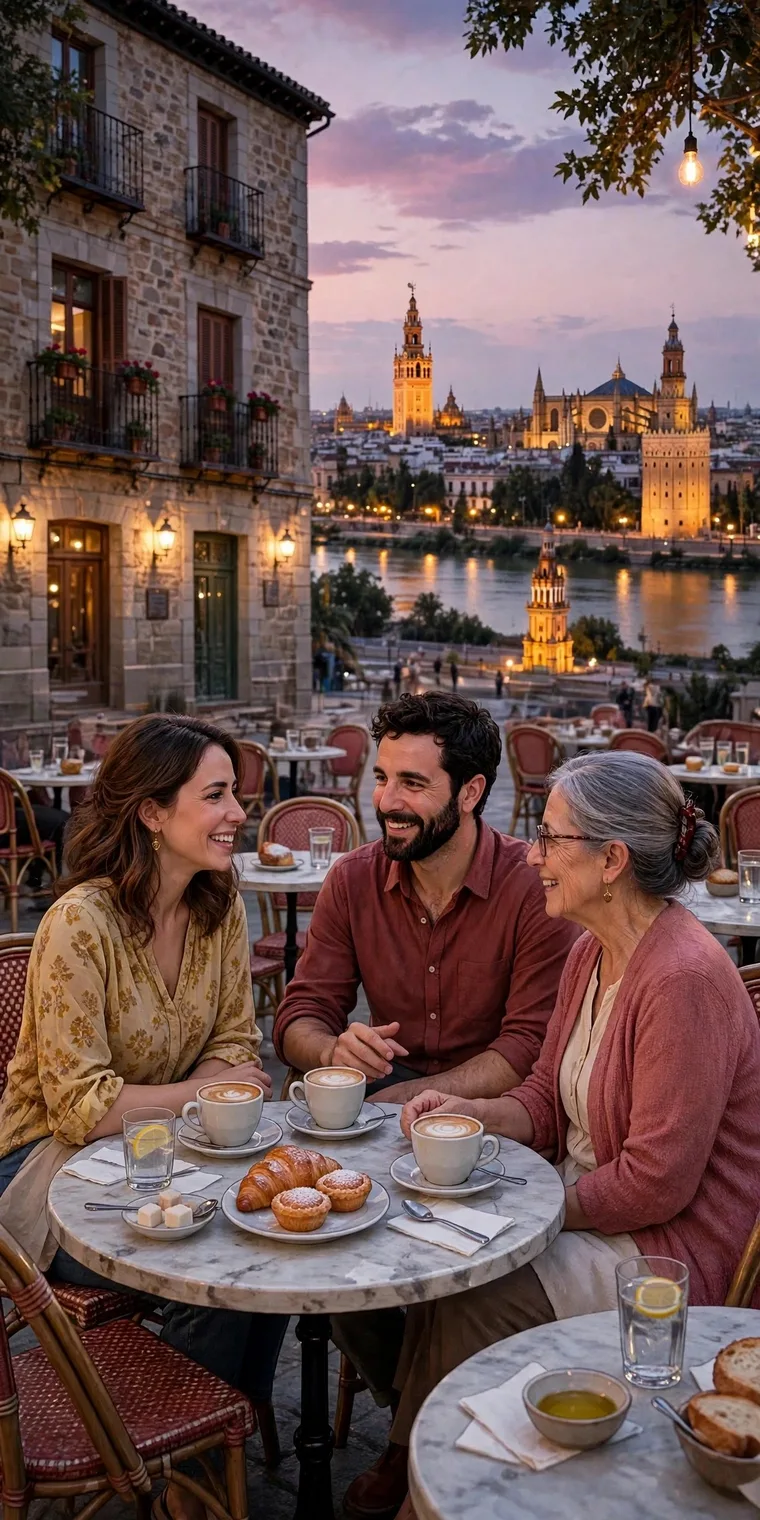
Every neighborhood in Spain has one, and most have several: a bar with a steel counter, a television in the corner, a chalked menú del día by the door, and regulars who treat the place as an extension of their own homes. It is not a pub, not a Parisian café, and not a cocktail bar, though it contains traces of all three. The neighborhood bar — el bar de siempre, the bar of always — is one of Spain's essential institutions. It serves breakfast, mid-morning coffee, lunch, and evening cañas. It knows your order, your football team, and probably your family. To understand everyday Spain, you do not start in a museum. You start here, at the counter at eight in the morning.
Spain has long had one of the highest densities of bars in Europe — roughly one for every 175 inhabitants — and even as numbers have thinned, the bar remains the default third place between home and work. Crucially, it is not primarily about alcohol, nor for the young or the night. Its busiest, most characteristic hours may be the morning.
A Day in the Life of the Counter
The bar opens early, often at seven or earlier near markets, stations, and building sites. First come workers for desayuno: a coffee and a tostada con tomate — toasted bread rubbed with tomato, olive oil, and salt, especially beloved in the south and east — or a croissant, or in Madrid a few churros dunked quickly before the day begins. The coffee machine hisses constantly. Glasses are small, cups are small, and nobody lingers over a vat of anything. The counter is built for standing, for leaning an elbow, for finishing and going — or for deciding, instead, to stay for one more.
By eleven comes the second pulse: the mid-morning break. Office staff, shopkeepers, and tradespeople arrive for a coffee, a small beer, or the mighty bocadillo that in some regions is practically a meal in a bread roll. At one-thirty, if the bar serves lunch, tables fill for the menú del día. In the late afternoon the tone softens — coffees, a vermouth, grandparents with grandchildren — and by eight the evening cañas begin, that small draft beer that is less a drink than a punctuation mark at the end of work.
Through all of it, the same social rules apply. You greet the room — a general buenas is normal when entering a small bar. You can sit alone without stigma; the bar is one of the few places where solitude in public is completely respectable. Children are present, unremarkably, because the bar is a family space as much as an adult one. Pensioners play cards or dominoes. The television shows news or football at a volume that allows argument. It is, in the best sense, ordinary — and that ordinariness is the point. The living room of a Spanish home is private. This one is shared.
Loyalty matters. Regulars have their bar, and the bar has them. The camarero who pours your coffee before you finish ordering has performed a small act of recognition Spaniards value out of proportion to its size. A newcomer who returns three days running becomes a project: the staff begin to remember. Move neighborhoods and losing your bar is a genuine, if minor, grief.
Coffee, Decoded at Last
Nothing exposes a visitor faster than ordering coffee, and nothing rewards learning faster either, because Spanish coffee vocabulary is precise, economical, and used all day. Order with confidence and the whole ritual smooths.
The foundation is the café solo: a single short espresso, black and intense, in a small cup or glass. It is the default unit of Spanish coffee life — drunk after lunch, mid-morning, at any pause that needs marking. A café con leche is the breakfast coffee: espresso with a roughly equal measure of hot milk, in a larger cup. It belongs to the morning; ordering one after dinner marks you, gently, as foreign. Between the two stands the beloved cortado: an espresso "cut" with a dash of warm milk, served small in a little glass. It is the correct after-meal order for anyone who finds a solo severe.
Around those pillars orbits a supporting cast. An americano is a solo lengthened with hot water — acceptable, faintly pitied. A café bombón layers espresso over sweetened condensed milk. A carajillo spikes coffee with brandy or rum. In summer, café con hielo arrives as hot coffee with a separate glass of ice, into which you pour it yourself. In Málaga, the vocabulary multiplies into a local system — sombra, nube, mitad — describing exact proportions of coffee to milk: national in structure, fiercely local in detail.
Two rules govern the system. First, coffee is fast and cheap: a solo at a neighborhood counter costs far less than a chain coffee in London or New York, and it is drunk in minutes, standing. Second, coffee is not taken away by default — the paper-cup commute is a recent import. In the bar de siempre, coffee is an event in place: you stop, you exchange four sentences about the weather or the match, you go. The caffeine is almost incidental. The pause is the product.
More Than a Drink
It would be a mistake to treat the neighborhood bar as a quaint survival. It does real work. It is where tradespeople find clients, where local news travels faster than any feed, where an elderly person living alone gets a guaranteed daily conversation, where immigrants have traditionally learned the language at the speed of the counter. During hard times, bars quietly extend credit and keep the tab in a notebook. During fiestas, the bar becomes headquarters. During a World Cup, a stadium annex.
It is also under pressure. Rents, retirements, and chains have closed many classic bars, and campaigns to protect them as cultural heritage have sprung up in Madrid and elsewhere. What is being defended is not nostalgia. It is a social technology: a place with no membership, no dress code, and no time limit, open to the whole street.
So learn the counter. Go in the morning, when the coffee machine is at full song. Order a cortado. Stand where the regulars stand. Nobody will perform Spain for you — that is the compliment the bar pays you. For the length of one small coffee, you are not a tourist watching Spanish life. You are standing in its living room, taking part.
© 2026 InsideRealSpain.com