Tapas, Raciones, and the Sunday Table: How Spain Actually Orders
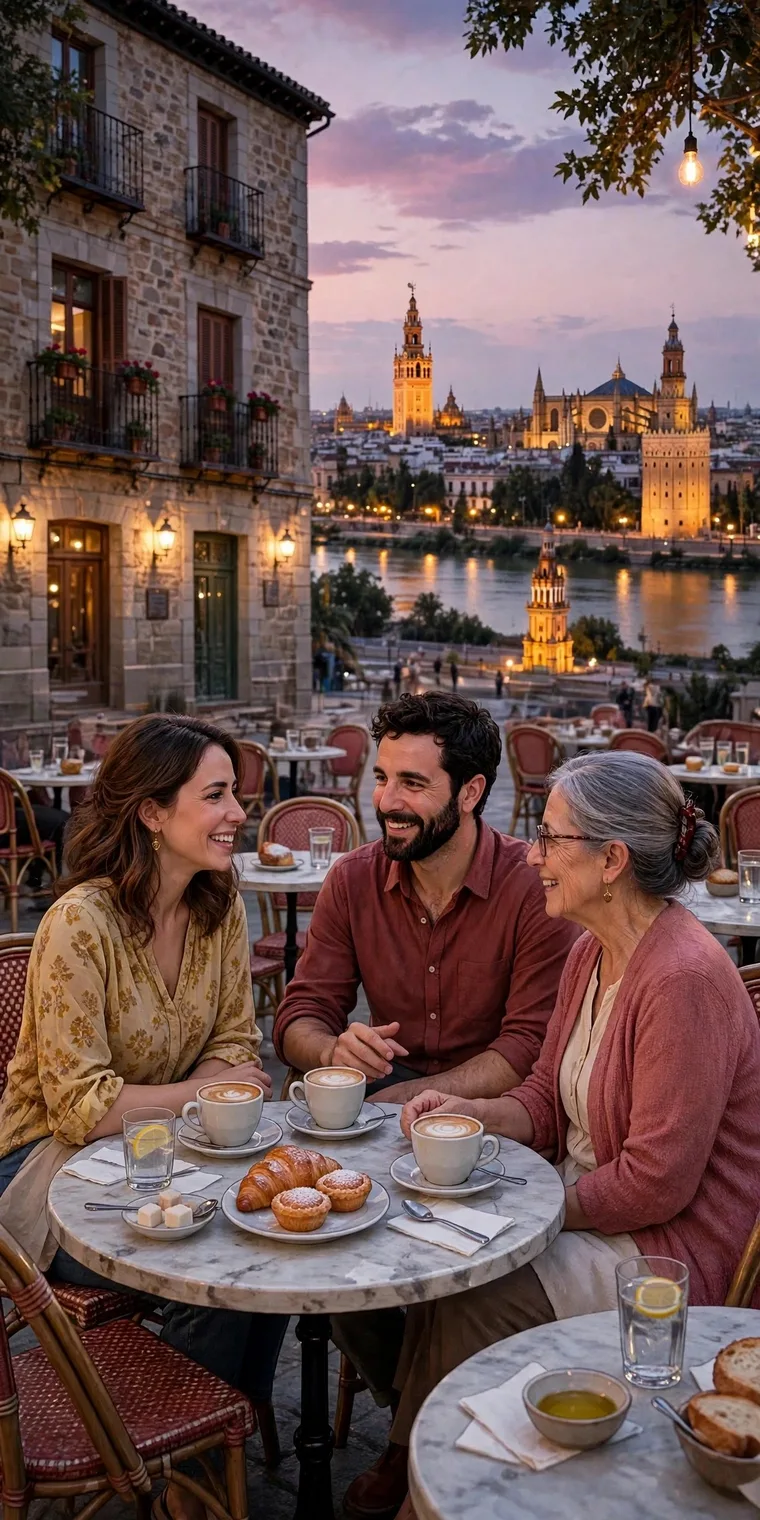
The fastest way to over-order in Spain is to read a bar menu as if it were a restaurant menu back home. A visitor sees patatas bravas, gambas al ajillo, ensaladilla rusa, and jamón, orders all four "to start," and then watches as four substantial dishes arrive at once — before a main course that is no longer possible. The mistake is not greed. It is grammar. Spanish eating out has its own grammar — tapa, ración, compartir — and once you learn it, the system becomes generous, flexible, and remarkably good value.
The same grammar governs the other pole of Spanish food life: the Sunday comida, the long family lunch where ordering disappears and food simply arrives, course after course, under the authority of whoever is cooking. Between the bar counter and the family table lies most of what Spain believes about eating together.
Tapa, Media, Ración: The Sizes That Matter
A tapa is a small portion — a little plate of food, a few bites, designed to accompany a drink. Its origins are argued over endlessly (a slice of ham laid over a glass to keep out flies is the famous story, tapa meaning lid), but its modern function is clear: it is a taste, not a serving. In Granada, León, and much of Andalusia, a tapa still comes free with a drink, growing more elaborate with each round — a custom locals defend as civilization itself. In most of the country, however, you pay for your tapa, and the free morsel, if any, is a few olives or crisps.
A ración is the full-sized version: a proper plate of the same dish, meant to be shared. Between the two, many bars offer the media ración, the half portion, often the smartest order in the building. The crucial point is that raciones are normally para compartir — for the table. Nobody orders their own ración of croquetas and guards it. Plates land in the middle, forks converge, and the table eats as a unit. A group of four might order five or six raciones between them: cold things first, then hot, then the richest last.
This is why Spanish ordering is a negotiation, not a selection. Someone proposes, someone vetoes the octopus, the waiter advises that the mushrooms are exceptional today and that three raciones will be plenty to start — advice you should almost always take, because you can always order more. The habit of ordering everything at once, individually, fights the system. The Spanish habit — order a little, share everything, assess, order again — is the system working as designed. Ir de tapas extends the logic across a whole evening: a drink and a specialty in one bar, a walk, the famous dish in the next. The crawl, not the sitting, is the event, especially in San Sebastián, Seville, Granada, and Madrid.
Regional pride runs through the small plates. Basque pintxos — elaborate bites speared on bread, lined up on counters in San Sebastián and Bilbao — are counted and paid for by the stick, on trust. Galicia sends out pulpo a feira, octopus with paprika and oil. Madrid claims patatas bravas and callos. Valencia will correct you if you call anything with rice a paella that is not. The tapa is small. The loyalties are not.
The Bill, the Tip, and the Spaniard's Shrugged Generosity
Then comes the moment visitors overthink most: paying. Tipping in Spain is modest and blessedly free of mathematics. Service is included in the price; waiters are salaried professionals, and no percentage is owed or calculated at the table. What Spaniards do, when service has been good, is leave the small change: a euro or two after a menú del día, perhaps five to ten euros after a long dinner for a group. In bars, the coins left on the tray are the tip, and walking away from twenty cents of change is normal micro-generosity, not a statement.
Large percentage tips, offered earnestly by visitors used to American norms, are received with gratitude but also mild bewilderment, and they impress nobody. The Spanish way to reward a place is different: return, bring friends, become known. The one unforgivable behavior is not undertipping. It is splitting hairs — the long table audit in which each person calculates their exact consumption to the cent. Groups commonly divide the bill equally or take turns paying whole meals across weeks, trusting the long balance. Generosity in Spain is measured over time, not per transaction.
Sunday, Two-Thirty: The Comida That Rules the Week
If tapas are improvisation, the Sunday comida is liturgy. Sunday lunch remains the week's fixed point of family life: adult children return to their parents' home, grandparents preside, and the table expands to fit whoever can be fitted. It starts late — sitting down at two-thirty or three — and it has no scheduled end. Shops are largely closed, streets are quiet, and the nation's real activity is happening behind apartment doors, around tables loaded beyond reason.
The menu follows a logic that rarely changes. Something to pick at first: olives, jamón, cheese. Then a first course — in winter a cocido or fabada, the great stews that are meals in themselves; in lighter months a salad, a soup, or a rice. Sunday is paella day in Valencia and far beyond it, eaten communally and argued over until you taste a proper socarrat, the crisped bottom layer that is the prize. The main course, dessert, coffee, and the long sobremesa follow. By six, people begin, slowly, to leave, carrying containers of leftovers they were ordered to accept.
Foreigners sometimes read this ritual as a tradition on its way out. The evidence suggests otherwise. Families are smaller and distances larger, but the institution adapts rather than dies: the comida moves to a restaurant's long table, or to Saturday, or to a video call propped against the bread basket for the child studying abroad. What does not change is the premise that the family eats together, at length, once a week — not a lifestyle preference but a duty of affection.
Learn the grammar and the two worlds connect. Order raciones to share and you are eating the bar's version of the Sunday table: food in the middle, talk around it, nobody counting, nobody rushed. Leave the coins, skip the calculations, accept the extra plate and the container of leftovers. In Spain, the menu is never just a list of dishes. It is instructions for being together — and on Sunday, at two-thirty, the whole country sits down to follow them.
© 2026 InsideRealSpain.com