Cabo de Gata: Spain's Wild, Dry, Luminous Edge
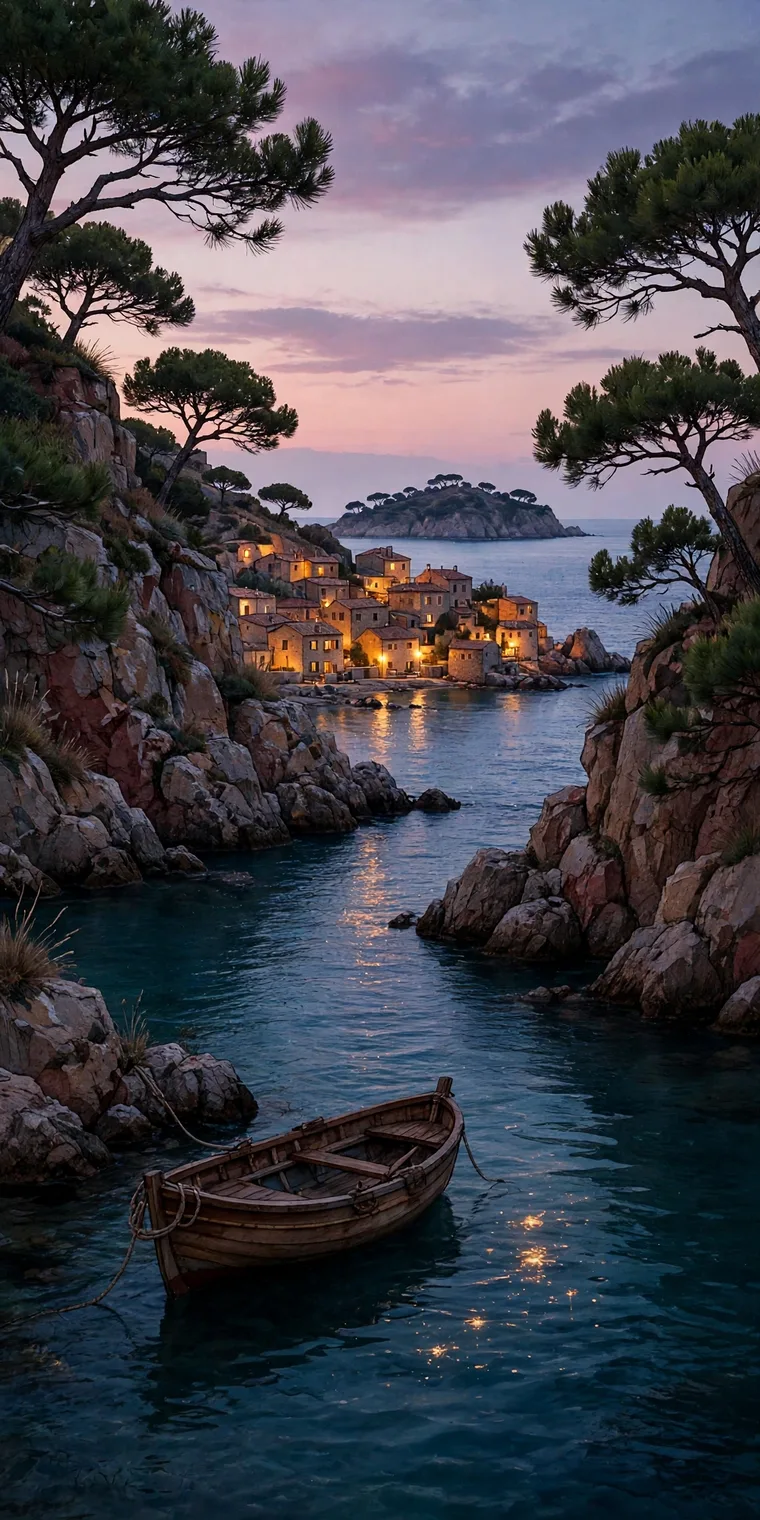
Cabo de Gata, in the far southeast corner of Almería, is the driest place in mainland Europe — around 150 to 200 millimetres of rain in a year, steppe light, volcanic hills the colour of rust and bone — and it looks like nowhere else in Spain. There are no forested headlands here, no green coves. There are salt flats white as snowfields, palm groves in dry riverbeds, watchtowers on black cliffs, and a sea so clear it seems lit from below. Protected since 1987 as the Cabo de Gata-Níjar Natural Park, one of Spain's first maritime-terrestrial parks, it is the Mediterranean coast as it might have been everywhere, before the concrete arrived.
A Volcanic Coast That Never Got Built
The park covers some 49,000 hectares of land and sea along roughly sixty kilometres of coastline, and its emptiness is not an accident of neglect alone. The terrain — ancient volcanic formations eroded into domes, dikes, fossil reefs and dunes — was too dry for farming at scale and too poor for industry. What grew instead was a scattering of small settlements: the fishing village of San José, now the park's informal capital; Las Negras, named, legend says, for the black mourning dress of widows from a wrecked boat's village; Rodalquilar, a former gold-mining town whose mines closed in the 1960s and whose ruins and botanical garden now sit in a valley of agave and silence; and the tiny, roadless-by-car hamlets of Cala de San Pedro, reached on foot or by boat, where a freshwater spring and an alternative community occupy a ruined fortress cove.
Because development never came, the park's beaches remain unbuilt in a way that startles visitors used to the Costa del Sol, three hours west. Playa de Mónsul, with its great wave-shaped wall of solidified lava, became famous as a film location — Indiana Jones and the Last Crusade shot its beach scenes here, as did Lawrence of Arabia further inland in Almería's deserts — but fame has not added a single building. Playa de los Genoveses, a broad, gentle bay backed by dunes and eucalyptus, is named for the Genoese fleet that anchored here in 1147. In high summer the park limits car access to these beaches and runs shuttle buses from San José; arrive early, carry water and shade, and expect nothing to buy. That absence is the luxury on offer.
Further east, the coast turns wilder still. Los Escullos has a fossil dune like a frozen wave beside its castle. La Isleta del Moro, two whitewashed clusters of houses on a rocky point, serves fish restaurants where the day's catch and the view compete. Beyond Agua Amarga, a comparatively polished village at the park's northeast edge, footpaths lead to Cala del Plomo and Cala de Enmedio, white-sand coves folded into pale cliffs, reachable only on foot — and therefore, even in August, comparatively your own.
Salt, Flamingos and the Lighthouse
At the park's southwestern gate stand the Salinas de Cabo de Gata, salt pans worked since antiquity and still producing, divided into lagoons that host one of the park's great spectacles: greater flamingos, sometimes in their thousands, feeding in pink ranks in the shallows, alongside avocets, black-winged stilts and, in migration seasons, a roll call of European waders. The bird observatory by the village of Las Salinas, with the strange, slender-spired church built for the salt workers in 1907, is the place to watch them at dawn.
The road continues past the pans, climbing to the Faro de Cabo de Gata itself, the lighthouse of 1863 standing on the cape where the park takes its name, above the Arrecife de las Sirenas — the Reef of the Sirens — a cluster of volcanic chimneys rising from water of hallucinatory clarity. The sirens were probably monk seals, once resident here; the name kept the magic and lost the seals, though conservationists hope they will return to a coastline now protected down into the sea itself. The park's marine reserve, a mile wide along its best stretches, bans fishing in its core zones, and snorkelling over its posidonia beds and rocky reefs — groupers, barracuda, octopus, clouds of damselfish — is the finest on Spain's Mediterranean mainland.
Heat, Light and Honest Warnings
Cabo de Gata does not suit everyone, and an honest guide should say so. In July and August the heat is serious, the wind — the levante from the east, the poniente from the west — decides which beaches are swimmable on any given day, and jellyfish arrive with certain winds and warm currents. The villages are small and their restaurants fill; book. There is little shade that nature provides, almost no nightlife, and no water sports infrastructure beyond kayak hire, diving centres in San José and Las Negras, and boat trips along the cliffs. Travellers wanting animation should stop in Mojácar or Almería city, itself underrated, with its great Alcazaba fortress and cathedral built like a fort against the same pirates who made this coast need watchtowers.
Come instead in the shoulder seasons, when Cabo de Gata becomes close to perfect: April to June and September to October bring warm seas, empty paths, the steppe briefly green and flowering after any rain, and temperatures made for the park's walking routes — the coastal path from Las Negras to Agua Amarga, the climb to the Mesa Roldán lighthouse and its Carboneras views, the rambla walks inland through palm groves at Fernán Pérez. Winter, too, has its devotees: this is one of the few corners of Europe where January regularly offers T-shirt afternoons, almond blossom, and flamingos under a hard blue sky.
The Value of Dryness
Spain's coasts usually compete on abundance — greener, bigger, livelier. Cabo de Gata competes on absence: no towers, no promenades, no beach bars with speakers, just volcanic rock, salt, light and a protected sea. In a country that built so much of its shoreline, the driest corner of Almería kept the oldest version of the Mediterranean. It is not the easiest coast in Spain. For many who find it, it becomes the favourite.
© 2026 InsideRealSpain.com