The Costa Brava's Hidden Coves: Where the Pyrenees Meet the Sea
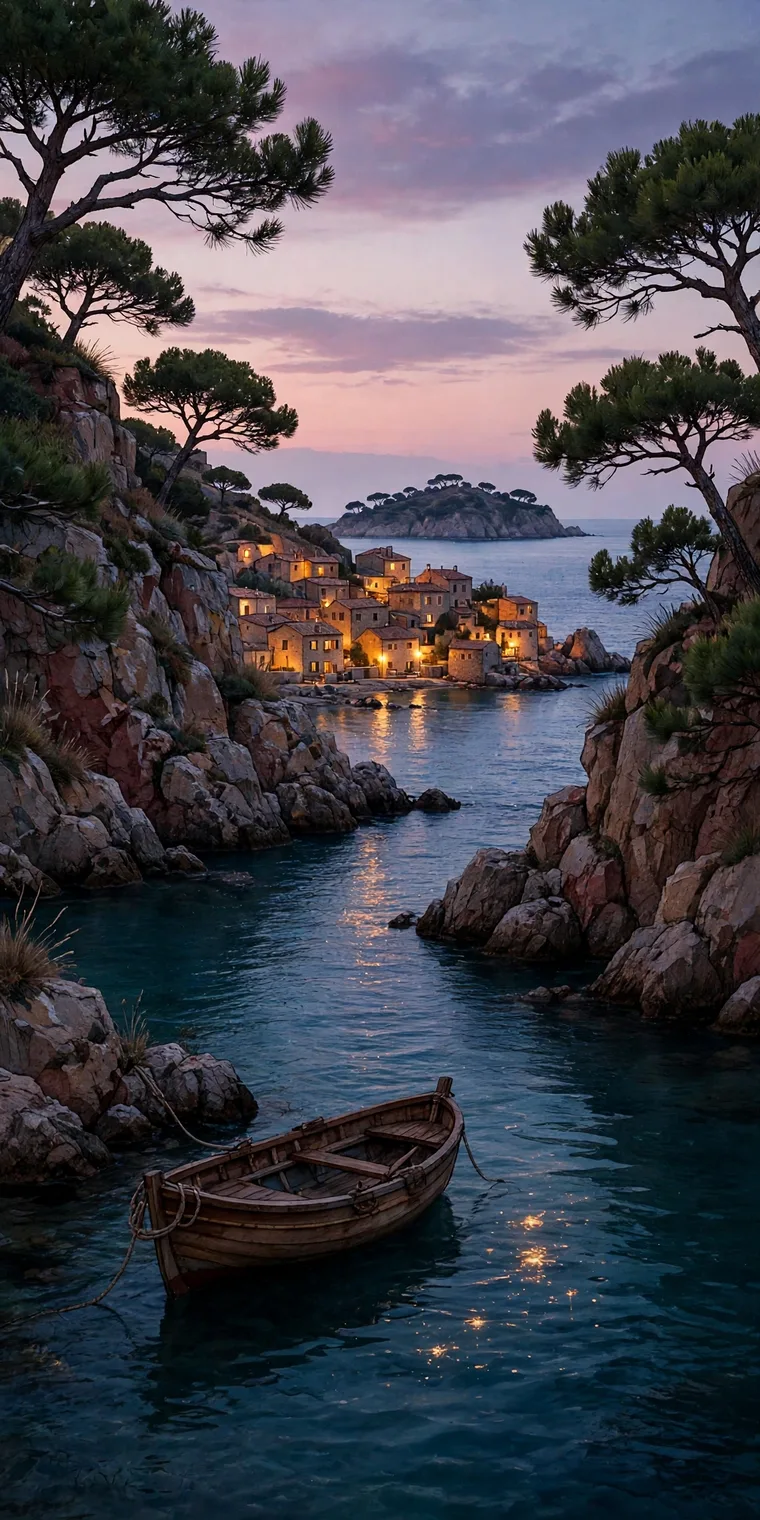
The Costa Brava earned its name — the Rugged Coast — in 1908, when journalist Ferran Agulló used it in print for the shoreline running from Blanes, north of Barcelona, to the French border at Portbou. It was also, a generation later, one of the birthplaces of mass tourism in Spain, and its southern stretches still show it. But the Costa Brava has a split nature that defines it: where the road runs straight, the resorts grew; where the Pyrenees fall into the sea in folds of pine, schist and granite, the coast stayed wild, footpath-only and quietly magnificent. The art of visiting is knowing which Costa Brava you are in.
The Camí de Ronda: The Only Honest Way In
Almost everything worth finding on this coast is found from the Camí de Ronda, the coastal path originally patrolled by the Guardia Civil to watch for smugglers. Restored and waymarked as the GR92, it links cove to cove along cliffs, through pine woods and past watchtowers, often where no road reaches. Walk from Calella de Palafrugell to Llafranc — forty-five minutes of headlands and clear water — or the wilder stretch from Begur to Tamariu, and the geography becomes clear: this is not a beach coast, it is a cove coast. Cala, cala, cala. Each one small, enclosed, reached by steps or path, with water over rock and sand that snorkellers cross above posidonia meadows and octopus gardens.
Begur makes the best base for the central coves. A medieval hill town crowned by a castle, it commands a ring of beaches that face in different directions — useful local knowledge, because when the tramontana or a southerly chop ruins one, another will be sheltered. Sa Riera is the largest and easiest; Aiguablava, facing the blue as its name promises, is the beauty; Sa Tuna, a tiny fishing cove with houses at the water's edge, is the one to reach on foot and stay for lunch. Further south around Palafrugell, Tamariu keeps a village scale that its popularity has not broken, while Calella de Palafrugell — whitewashed houses, arched porticos on the seafront, boats hauled on the sand — is the Costa Brava of the classic postcards, and one of the few that lives up to them. On the night of 2 July each year, its Cantada d'Havaneres fills the bay with old sea songs brought back from Cuba, sung to an audience sitting in boats.
Cadaqués and Cap de Creus: The Dalí Coast
North of the great, developed bay of Roses, the coast changes temperament. The road to Cadaqués winds for half an hour around a barren cape, and that inconvenience saved the town. Cadaqués is white, blue-shuttered and self-contained, a former fishing village that became, improbably, an outpost of twentieth-century art: Picasso visited, Marcel Duchamp played chess in its cafés, and Salvador Dalí made his home at Portlligat, just around the bay — a labyrinth of fishermen's huts he expanded over forty years into a house like a dream made habitable, now a museum booked weeks ahead in season.
Behind the town rises Cap de Creus, mainland Spain's easternmost point and its first maritime-terrestrial natural park. This is geology as sculpture: schist and granite eroded by the tramontana — the cold, violent north wind that locals credit and blame for everything from the light to the temperament — into shapes Dalí insisted had taught him his forms. Eagle, camel, lion: the named rocks along the path to the lighthouse are not hard to see. Swimming here is from rock platforms and small stony coves like Cala Culip and Cala Jugadora, the water exceptionally clear, the setting closer to the end of the world than to a resort. Go in the morning, walk to the lighthouse, and be in a Cadaqués terrace for grilled fish before the day boats and the heat arrive.
Inland from the cape, two stops complete the picture. The monastery of Sant Pere de Rodes, a vast Benedictine ruin on the slopes of the Verdera range, surveyed the sea for pirates and pilgrims for a thousand years; its church is a masterpiece of Catalan Romanesque. And in Figueres, Dalí built his own afterlife: the Dalí Theatre-Museum, topped with eggs and watched over by golden figures, the largest surrealist object in the world, as he called it, and the single most visited museum in Catalonia after Barcelona's giants.
The Northern Edge and the Southern Warning
The coast ends, fittingly, in ambiguity at Portbou, a border town of railway yards and memory, where philosopher Walter Benjamin died in 1940 fleeing the Nazis; the memorial there, stairs descending toward the sea through a steel corridor, is one of Spain's most quietly powerful monuments. Southward, by contrast, lie Lloret de Mar and Tossa de Mar — Tossa genuinely beautiful inside its medieval walls, Lloret transformed beyond recognition. They are part of the Costa Brava's story too, but they are the cautionary part.
Practical sense on this coast is seasonal above all. In August, even hidden coves are found. In June and September the water is warm, the paths are empty by nine in the morning, and the same coves recover their nature. Drive the Gi-524 and the cliff roads slowly, park where you are told to, and walk the last stretch — the Costa Brava was built by smugglers' paths, not promenades, and it still rewards those who arrive on foot.
Why Rugged Wins
Every famous Spanish coast has a claim, but the Costa Brava's is distinctive: it is beautiful because it resisted, in its best stretches, the straight line. The Pyrenees made coves instead of beaches, the wind kept developers honest, and villages like Cadaqués turned isolation into culture. Find it on foot, early, out of season, and the rugged coast is not a brand name. It is a description.
© 2026 InsideRealSpain.com