A River of Wings: The Raptor Migration Over the Strait of Gibraltar
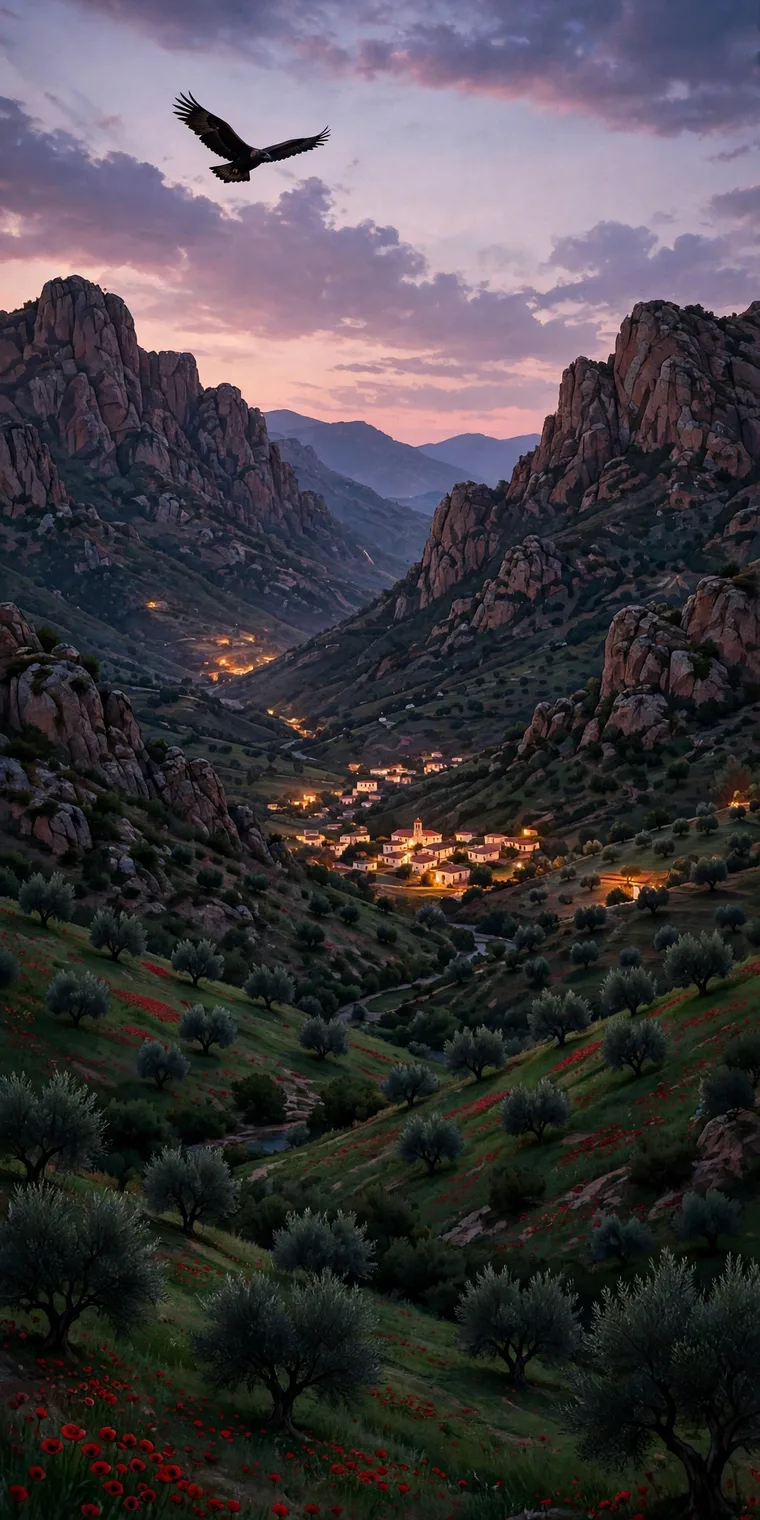
There is a place in southern Spain where, on the right day in September, you can watch 10,000 birds of prey cross from one continent to another before lunch. The Strait of Gibraltar is only 14 kilometres wide at its narrowest — Africa is not a distant idea here, it is a blue ridge you can see from the beach — and for soaring birds that cannot flap their way over long stretches of water, those 14 kilometres are everything. Twice a year, the strait becomes one of the great migration bottlenecks of the world.
An estimated 30 million birds use the crossing annually, among them more than 400,000 raptors and storks. They concentrate, they wait, they read the wind, and when conditions are right they pour across in rivers that can darken a hillside's sky.
Why Soaring Birds Need This Bridge
A honey buzzard or a short-toed eagle is built to soar. Broad wings catch rising air — thermals over sun-heated land — and the bird climbs in circles without a wingbeat, then glides forward losing height until it finds the next thermal. Over water there are no thermals. A long sea crossing means flapping, flapping means energy, and for a bird facing a journey from Scandinavia to the Sahel, wasted energy can be fatal.
So the geography of Europe funnels them here. Birds from across western and central Europe converge on Iberia, travel down its length, and gather at its southern tip rather than cross the Mediterranean at a wider point. White storks do the same. The eastern population uses the Bosphorus; the western population uses Gibraltar. Stand at Tarifa in Cádiz province in late August and you are standing at the narrow end of a funnel the size of a continent.
Wind decides everything. With a poniente — the westerly — migration flows steadily and birds cross high and fast. With a levante, the fierce easterly that can blow for days through the strait, soaring birds are pushed west, grounded, or forced to attempt the crossing from unfavourable points. Experienced watchers do not just check the date. They check the wind the night before, and they position themselves accordingly: east of Tarifa when the levante blows, west when it does not. The birds, of course, worked this out long before anyone wrote it down.
The Calendar of the Crossing
Migration here is not one event but two long, overlapping seasons, each with its own cast.
Southbound passage begins surprisingly early. Black kites — the most numerous raptor at the strait — start moving in July, and by August they cross in flocks of hundreds, loose, buoyant groups that fill the sky over the Campo de Gibraltar. Honey buzzards peak in late August and early September, elegant and long-winged, on their way to tropical Africa where they specialise in wasp larvae. September is the richest month: short-toed eagles, booted eagles in pale and dark forms, Egyptian vultures, marsh harriers quartering low over the fields, black storks in small, wary parties among the thousands of white storks, and sparrowhawks flickering across at hedge height.
October brings a change of character — short-toed eagles still, common buzzards, and the first griffon vultures, huge birds that breed in Spanish sierras and whose young disperse south. Griffons are the strugglers of the strait. With wingspans approaching 2.8 metres and weights up to 11 kilograms, they depend entirely on strong lift, and groups regularly abort crossings, turning back to the Spanish side to wait, sometimes for days. Watching a kettle of 200 griffons climb over Algeciras, set their wings for Africa, hesitate and unravel back to the hills is to understand that migration is not instinct as clockwork. It is decision, risk and weather, repeated bird by bird.
Northbound passage, from late February to June, is more spread out and, for many watchers, even better. The birds are in breeding plumage, the light is softer, the hills are green and flower-covered, and black kites, short-toed eagles and Egyptian vultures return alongside swifts, bee-eaters and swallows in enormous numbers. Egyptian vultures crossing in spring include adults returning to Spanish breeding cliffs — a population of European importance that Spain has a special duty to protect.
Where to Watch, and Who Is Counting
The classic watchpoints are staffed observatories on the hills above the coast: Cazalla and Algarrobo near Tarifa, and others across the natural park of Los Alcornocales and the Strait Natural Park, which protects land on the Spanish shore. On a peak day the atmosphere at Cazalla is part bird fair, part air-traffic control. Volunteers call out species, ages and numbers in Spanish, English, German and Dutch, clickers in hand, as kettles form and dissolve overhead.
Much of that counting is done by Fundación Migres, based in Tarifa, which has run a standardised monitoring programme since the late 1990s. Its value is not just spectacle. Systematic counts from fixed points, hour after hour, season after season, are how Europe knows whether its honey buzzards or Egyptian vultures are increasing or quietly collapsing. The strait is a census point for the continent — a place where the health of populations breeding from Sweden to Seville can be read in a single autumn. Migres and other teams also track birds by satellite, revealing wintering areas in Mali, Mauritania and Senegal and the stopovers that need protection along the way.
There are threats specific to the bottleneck. The hills around Tarifa were among the first in Spain to fill with wind turbines, and early siting caused real raptor mortality; shutdown-on-demand systems, where turbines stop when large flocks approach, have since cut deaths significantly. A bottleneck concentrates birds wonderfully for watchers — and dangerously, if the bottleneck itself becomes hazardous.
More Than Raptors
Below the raptor kettles, bee-eaters cross in calling flocks and swifts scream around the cliffs. In the strait itself, another migration takes place in water: dolphins, pilot whales, orcas that follow the bluefin tuna in summer, and fin whales passing between Atlantic and Mediterranean.
Go in the first half of September for sheer numbers, in March and April for the return in spring light. Bring binoculars and patience; migration has blank days when the levante pins everything down. Then the wind drops, the sky fills, and a kettle of honey buzzards spirals up over Tarifa, turns south, and commits to Africa. Fourteen kilometres. No thermals. Everything the species knows, staked on one glide. It never gets ordinary.
© 2026 InsideRealSpain.com