Postcards That Refuse to Fade: Albarracín, Cadaqués and Spain's Prettiest Villages
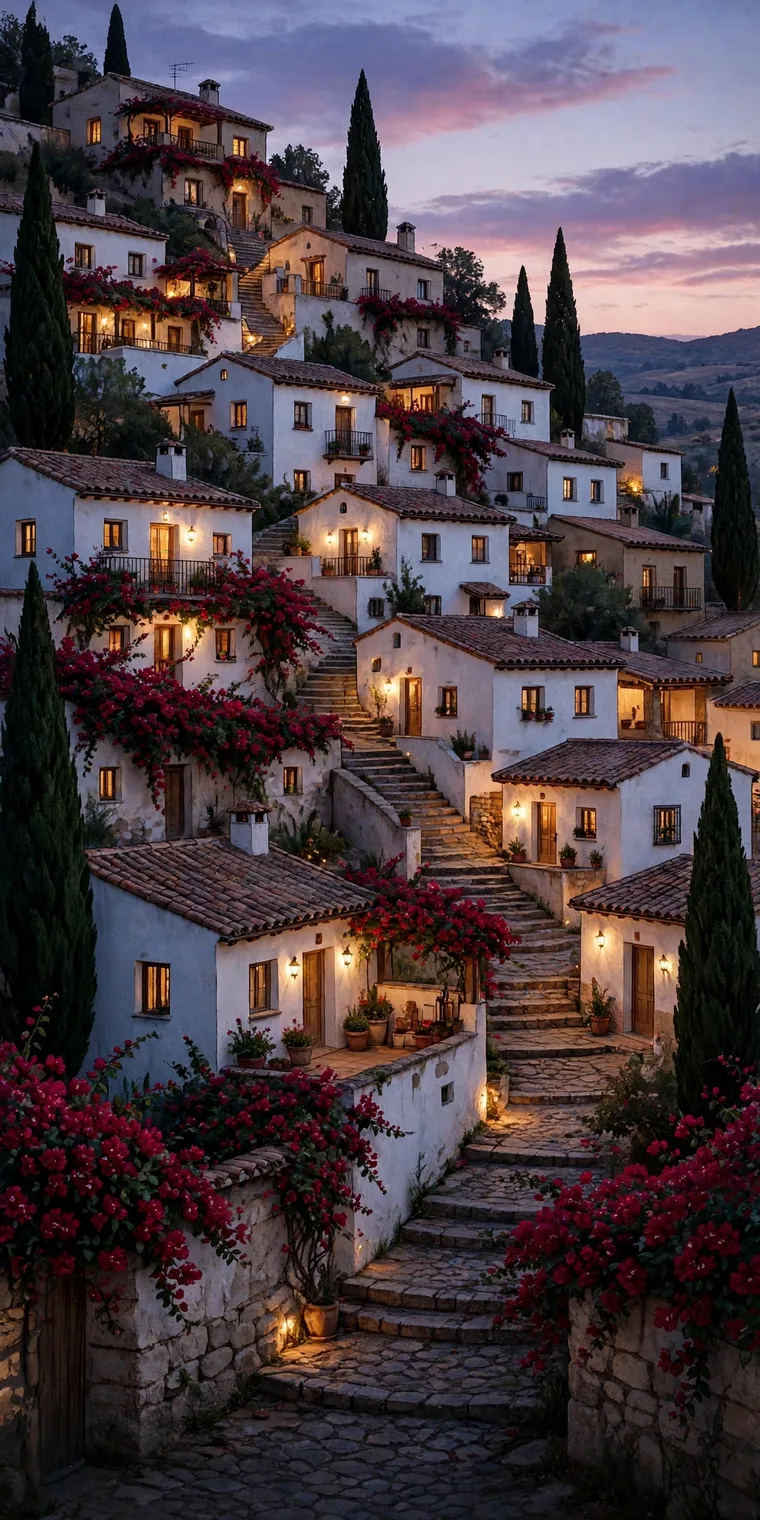
Spain has an official beauty contest for villages, and it is fiercely contested. The association Los Pueblos Más Bonitos de España — the Most Beautiful Villages of Spain — was founded in 2011, modeled on similar networks in France and Italy. Admission is demanding: fewer than 15,000 inhabitants, a certified heritage, and an audit of everything from facade upkeep to traffic control. Fewer than one in five applicants gets in. The network now counts more than 120 members.
The point is not the plaque. It is that Spain keeps some of its greatest pleasures in places of a few hundred or a few thousand people, often at the end of a winding road. Two show the range: Albarracín, lost in the mountains of Aragón, and Cadaqués, on a bay at the far edge of Catalonia. One is inland, fortified, and rose-pink. The other is maritime, white, and drenched in art. Both are regularly called the prettiest village in Spain, and both arguments are good.
Albarracín: The Pink Fortress in the Pines
Albarracín sits in the Montes Universales of Teruel province, in one of the least populated corners of Western Europe, wrapped in a meander of the Guadalaviar River and surrounded by forests of pine and red sandstone. Getting there is part of the experience: the road from Teruel city climbs and twists for almost 40 kilometers, and the village appears suddenly — a cascade of tall, narrow, rose-colored houses climbing a hillside to a ruined castle.
The houses define Albarracín. They are built of timber, plaster, and local stone in pink, ochre, and rust, with wooden balconies jutting over lanes so narrow that neighbors can almost shake hands across them. Many are wider at the top than at the bottom, overhanging the street floor by floor — a medieval habit that gained space and shelter at once. The small, irregular Plaza Mayor holds the town hall with its wooden gallery. Above everything stands the Torre del Andador, a Moorish watchtower from when Albarracín was the capital of a small taifa kingdom, ruled by the Banu Razin family, from whose name the village takes its own.
That frontier past explains its shape. Albarracín was a border stronghold between Muslim and Christian Spain and later between Aragón and Castile, defended by walls that still climb the ridge. Today the population is only around 1,000. Tourism matters, but Albarracín has protected itself well: traffic stays out of the old center, new building is strictly controlled, and the Fundación Santa María de Albarracín has spent decades restoring historic buildings while running concerts and courses that bring life, not just visitors.
Come in late afternoon, when the stone turns deeper red, walk the wall path for the view over the river bend, and stay for dinner: Teruel ham, black truffles, and migas — fried breadcrumbs with chorizo — are the mountain cooking to order.
Cadaqués: The White Village at the End of the Road
Cadaqués could hardly be more different. It lies in the province of Girona, on the Cap de Creus peninsula, where the Pyrenees finally fall into the Mediterranean. For most of its history it was effectively an island on land, cut off by the Pení mountain and reached only by sea or by a rough track. The modern road still winds dramatically, and that difficulty preserved Cadaqués long enough for it to be discovered on its own terms.
Those terms were set largely by Salvador Dalí. He first visited as a teenager, later bought a fisherman's hut at Portlligat, just over the headland, and enlarged it hut by hut into the labyrinthine house — now a museum — where he lived for decades. Dalí called the Cap de Creus landscape the inspiration for his melting forms, and looking at its wind-sculpted rocks, you believe him. He was not alone: Picasso, Miró, Duchamp, and García Lorca all spent time here. Cadaqués became a working fishing village that was also a bohemian colony, and it has never quite stopped being both.
The village is a small amphitheater of white houses around a bay of clear water, with slate — the dark local stone — used for roofs and lanes. The church of Santa María holds a gilded baroque altarpiece that survived the Civil War hidden by villagers. Boats still fish from here, and the catch anchors restaurant menus. Prices are high and summer crowds intense, in a place that cannot grow. Go in May, June, or September, book Portlligat well ahead, and walk the coastal path into Cap de Creus Natural Park, where the tramontana wind has shaped both the rocks and, locals insist, everyone's character.
Beyond the Famous Two
Albarracín and Cadaqués lead a long bench. Santillana del Mar in Cantabria preserves a whole town of stone palaces — joked to be the town of three lies, since it is neither saintly (santa), flat (llana), nor on the sea (del mar). Hondarribia, on the Basque coast, mixes a walled old town with one of the best food scenes of any small town in Spain. Valldemossa and Deià, in Mallorca's Tramuntana mountains, pair stone villages with a lineage running from Chopin to Robert Graves.
Inland and south, look for Frigiliana above the Málaga coast, with its Moorish quarter; Pedraza in Segovia, a walled town that lights thousands of candles for its July concerts; Aínsa in the Aragonese Pyrenees; and Trujillo in Extremadura, whose granite plaza is among Spain's most handsome. Each became famous differently, but they share discipline: strict planning rules, residents who stayed, and a refusal to let the souvenir economy hollow out the center.
Visiting Without Spoiling Them
These villages are fragile. A place of 800 people cannot absorb 8,000 visitors a day unchanged, and they know it. Some limit coach access or promote visits outside August. Travelers can help: stay at least one night, so money goes to local rooms and restaurants; visit in shoulder season, when the light is often better; and walk in from the edges instead of driving into the old center.
Above all, remember that a postcard village is still a village — with a school, a pharmacy queue, and a fiesta committee meeting in the bar. Its beauty came from people living ordinary lives in an extraordinary place for a very long time. The best compliment a visitor can pay is to behave like a guest in someone's home town — because that is exactly what it is.
© 2026 InsideRealSpain.com