The White Villages: Chasing Light Through Andalusia's Pueblos Blancos
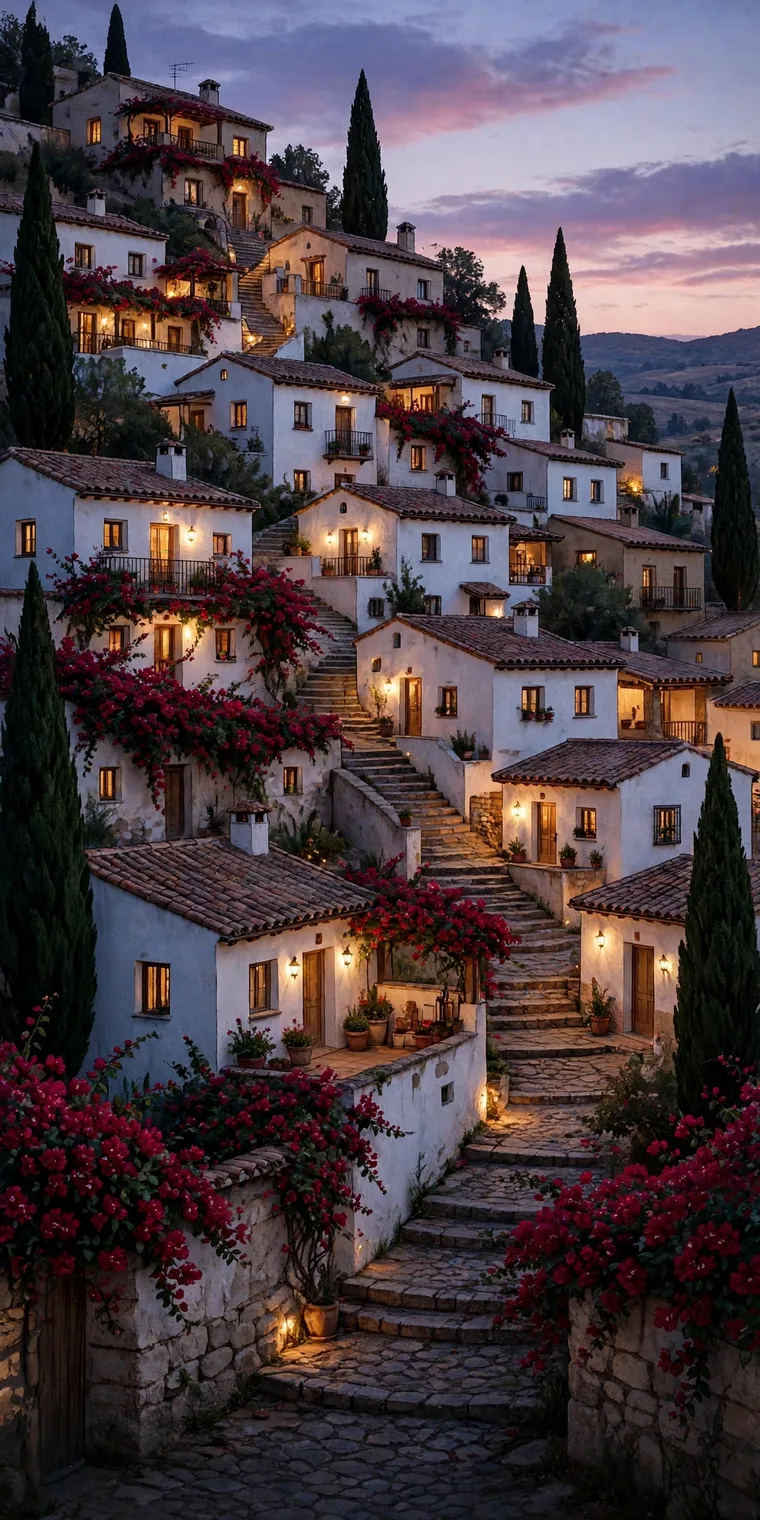
From a distance, they look almost unreal. A cluster of white cubes spilled over a ridge, a church tower above flat roofs, a castle on the highest rock — and around it, olive groves and dry hills in ochre and green. Up close, the spell deepens. The pueblos blancos, the white villages of Cádiz and Málaga provinces, are among the most beautiful settlements in Spain, and they are beautiful for practical reasons that long predate tourism.
Whitewash is not decoration. Lime wash reflects the brutal summer sun, keeping thick-walled houses cool, and it has mild antiseptic properties that mattered when disease moved quickly through hill towns. Communities whitewashed together, often before festivals, and in some villages the custom was once enforced by ordinance. House by house, the result is a collective architecture: individual homes may be modest, but together they are luminous.
An official Ruta de los Pueblos Blancos links some thirty towns in the Sierra de Grazalema and the Serranía de Ronda. Pick three or four, stay overnight in at least one, and learn how different places sharing the same palette can be. Ronda, Arcos de la Frontera, and Vejer de la Frontera make a perfect triangle.
Ronda: The Town Split in Two
Ronda is the most famous of the white towns, and the only one fairly called a town, with around 33,000 inhabitants. It sits on a plateau northwest of Málaga, and its fame rests on a single, staggering feature: the Tajo, a gorge more than 100 meters deep carved by the Guadalevín River, dividing Ronda into the old Moorish quarter, La Ciudad, and the newer Mercadillo district.
Three bridges cross the chasm. The Puente Nuevo — the "New Bridge," completed in 1793 — is the one in every photograph, its stone piers rising from the gorge floor, a chamber above its central arch once used as a prison. Hemingway and Orson Welles both loved Ronda; Welles's ashes were scattered outside town. Cross into La Ciudad for the Palacio de Mondragón and streets that still follow the Islamic medina Ronda once was.
Ronda also claims a central place in bullfighting history: its plaza de toros, opened in 1785, is one of the oldest in Spain, associated with the Romero dynasty, who helped shape modern bullfighting on foot. Stay the night if you can. Day-trippers crowd the bridge between eleven and four. By evening Ronda recovers its dignity — swifts around the gorge, the paseo, dinner of rabo de toro, oxtail stew, and local red wine.
Arcos de la Frontera: The Gateway on the Cliff
Arcos may be the most dramatic in its setting. The old town perches on a narrow, knife-edge ridge above the Guadalete River, with a sheer cliff — la peña — falling away on one side. The streets narrow to the width of a single car, then to two pedestrians, and suddenly you are in the Plaza del Cabildo, with the church of Santa María de la Asunción on one side and, on the other, a parapet and a view across the plain that seems to go on forever.
The name "de la Frontera" appears all over this part of Andalusia — Jerez, Vejer, Arcos — and it is a history lesson in itself. For centuries this was the frontier between Christian and Muslim Spain, a shifting, fortified borderland during the Reconquista. Arcos was taken by Christian forces in the thirteenth century, but the frontier moved slowly, and its castle and maze of streets are the physical memory of that anxious era.
Arcos is famous in Spain for Holy Week, when its narrow streets make the processions of heavy, candlelit pasos an exercise in precision. Outside Semana Santa, its pleasures are quieter: a second great church, San Pedro, convents selling sweets through a revolving window, and bars pouring fino sherry from nearby Jerez. It also makes a fine base: Grazalema, Zahara de la Sierra above a turquoise reservoir, and Setenil de las Bodegas, where houses are built under enormous rock overhangs, are all within an easy drive.
Vejer de la Frontera: White, Wind, and the Atlantic
Drive south toward the Cádiz coast and the character changes. Vejer sits on a hill just inland from the Atlantic, about 200 meters above sea level, close enough to feel the levante, the warm east wind locals blame, half-jokingly, for everything from headaches to bad decisions.
Vejer is, simply, ravishing: a protected labyrinth of white streets, flower-filled patios, and small plazas, crowned by castle remains and the church of the Divino Salvador, built in stages over a mosque. Until well into the twentieth century, women here wore the cobijada, a black garment covering all but one eye — now commemorated by a statue near the old walls. Vejer's beauty is often behind a doorway, in a courtyard glimpsed through a half-open gate.
In the last twenty years Vejer became fashionable — carefully, and on a small scale. Boutique hotels opened in restored houses and chefs arrived to cook modern Andalusian food, while the working agricultural town continued around the postcard core. Come in May, when patios are at their best, or in September, when crowds thin. Eight kilometers away is El Palmar, a long, wild Atlantic beach loved by surfers. Cádiz city is under an hour away.
How to Do the White Villages Well
Drive. Public transport links these towns slowly, and the journey — through the cork oak forests of Los Alcornocales or the limestone Sierra de Grazalema, one of the wettest places in Spain — is half the experience. Walk up: every village is organized vertically, and the best church, castle, and view are always at the top, up cobbles that demand proper shoes.
Respect the siesta rhythm. Wander as shops open, eat a long lunch, retreat during the fierce summer afternoon, and come out again for the evening paseo, when the whitewash glows pink and the whole town is in the street. Stay overnight in a smaller place — Grazalema, Zahara, Olvera — at least once. A white village at dawn, swallows over empty streets, is a different place from the same village at noon.
Finally, look beyond the white. Notice iron rejas at windows, tiles around a doorway, geraniums against the lime, a date carved in stone. The pueblos blancos are not a single photogenic idea. They are thirty-odd living communities, each with its own history of frontier war, farming, emigration, and return, sharing a brilliant, practical way of facing the Andalusian sun. Travel among them slowly, and the differences are what you will remember.
© 2026 InsideRealSpain.com