Sleeping Like a Pilgrim: A Field Guide to Albergues and the Credencial
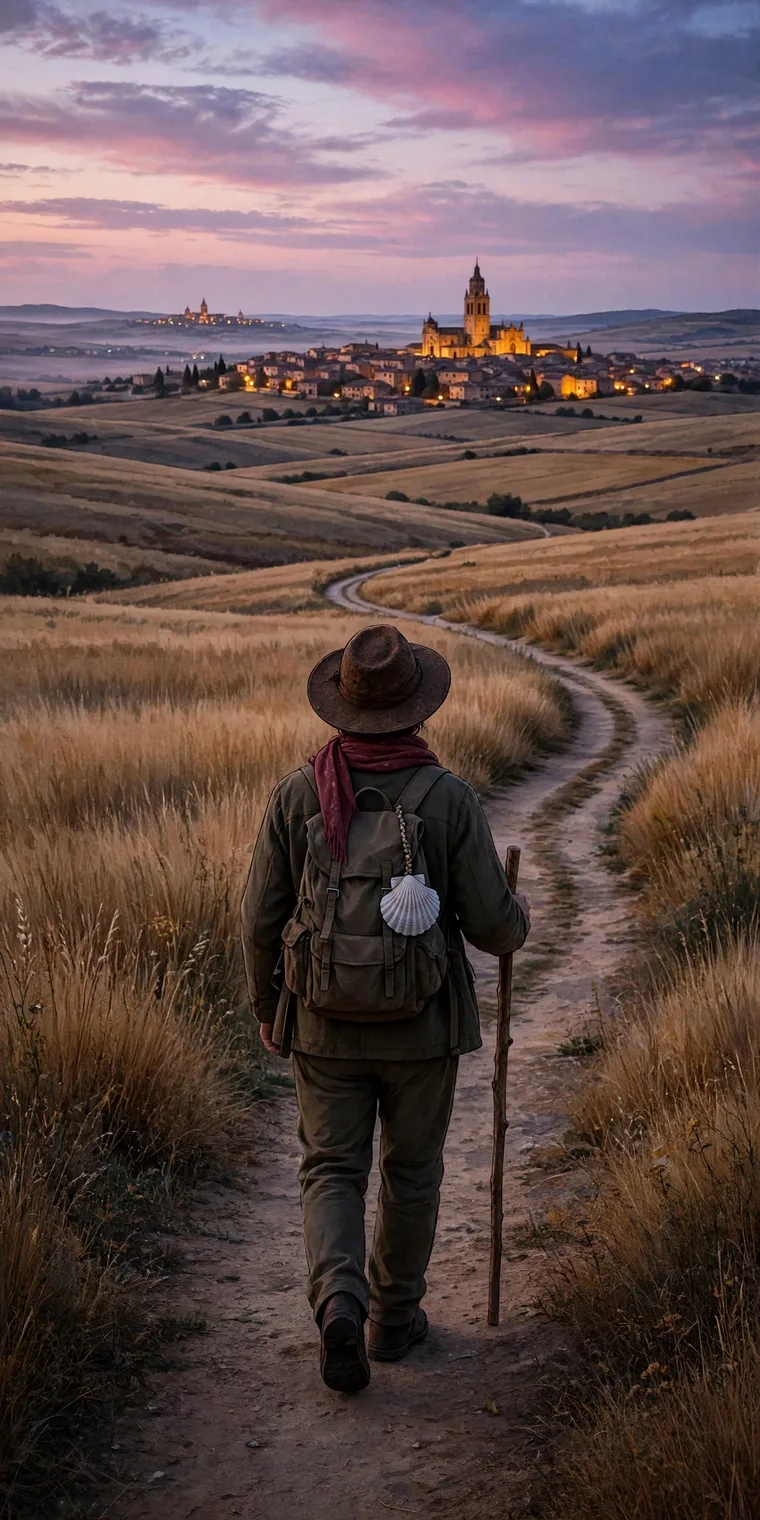
Two things decide whether your Camino works day to day. One is a folded card booklet, stamped at bars, churches, town halls, and hostels until it looks like a child's sticker album. The other is a bunk bed in a room with twenty, forty, sometimes a hundred other walkers, costing less than a sandwich in London. The first is the credencial. The second is the albergue. Understand both, and the Camino becomes logistically simple. Misunderstand them, and even fit walkers spend their days anxious, racing, or locked out of the system that makes this pilgrimage affordable for ordinary people.
The credencial descends from medieval letters of safe conduct; the albergue from the old hospitals for pilgrims. The modern versions are better plumbed, but the spirit survives.
The Credencial: Your Pilgrim Passport
The credencial is a stiff, accordion-folded document, obtained for a few euros from a cathedral, a pilgrims' association, a large albergue, or the pilgrim office at common starting points such as Saint-Jean-Pied-de-Port, Roncesvalles, Sarria, Tui, Porto, or Oviedo. Get it before you start walking, not halfway down the road.
Its job is twofold. First, it is your key: municipal and parochial albergues will ask to see it, and without one you may be refused a pilgrim bed. Second, it is your evidence. To receive the Compostela in Santiago, the Pilgrim's Office needs to see stamps — sellos — proving you walked the required distance. The rule for walkers is at least the last 100 kilometres continuously, with stamps collected along the way. In practice, collect at least one stamp a day for most of the walk and two a day in the final 100 kilometres, where the office looks most carefully.
Stamps are the Camino's folk art. Every albergue has one. So do most churches, many bars, some bakeries, and the occasional food truck with unexpected pride in its sello. Designs range from austere cathedral seals to drawings of boots, shells, and saints. Pilgrims who begin by stamping dutifully end by hunting favourites: the wax-sealed stamp at Roncesvalles, a tiny parish church where the priest writes the date by hand.
Write your name exactly as you want it to appear on your Compostela, and note your starting place and date — the office checks continuity. Keep the credencial dry and accessible, not buried at the bottom of your pack; you will show it at check-in every night, usually alongside your passport or identity card. If you fill one booklet, start a second and carry both.
Three Kinds of Bed
Municipal albergues, run by towns and villages, are the backbone: typically five to ten euros, dormitory bunks, a kitchen, showers, and a strict one-night rule unless you are ill. You generally cannot book them. Beds go on arrival, in order, to pilgrims with credenciales — walkers usually before cyclists. Doors often open early to mid-afternoon, and in busy season after Sarria the queue forms well before that.
Parochial and association albergues, run by churches, confraternities, and volunteers, are often the emotional high points of a walk. Many run on donativo — pay what you can, honestly, in the box — and offer a communal dinner and breakfast. The hospitaleros who staff them are frequently former pilgrims. Their welcome and their soup are not extras; historically, they are the point.
Private albergues look more like good hostels: bookable online, slightly higher prices, smaller dormitories or private rooms, better mattresses, washing machines that work. There is no shame in using them — most pilgrims mix all three types — but they run on hostel logic, not pilgrim logic: reservations honoured, later check-outs, no expectation you will be gone by eight.
Above the albergues sit pensiones, hotels, and paradors. A hotel night once a week — for sleep, laundry, and a door that locks — is a strategy many experienced walkers recommend, especially where coverage is thinner.
A Night in an Albergue: How It Actually Works
Arrive, present credencial and ID, pay, and you will be assigned a bunk and shown the rules. Shoes and poles usually stay at the entrance — a line of boots by the door is one of the Camino's defining sights, and smells. Then showers, then laundry, by hand in outdoor sinks or in machines shared with negotiation and clothes pegs. Kitchens are communal, first-come, and cleaned, in theory, by everyone.
Lights-out is typically around ten, and the morning exodus begins startlingly early. Municipal albergues usually require everyone out by eight. Head torches, earplugs, and an eye mask are not luxuries; snoring in a forty-bed dormitory achieves an orchestral scale first-timers underestimate. Sort your pack outside the dormitory if you rise before six. Rustling plastic bags at half past five is the Camino's most prosecuted social offence — informally, but sincerely.
Keep passport, phone, cash, and credencial in a pouch that sleeps with you, not in a boot downstairs.
The Etiquette Nobody Prints
The system survives because pilgrims police it themselves. Do not wash socks in the kitchen sink. Do not claim a lower bunk with a towel and vanish for three hours in high season. Offer the last socket, share the washing line, and put money in the donativo box even — especially — when dinner was simple. Treat hospitaleros as hosts, not hotel staff.
Communal dinners are where the Camino's international society forms: strangers dividing bread and comparing blisters in three languages. Even if your Spanish is minimal, attend.
Booking, Racing, and the Sarria Problem
Should you book ahead? On the Francés in May, June, and September, and anywhere in a Holy Year when numbers swell, booking private beds a day or two ahead is prudent — while remembering municipal beds remain walk-in only. On the Portugués from Porto, a similar pattern now applies in season. On the Plata the problem is the opposite: not competition, but distance. Know where the next bed is before you leave in the morning.
Above all, resist bed-racing. The pilgrim who leaves at five in the dark to secure a bunk by noon walks at the emptiest hours and experiences the Camino as a queue with scenery. Walk a human distance, arrive mid-afternoon, and if the municipal albergue is full, accept the private one down the street as the price of a better day. In the main towns, in season, there is almost always a bed somewhere.
Sleeping like a pilgrim is an education in enough: a bunk, a stamp, a shared table, an early night — a discovery smuggled home in a battered credencial.
© 2026 InsideRealSpain.com